Author: Laura Mesa

  • saunders research onion

    This is something that is ongoing and I will continue to add to it however I thought it was important that I look at the methodology and try to find where my gaps where in order to get where I need to work on more as well as what I have been looking at in the form of organizing my blog in order to make sure that I am not going to have blank sports when it comes to the learning outcomes.

  • Tutorial October 19

    This week, during tutorial, I reviewed the work I’ve done so far. What else I could continue to do and get a greater outreach, one thing that my tutor recommended is that maybe I could start with getting a different audience to interact with my work in one of the interventions I had done in Medellin at a mall and try to see if I could do it digitally which I immediately got on and started to get people to look at and sent out after having done my intervention through paddle the last time and realizing that I had gotten some good responses and people were willing to participate I decided to use the same one, however I am still waiting to get more results since I am having more people circulating with it. One suggestion that my auto did which I was not a very big fan of but I am starting to consider it is doing podcasts and having experts participate and share their expertise about the subject this is still something I am having a very hard time of looking at and I am not sure this is something I want to do because I might be scard or it might be a very big step and I also feel as if I might not have enough time to accomplish this however I want to see where it could take me so I might try to plan a first one and see how that goes and this might even be something that I do after I finish my masters, I defenelty want to make sure that if I am doing this that it is something different and not the same iteration to what other people are doing maybe I would prefer to do other sorts of collaborations nd this is what I am looking to do with the people that I am seeing the results on the most resent padlet that I sent out because I included a question which the response I am going to be using for an artifact I am working on and then hopefully I might be able to get more reactions from it and see how people see this issue represented in art pieces. I feel like I’ve had very productive tutorials because I really appreciate being pushed and questioned. After all, I feel this is how I grow, and I will be able to make my project even better than it is now, which is important to me. I will keep trying to live up to the expectations and push as hard as I can on this project, even with less time. 

  • Ethics/ Communication

    https://padlet.com/lmesag02/cuerpo-undefined-2-s024nn8v4vyyca71cz5m

    https://padlet.com/cuerpoundefined/collage-el-cuerpo-undefined-s023lvc2f36el4vh3xuh

    I guess this post can go into both categories. Still, to get my interventions out there, it was important for me to ask people to participate and share it with friends from Latino backgrounds to get diverse opinions from women in Latin America, so I started. Hence, I sent it to some of my friends who had completed a previous one and who were willing to help me and send it out, and I gu. I thought this was important in my communication since I needed to be careful about who I sent this to and make sure that I was not triggering people who were already going through a tough time, as well as making sure that I was sending the right message to get people to want to engage with the content. I also had to ensure I followed ethical guidelines by making sure people participating and reacting to this artifact knew it would be used in my research and that a certain public would read it. Since it was done in a Padlet, people also had the option to participate in it without including their names, which I thought was important. I also made sure the ethics and consent were clear and readable because I never want to be in a position where people can’t find it or it’s hidden. So, before people started the activity, they needed to review it and make sure they understood what they were signing up for. This is something that I did on both of the Padlets.

  • Beauty Sick by Renee Engeln, PhD

    I started looking at and reading the book Beauty Sick by Renee Engeln, Phd after a talk with one of my experts, who is one of the founders of a therapy-led approach group in Colombia called El Cuerpo Que Somos. They started this initiative around ten years ago, and they have therapy groups for extended periods of time as their treatment. I started doing this this week, which I am really excited about, because they talk about and analyze everything around body image and the obsession with looking a certain way. They recommended I read this book for my thesis as well as for my journey in their therapy group. 

    The book starts with a critical introduction to beauty and the industry, and how we are never satisfied with what we see in the mirror because we are obsessed with the media and trying to emulate what we see in our actual lives. There is always this idea in our lives that there is something that needs to change and that we look great, but I should fix this one small thing or another. She started her career and began learning more about women’s psychology. She saw that women sometimes stopped living or constantly criticized themselves because of how they looked and how other people perceived them. (I believe this is definitely a reality from all the sources I have interacted with, but as the book says later on, there isn’t enough research on people who actually feel good in their bodies; it is mostly about women who suffer from beauty sickness.) 

    Thought the book there is a lot of talk surrounding the mirror and it is seen even in the cover of the book having there be a broken mirror this is a book that is really interesting and entertaining to read which makes me think of the fact that most women should give it a read since it takes on a very particular style where there is a lot of research and numbers, “34% of five-year-old girls do dietary restriction, and 28% of this group of girls want their body to look like the people who are on TV.”(pg.3) and there are many phrases and numbers such as this throughout the book but it does bring sort of a novel aspect to it as well as the author chose to describe conversations with women who had suffered from beauty sickness and how this was something that looked different for all women and everyone had their own experience which made it easier to read than most academic books in my opinion and easier to understand since it was as if they were telling a story I think this makes it easier for the average audience to engage with because it is not just information getting thrown at you but you have something that you are able to follow and characters you are able to relate to. 

    One of the main discussions in the book is that we have created an environment where being beautiful, and being perceived as beautiful, means you have power. If I seem smaller than the rest and have a more beautiful face, then that means I am superior to others, and based on what we see in the media and the outside world, we have also made it impossible for people who live in bigger cities to be seen as beautiful. The first example of someone with body image issues in the book is a young girl named Leigh. Clearly, the researcher also had the parents’ consent for their child to participate in this research. When she was asked what she thought was beautiful, she said that it was having thin body parts: “beauty could be captured via a series of measurements”(pg.4). There is a lot of talk in the book throughout about the fact that women live in the forms of others and start to internalize that people are looking at them. This is what gives them value, and it is something we don’t come out of the womb with; we learn it as we grow up, shaped by the society we are in. 

    There were a lot of examples all through the book about how some women started to get beauty sick based on how they saw their elders and especially their mothers have a relationship with their bodies for example if a girls mother was always critiquing her body and being her clothing that does not fit her but would fit her at her ideal weight it would make their daughter think about how their body is not correct and something that they have to keep on changing, this is something that we see all of the time and it is something that we see of a lot on tv as well as in the media as a whole for example women showing their bodies in instagram with their size xxc skirt when it did not kit them. Then, a couple of months later, it fit her, which only proves the point that smaller is seen as better and something women are always striving for. 

    One thing in the book that really emphasized my gap of there not being enough research or enough talk about women in Latin America and body image is the fact that the researcher and author talks about the fact that there are a lot of students that reach out to her about getting information for projects they are doing, but this is mostly in the USA; she does not speak about people from other countries doing so, which is important to note. 

    One of the main issues the author notes is that this cultural obsession is not just about one person or one family. Still, it is the fact that as a society we have placed such an emphasis on looks and the media: “signs…thoughts…behaviors… illness also lives in our culture…A beauty-sick culture cares more about an actress’s nude selfie than important world events”(pg. 8). This is something that we have seen recently in different moments; for example, there is the fact that even today there are moments when there are real-world issues happening, but people’s reactions and the importance they put on what models and celebrities are doing is more important. 

    One of the main ways in which the author talks about young girls getting into this world is in mother own relationship with their bodies and this is a fear I have heard and seen on social media about people who have suffering through eating disorders and starting a family because they never want to set that example for their children and this is very important because you might think that it is very important to never say anything negative to your child about your body but if you have very strong negative feelings towards your body and this is something your child sees this is something that at some point they are going to start internalizing and start to consider normal for example in this book the author was describing a exercise they did with young girls and their mother looking at themselves in the mirror and then doing it next to their daughters and even though the daughters individually did not have an insecurity about a certain part of their body when they saw their mothers talking negatively about that part of their body they started to think it was normal and since they admire their mother they said the same thing about being uncomfortable with that part of their body. 

    One example that the author describes is about the Duchess of Cambridge, Kate, and the way that, because she is in the public eye, her life is always on display for others to see. For example, “One day after Catherine, Duchess of Cambridge, gave birth to her first child, she was greeted with a story in the UK tabloid press about how she could lose the baby weight and “shape up.” After delivering her second child, she was widely criticized for looking too good after the birth.”(pg.12) This just shows us that people are always going to look for something to criticize and look at, so even if you do exactly what someone else wants, other people are going to disagree, which makes me think about the fact that you really have to be at peace with yourself and what you are doing because if you decide your life based on what the people around you are thinking, you are never going to get anywhere; you are always going to be trying to please other people and not succeeding at it. 

    There is also the fact that she talks about certain eating disorders or forms of disordered eating, including body dysmorphia, “…Body surveillance or body monitoring.”(pg.66) This is something that we see and from speaking to several man I have seen the fact that they say that it is good because it keeps women together and accountable on the way they look however if you are always looking at yourself and criticizing every small flaw that is when there starts to be issues with your time management as well as how you view the world because if your only focus is your body and what your appearance looks to the outer world this takes away from other work and activities you could be taking part in, “The problem with having body on your mind is that it takes your mind away from other things”(pg.69). This is an issue that is similar to a very used term which is food noise which is just the idea that you are always thinking about food and what you are going to eat next and your whole life revolves around it when there are so many other things one could live for. 

    There is this wrong image at times, not just of the males around us and the people around us but of ourselves, of thinking there are certain areas that we don’t like about our body that we can change without affecting our health or how anything else in our bodies looks: “‘They had gone through and created a perfect female by taking segments of each girl that they thought won a category. So this person’s face, this person’s chest. And then he told me I had won the torso, which was the abdomen and butt’”(pg.71). How was it okay for people to be taking women’s parts of their bodies an acting as if they could build the perfect woman as if it were that way it could be done the other way around of just saying that men could change this or that about themselves but in reality it is important to look at people as a whole and not just at the specific part about them that you like. 

    ““She said my face was so fat, who would ever be attracted to me? They were always commenting on what I was eating. I would counter with ‘People should like me for what I am. People should like me for what’s on the inside.’ But it was just this constant barrage of shit about my appearance.””(pg.93) If not even your parents love you just the way you are and are always commenting on your body and your appearance, you are going to believe you are not truly worthy of love. Why was it important to look attractive for a man, as if they needed to make sure they looked pretty for a man and future people who might be attracted to them, as if that was where their worth went??

    I think that this book is a hard read because it really makes you think about your own relationship with your body and how body-sick you might be. Still, it is important because it is showing us the reality and the critique of something we have normalized so much that we don’t even question it anymore, one of the main steps that the book talks about is about how we need to critique better what is going on around us so that we know how to avoid it, the book really looks at the reality of not asking women to not participate in their beauty rituals if you feel happy to be doing your make up then that great but don’t critique other when they are not constantly fixing their make up and don’t make it an expectation for example give young girls different gifts instead of just asking them to play with make up and nail products give them other things they can play with and develop their personality around. 
  • Ethics Journey (My Approach)

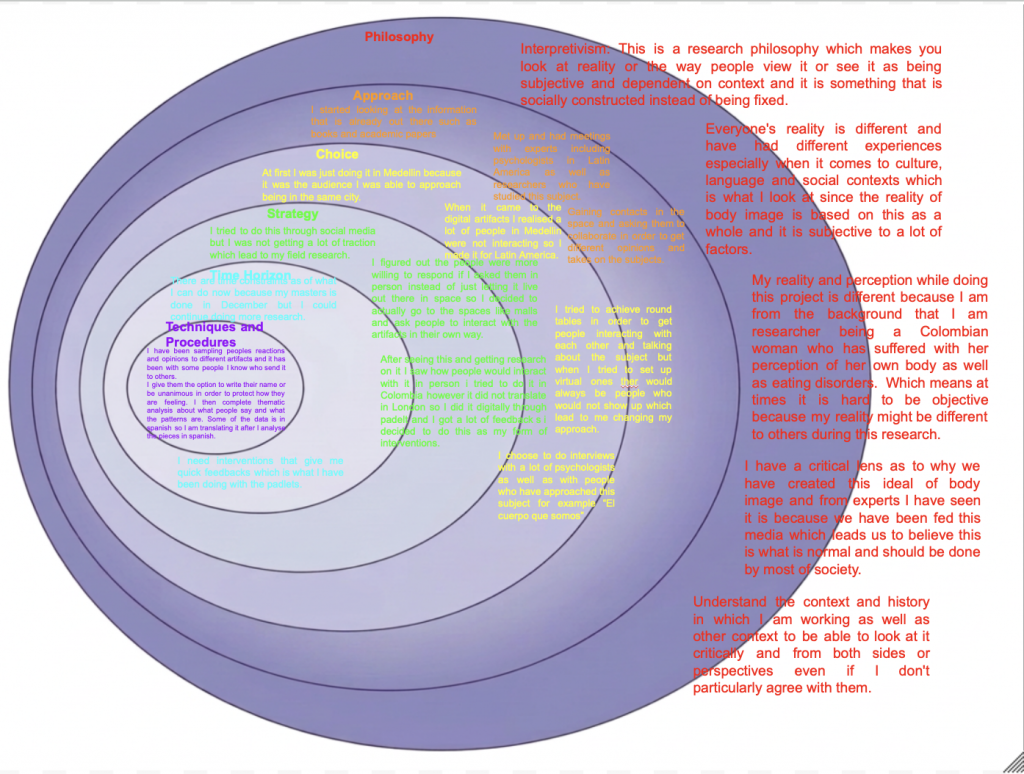
    Ethics has been a learning process throughout this master’s because it was a project where I really needed to be careful about how I spoke on the subject, especially since it started as an eating disorder research project and meant I was speaking to a very vulnerable group of people. I wanted to create a comfortable environment for them, and make sure they felt comfortable enough to withdraw if they wanted to stop talking about the subject or didn’t want to answer a question. During our conversations, I made sure they were comfortable with me discussing the subject, answered any questions, and checked in to make sure they were okay. There were also a lot of people I was speaking to who weren’t comfortable telling me their name; they just went by their TikTok and Instagram handles, and they didn’t turn on their cameras, which I completely understood and respected, and I made that clear. I also thought it was important to be fully transparent and ask whether they felt comfortable with me taking notes and uploading them to my student blog, where my classmates, advisors, and program directors would see them. They all said yes. After we finished talking, I asked them again to make sure they had the chance to retract anything or say whether there was a specific part of the interview they wanted taken off the record, in journalistic terms. Whenever I saw something wrong with someone’s work, I made sure to write up a contract, make sure they understood it, and ensure they were aware of all the terms and could make changes wherever they found them necessary. For example, for anyone taking part in an online activity, I wrote down all the terms at the beginning so they knew what it would include. Since it was done in a Padlet format, they could see what participating would entail and opt out at any time, since their content is revocable if they don’t feel comfortable. I want to make sure that I am doing everything as ethically correct as possible. Still, I understand there may be gaps I don’t see, so if someone notices something, I want to know so I can make sure I am doing things as well as I can. When I met up with people I found on social media, a couple of them told me this was a very important part of the research and that, before participating, they wanted to make sure they were doing it as ethically as possible. I also found it very important to respect people’s decisions whenever they felt they did not want to participate or speak to me. I wanted to make sure people always felt safe, and I always thanked them for wandering, even if they weren’t interested in participating, which I thought was important and made people feel safer. 

  • Who Wins When We Hate Our Bodies? Adriana Covers

    • This is a TEDx talk by one of Colombia’s fat activists, Adriana, but on social media she’s known as Fat Pandora. She has a very interesting story and take on fat phobia in Colombia, and I thought this was a great talk to watch and include in my blog. 
    • The talk began with the interviewee talking about how she came to know Fat Pandora from an article she read in a newspaper, and it started with a quote that she gave, which roughly translated, since it was done in Spanish, was, “I am Fat, I dress incredibly, and I will not hide”
    • They describe how it seems as if we live in a world that accepts body diversity, with concepts such as body positivity and size models. Adriana normally speaks about these subjects, as well as aesthetic violence and body violence. 
    • She was asked how her experience has been, especially now that there is the idea of miracles for losing weight. By listening to this, I am assuming she is asking about using GLP1s as weight loss medication. 
    • She speaks about aesthetic violence because she believes there is a misconception that this only involves or affects fat people, but this is something that all women are exposed to. (I can relate this to the book I read about Beauty Sick and how it is something we are just born to face in one way or another) There is constant pressure and watching the body to get close to the body standard society has; in that moment, the more you fall out of this and don’t follow or try to achieve this ideal, you are more exposed to violence. You lose privilege, and this is a type of prejudice. You lose privileges and are discriminated against because of how you look. 
    • Fatphobia and aesthetic discrimination almost always go hand in hand, and they are almost sisters. She comes from Bucaramanga, and her mother was a designer, so from a young age she went to buy textiles. Still, she remembers every time they would leave the house, someone would comment on Adriana’s body to her mom; a very common one in Colombia is, “you can tell that she eats her soup,” which means that she is eating more than she should because she is on the fatter side of the spectrum. Since she was young, she did not think this was bad, and her mother told her that they were telling her she was fat. That phrase marked her life, and it shows how children can internalize what they think is helpful. 
    • She found her place in the fashion space, having seen her mother as a designer and her father as someone who always wanted to look amazing in his clothing. As a fat woman, or just a woman in general, she learned to figure it out; however, when she went to study marketing and fashion communication in Bogotá, she studied with other girls who looked like what the industry had told us was acceptable, sort of like the actresses in The Devil Wears Prada. She started to think about how she wanted to look this way. She started saying she couldn’t be the only fat Colombian to want to buy fashionable clothing, and she looked at the bigger-size industry in the USA, China, and Germany, where there was an offer for this. Hence, she started saying she bought these clothes from these brands, but she understood this was her position of privilege because she had the means to buy them. 
    • She started a blog and took pictures in the clothes she bought. There are fat women in Colombia, and she wanted to prove that they existed. 
    • She called her blog Fat Pandora because she has always liked being disobedient; she found ways to compensate for being fat and admired the myth of Pandora. 
    • The fashion industry is a Machiavellian plan because they put the seed for insecurities; for example, the thigh gap, and a lot of girls fall into eating disorders, and then creams and then machines started to come out to make it better. They invented the idea that it is bad to have your hip bones stick out, and at one point they started saying freckles weren’t good, and everyone was crazy about covering them up; but now that they are in fashion, they sell you a pen that draws them in for you. 
    • Medicine that we don’t know about to lose weight; everyone is very thin right now and following this trend, but in reality it goes much deeper when you get a doctor, and you tell them that you don’t feel well, but they tell you that you are thin, so that must mean there is nothing wrong. (I actually have a friend who has PCOS and was told that since she was not fat, then it was not a problem, but in reality there are so many underlying issues that come with this that we don’t even realize). There is hypervigilance about women’s bodies. 
    • One of Adriana’s friends, who is super thin, told her that she was a victim of medical fat phobia and said that she has biomass. She is going to have to get surgery, but they had never examined her for complete tests, and now that she is getting surgery, they will. They saw that she has cholesterol problems, but if it had not been for her surgery, no doctor would have ever found it necessary to do this test because of how she looks. There, she saw the idea that there is this stereotype that if you are fat, it means unhealthy, and thin means healthy; it affects both sides of the spectrum. 
    • Pathologizing a body by just seeing it brings a lot of problems to fat people. She has her story with Ozempic, but a different one, and a doctor sent it to her. She started using it, and a few weeks later, the voice of reason, and she heard a third voice of What if we die, and she asked the doctor. She said that there is a percentage of people who can develop suicidal thoughts because of this medication, and she stopped taking this medication. A couple of years later, it came out that this is a problem and a consequence and causes depression and has effects on mental health. This fears the idea that society would rather see us dead than fat.
    • The idea of wanting to lose weight has a lot of effects, and there is research that says that women who are overweight earn less money than those who are not overweight. 
    • It looks like the world has changed somewhat because there are more plus-size models, and yes, and no, it is the message of society that you can only look fat if you look a specific kind of fat; there is still diversity with fat bodies, and the model of being more fat as a model does not represent all fat people. She does not think this is a victory to see them on a catwalk because these women are not representing all women, and it is not a victory that they choose fat women as a life-saving measure when they see that they are losing their market. 
    • What can we say to people who are still fighting these impossible stereotypes? She says to think about what we would have done with the time that we invest in being self-deprecating and use that time on something different, like working, a hobby, and knowing oneself better instead of trying to fit into less space. Secondly, she wanted to say that fat people are not promoting anything or romanticizing anything; they are just saying they want the same treatment and clothing they can wear they want to be treated with dignity.
  • Harper’s Bazaar Article “Bodies of work”

    While I was walking around Frieze and Frieze Masters today, I ran into a couple of stands with magazines from Harper’s Bazaar Art. I grabbed a couple, and later, when I got home, I started looking for articles that could give me information for my research. I found one called “Bodies of Work,” a curation piece by Jo Baring. The idea of this curation was to look at how women are portrayed, but this has been the subject of a lot of controversy and, at the same time, a lot of empowerment. They start talking about Venus, and when people think about Venus, they probably think about the painting The Birth of Venus or the sculpture that is in the Louver,. Still, people do not realize this was done long before that, and that the way she was imagined was influenced by earlier sculptures such as the Venus of Hohle Fels, discovered in a cave in Germany and believed to be 35,000 years old. In these sculptures, many of them depicted the women’s body in a very realistic way, including the vulva as well as large breasts. When people started to discover some of these pieces in the late 1800s, they began to compare them and say she was an immodest Venus, while European representations were modest. (This makes me think about the fact that they were grabbing something that already existed and someone had created and was the actual women form and something they gathered inspiration from and calling it immodest and as if it had less value. This reminds me of some of my readings about how some bodies are considered immodest, and it is similar to what they were doing around this piece.) The reason why they were considered immodest was that she covered her genitals in the Roman version, but in this one it was all exposed for the world to see. It is suggested that these were pieces done by the women themselves as a form ofself-portraiture (This is something that I find incredible: they were able to depict themselves in the nude and the way they saw themselves then, or even at the time when the Birth of Venus was painted, there was so much taboo over the female body, and even though this is something that is being fought against in society, there are different ways in which we can still see them today.)

  • “Thin Body in Fashion 7 reasons why skinny became’Fashionable’”

    I found this article from a company, but I couldn’t find their name on the website; however, I thought it had some really good points and could be beneficial to review as part of my research. I found it on a website called Parametex, which sells different types of fabrics, and I thought the name was super interesting. It is recent, since it was published in April of this year, so it offers a different perspective than older research I have looked at. One of the first things I noticed and found relevant is that “fashionable” is in quotation marks, which makes me think about rules that must be broken and the paradigms and belief systems we live in, so I found it interesting to explore. The first part of the article looks at the beginnings of why the thin body started to be so representative in the fashion industry. This article is different from others I have analyzed because it points to a direct shift in the 1960s, when Twiggy entered the modeling industry. Some claim it started in the 1920s, but researchers have different views on this subject.

    The article argues that one of the main things we see in fashion is thin bodies, no matter the context; this is seen across runways, magazines, and campaigns. They say this has been the standard from the start and that it shows how fashion is presented and positioned as a whole. In this article, Twiggy is considered one of the pivotal changes: she came in with her silhouette, made it a standard, and shifted the industry away from emphasizing and celebrating curves toward how clothing and fashion presented themselves. This makes me think that it stopped being so much about the body, which was the focus before, and made it more about the clothing, sort of like saying that the curves were a distraction from the clothing and the clothing needed to be the most interesting and important part of the industry; I think it made women invisible, as if they were the accessory and not the clothing. This is what is described next by saying, “the clothing is always the main focus.” It also suggests that, to do this, some people think the best way is through thin bodies; however, this is because it is “original to the design intention.” However, this makes me think about the fact that the intention is made from the beginning of the design, which is the silhouette they design, which means that if we change the process from the rule, or this is my hypothesis, then there could be more change in the fashion industry and the way that the clothing is specifically designed. This isn’t just something that happens; normally, specific fashion lines are produced in very specific sample sizes, which is considered good for speed and organization. Still, for example, if a model does not fit a dress specifically as it is imagined, then they are not right for the dress; there is never consideration that maybe the dress can change, and this is to make the process more efficient, which makes it necessary for models to be in such a small size and always be thin, or they will be taken out of the fashion industry, which tells us that this is the standard. However, this makes me ask the same question: how ethical is this industry, and do they care about the individuals they represent? Because, looking at the media and with my untrained eye, there are women in this industry that look sick from how thin they are, and I understand that there are some people that genetically look like this; however, there are some that need to think about their health and go to extreme measures to be a part of this industry. 

    This was made even stronger in the 1990s when models became even smaller, and this is sometimes referred to as heroin chic, and this was made to be a part of fashion identities. Even though it was an issue before, it became much more extreme in this instance. In this era, it became less about the clothing and more about the aesthetic, with models becoming part of it. They wanted models and the fashion industry to be something people aspired to, which raised their standard and led to a hierarchy where thinner was better. This is something that I can connect to the research about fearing the black body, since making women slimmer and making this the standard was a rationalization from racism; they are not on the same level playing field, to say the least, and it is very important to name, but it is a similarity that I find interesting and something to look at further. Since this body type has been so prevalent in the media, it’s important to look at how it shaped people’s perceptions of models and the fashion industry. “What we see repeatedly begins to feel normal…” This makes me think about how many people see models as just beautiful and slim, and it is because the media bombards us with that, which makes us believe it’s normal and something we should aspire to. 

    In this article, they discuss how, in recent years, the industry has started to include different body sizes. There is more representation across different forms of media, which is a real change; however, they argue that the default is still very thin, even in high fashion, ps and that these changes take time. However, I disagree with this take because, in the past couple of years, specifically following the Ozempic epidemic and seeing how much worse everything has gotten, we can see that they are going back to that default, and some models look even thinner than they ever had because of this new shift and the fact that this is something you can now buy; it is not accessible, but it is buyable. 

    In this article, they argue that the industry’s expansion is not necessarily a replacement for what already existed. Still, it is growing, and more brands offer more inclusive sizing. I believe there is still a lot of work to do in this area; however, this is this writer’s opinion. The way that they are talking about this is to get more consumers: “At this point, material becomes increasingly important. Fabric is no longer just about color or texture, but about how it adapts to different bodies. The way it drapes, moves, and shapes a silhouette becomes part of the fashion experience itself.” After this point, they say they are a company that does this and is part of this shift so that they can have more materials for everyone around them. They claim and believe the industry no longer looks at only one standard; however, I strongly disagree. More people are talking about it, which is good; however, there is still work to be done, especially now that more and more people are taking weight-loss medication. I want to make clear I am not against it when someone needs it; however, there are now people who take advantage of this and make things each time more difficult because it is even an ethical problem: should you take a medication you don’t even really need to fit a standard which has been constructed by society? 

  • Intervention with Colombia Designer

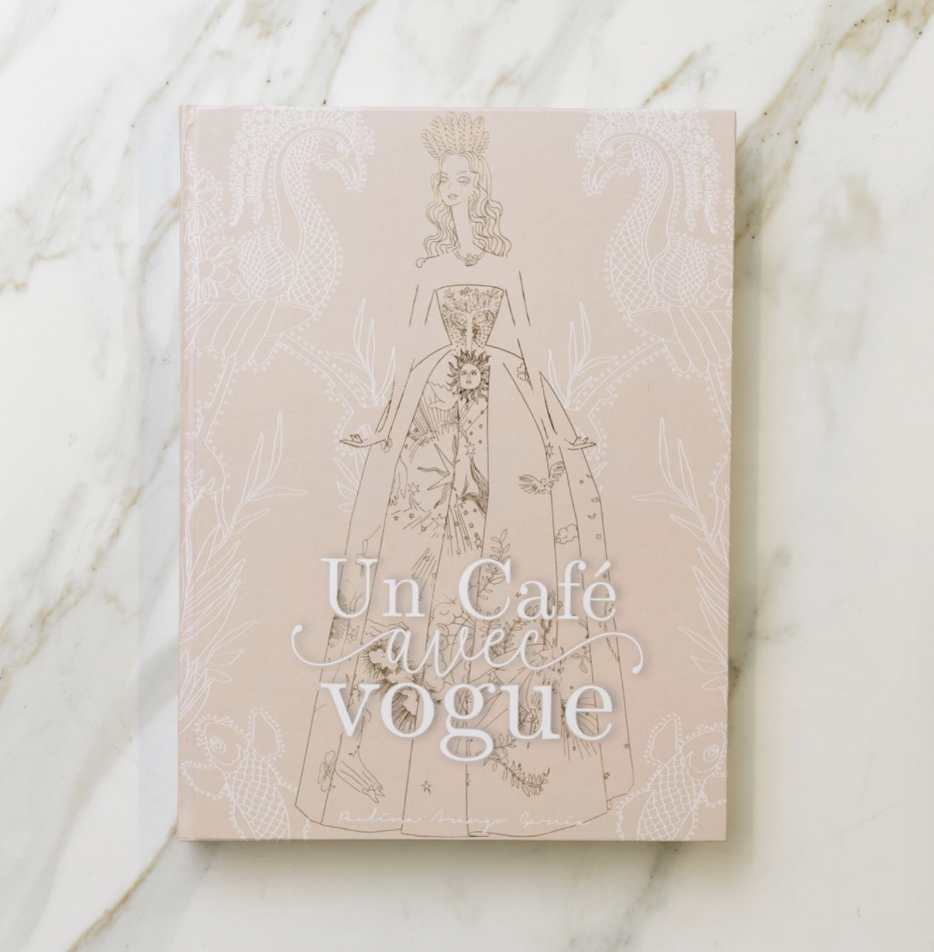
    This was an intervention I was testing with a designer I have a persona relationship with in all honesty she is my cousin and she is part of the reasons why I got so invested into fashion since she is a fashion designer. I have always admired her work and when I asked her if she was willing to participate and do a project for me she was all for it but I think it is important to note that she is my cousin for ethical reasons. Her name is Paulina Arango and she has published a book on fashion drawings and illustrations which people in Colombia buy to color inside them I am going to add the book below.

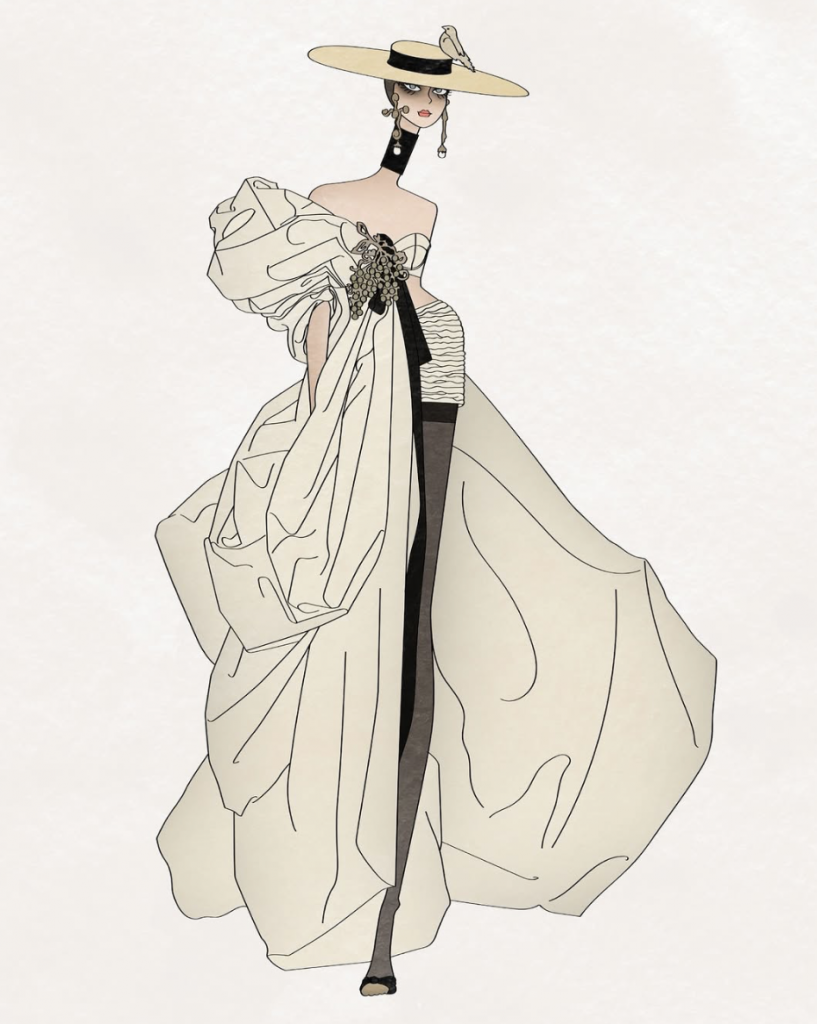
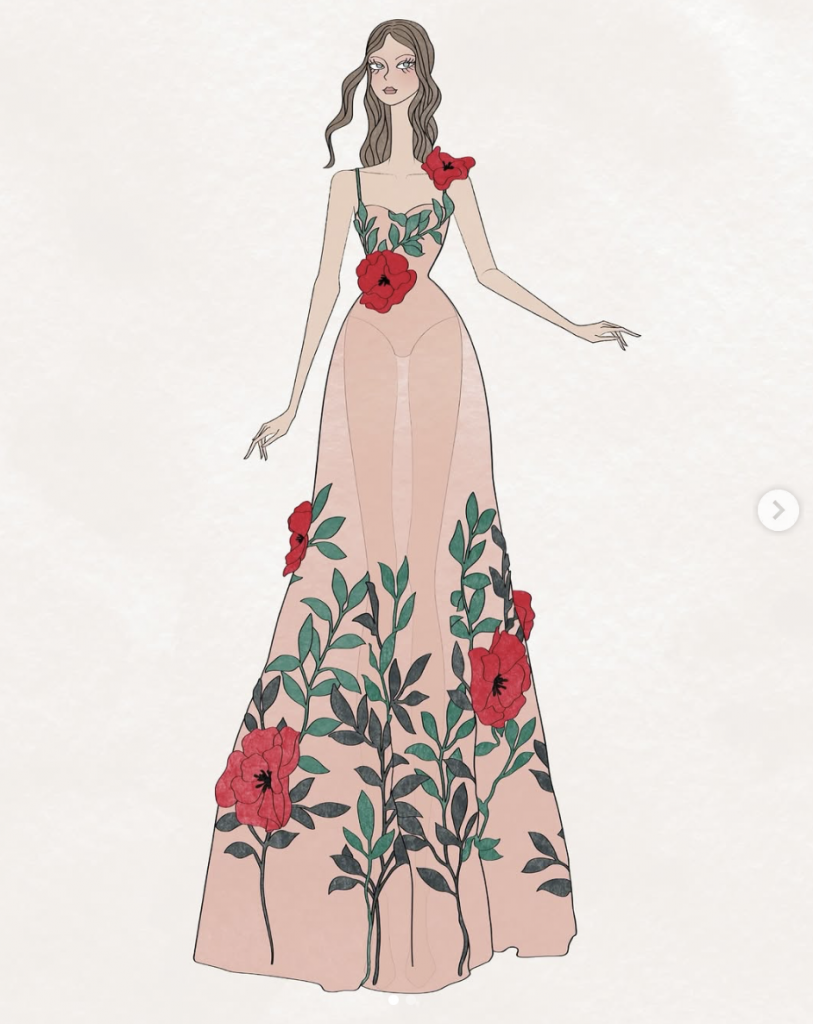
    That is the book as well as some of the images she has inside however they are not collared this is her own interpretation however when you see it you are able to see the fact that this are not real bodies they are fashion crocuses that she uses but this is what she was taught to use in universities and brands pay her to use. For example when I used to design on bodies that looked more real my mother would tell me that I should ask my cousin for help since hers where so much better and more pleasing to the eye than mine she wanted me to draw more I this format than more realistic bodies which looking back at it where not realistic at all either.

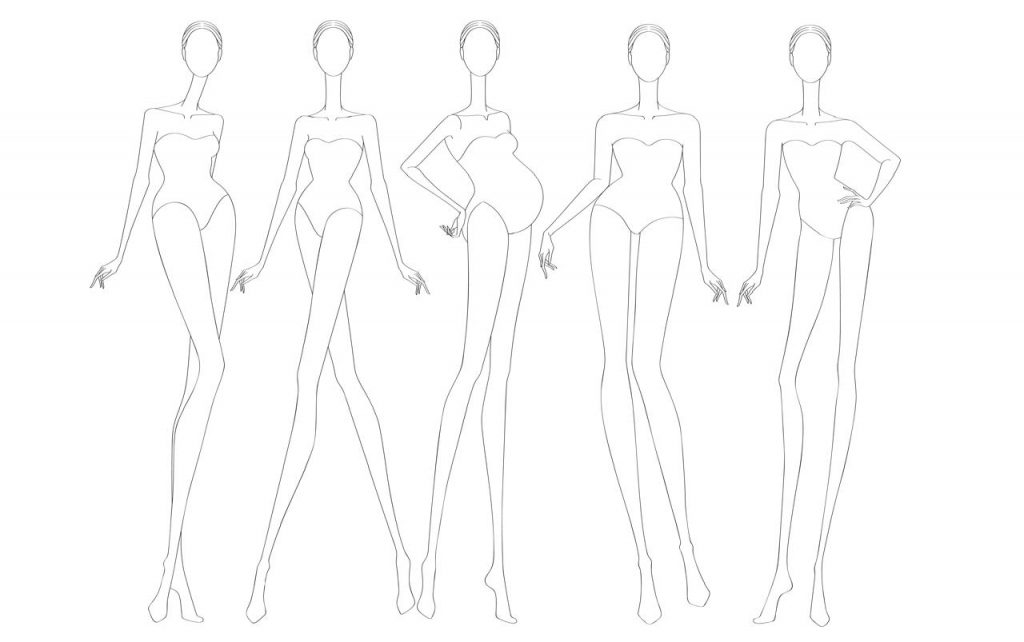
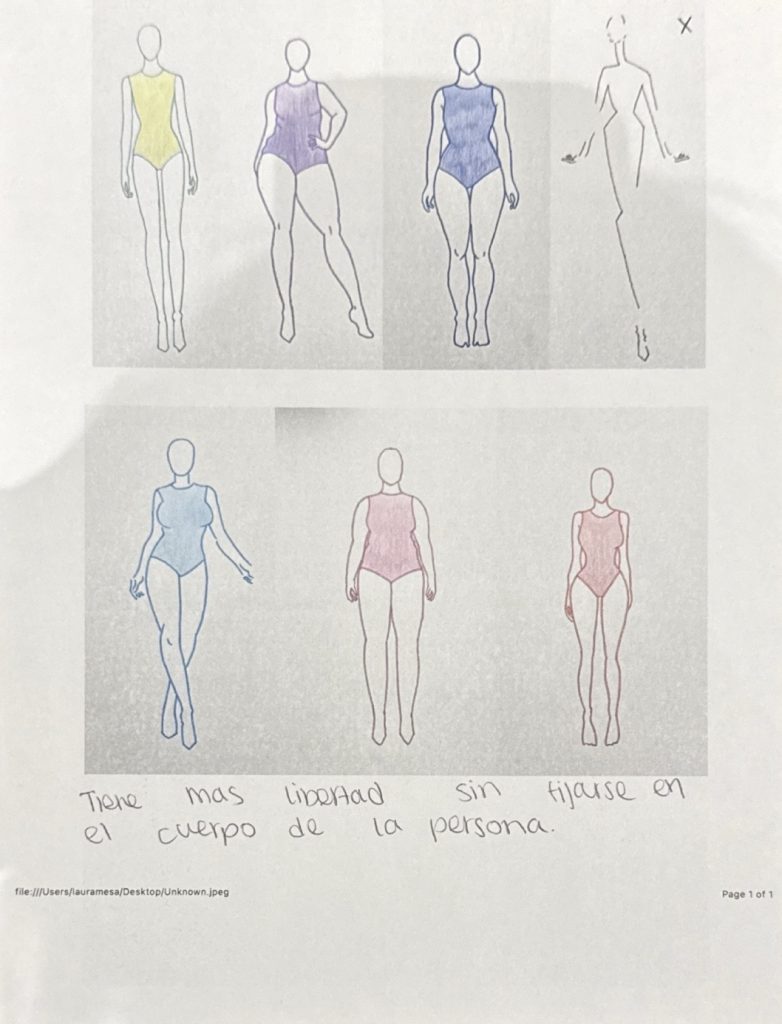
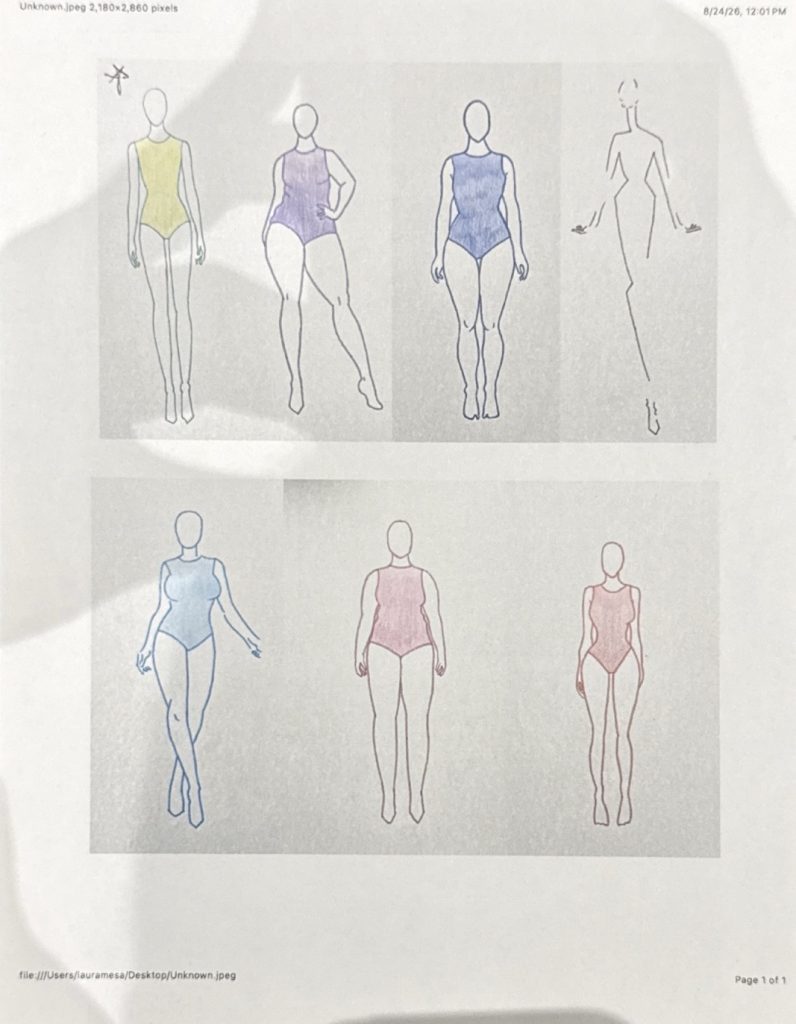
    My question for her was that I wanted her to design different types of bodies that she might use to do designs and represent different bodies but still do it in a fashion way and that was the brief I did not want to tell her exactly what to do I wanted to see what her interpretation of the brief was and she asked me questions such as the fact that maybe a different body type could be a pregnant woman and I told her yes and I think she stuck to the brief in a very fashion oriented way and was very much doing the same thing the fashion industry had been doing with slight changes.

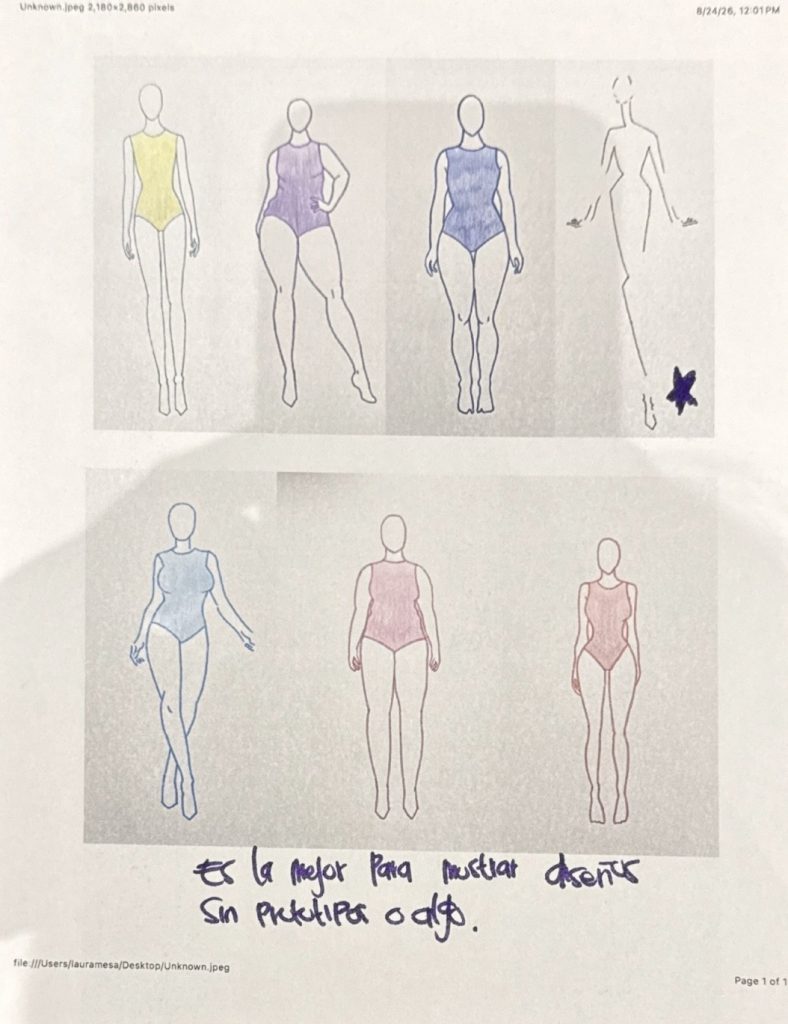
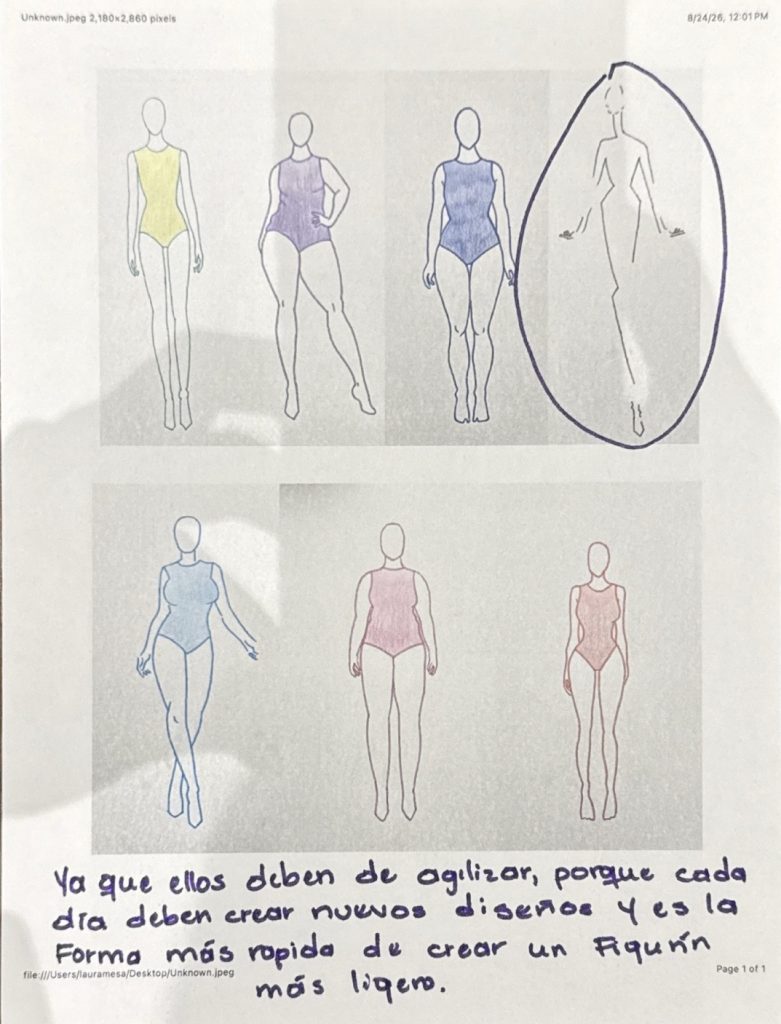
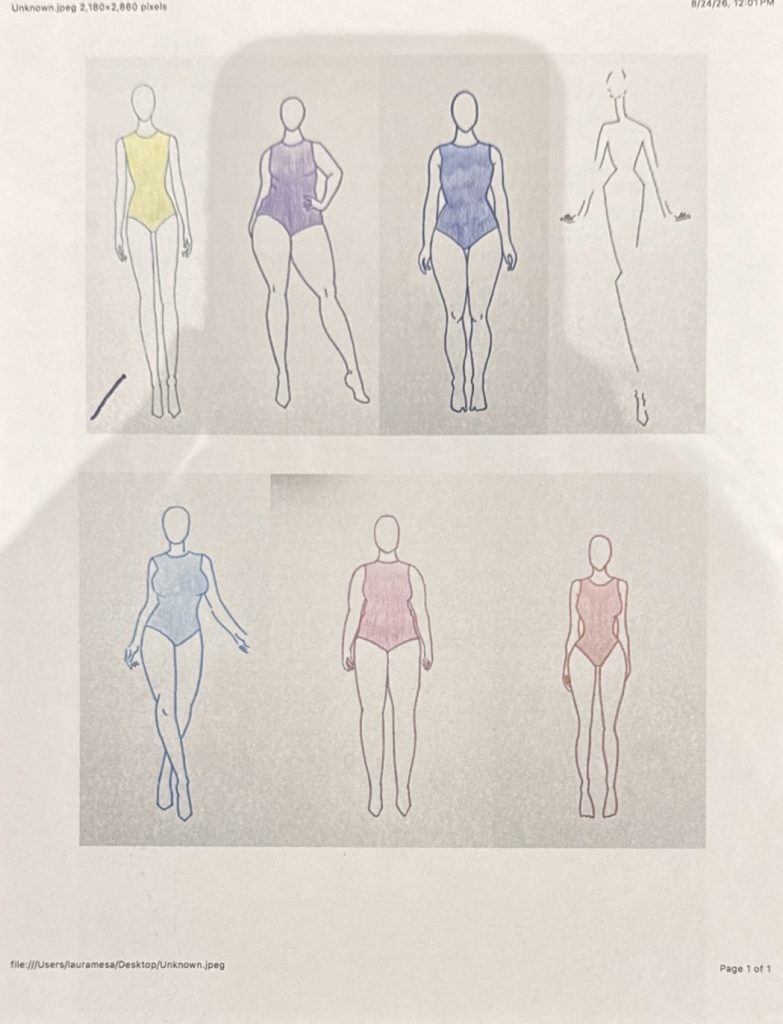
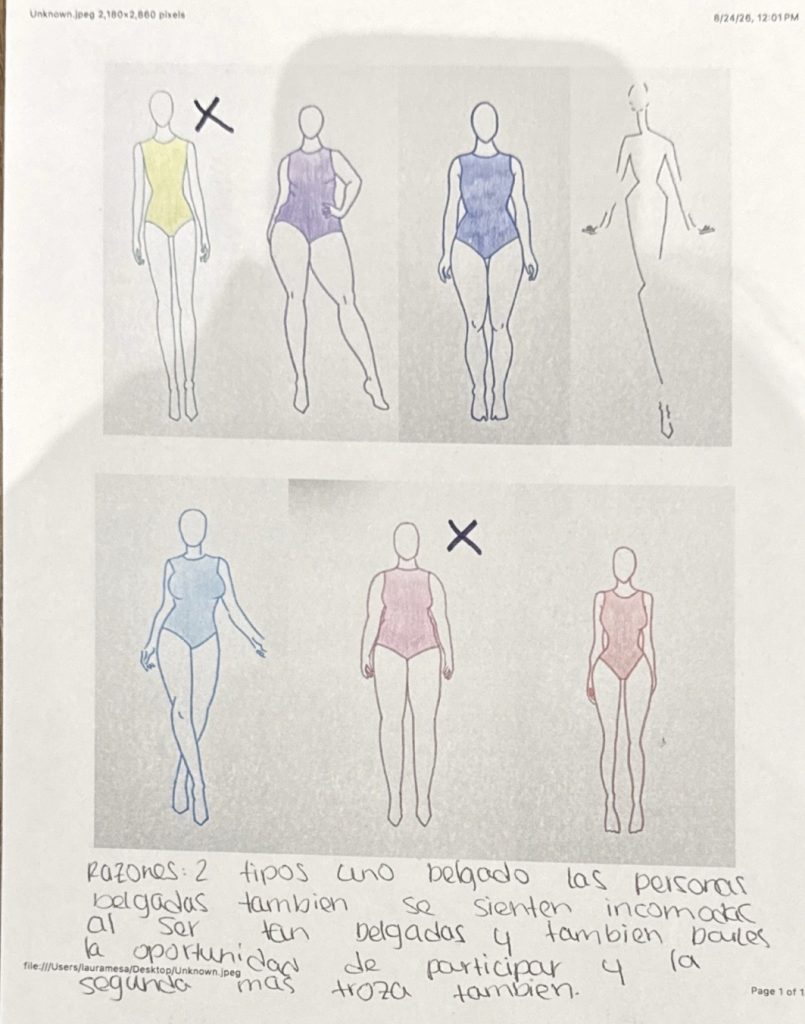
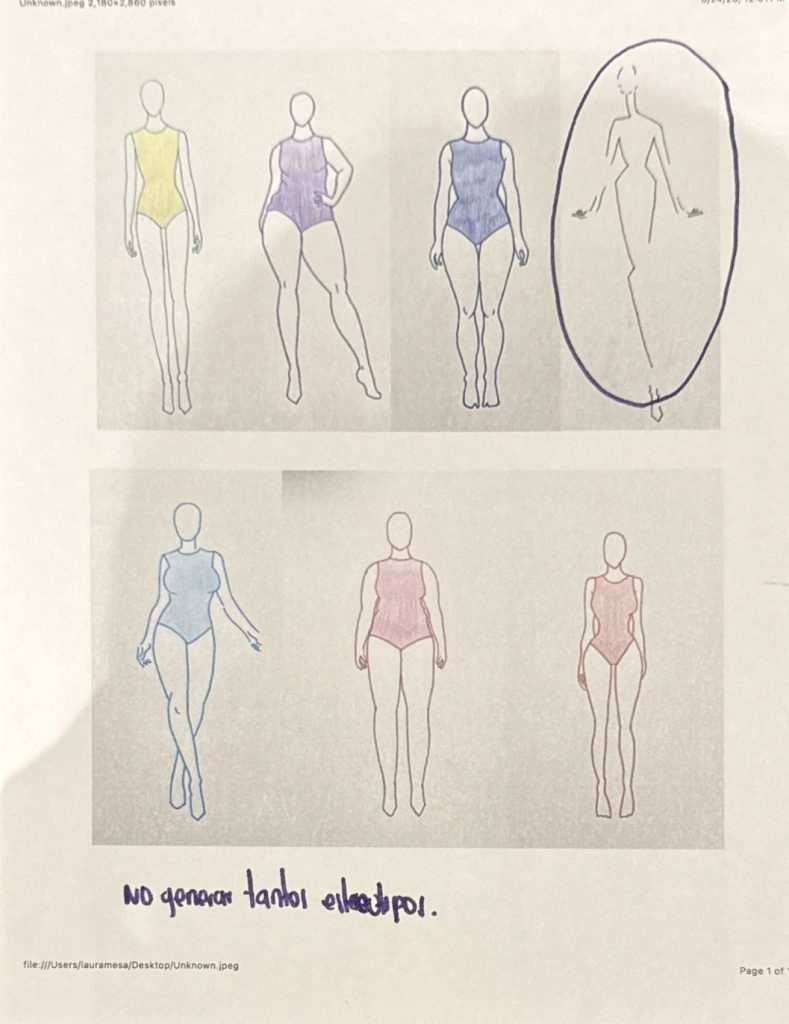
    This was what she sent me once she was done and I think that in a design format they are really well done I am not really questioning her abilities as a designer but I really wanted to see her interpretations as a designer to the fact that I asked her to create different bodies than the ones she had used previously but she kept them somewhat in the same proportions because they are all the same height she made some of their proportions different but this are not what I would consider real bodies this are still very much fashion design circuses that one could use. I really found it interesting that in every single one of them she included the color bones when in reality you cannot see everyones color bones which is very unrealistic and she included the long legs on all of them there where no proportions of some other being shorter and taller which is part of the general population. which I found very interesting and she described this as a very hard task and it took her some time to figure out how to do it which makes me think about the fact that the fashion industry is so closed that there it is almost unimaginable to do something different. This is something that I can connect to my conversation with a classmate from another course at central saint martins when I was speaking to her and showing her what I was working on she told me that one of the silhouettes in a previous activity I had done was the right one and when I asked her why she just said that it was what the industry expected and that was just what was done. then also with the field study I did in the mall in Medellin where there were 21 participants and where 7 chose two of the smallest and most unrealistic silhouettes even though in some of them they had other options as well.

    (It is the best one to show designs without prototypes or something)
    (Now that they must be agile because every day they must create new designs and his is the fastest way to create body image drawing with more agility and faster)

    This person was in a hurry, so she just answered with a check in the one she found more appropriate.
    (Reasons: 2 types, one that is slimmer and slimmer people also feel uncomfortable with being so thin, and they also need the opportunity to participate as well as the thicker one)
    (They have more liberty without noticing the body of the person)
    (Does not generate so many stereotypes)

    This were all the people that chose this type of silhouette that is more unrealistic and the least representative of the female population it is similar to the ones Paulina uses actually the one from the right hand corner was one that she had given me previously that she had worked on for her book.

    One of the main points that they brought up was the fact that they should use one of this since it has less stereotypes come from it which is really interesting. Secondly there is the fact that they think that it makes it easier for the designers to work and one person thought that it was important for there to be representation for thinner bodies as well since at times in Colombia there are designs or clothing that is not made for them since women in Colombia are expected to have more volume in their body.

    I connect both of this interventions because it if as if it was a given that the industry needs to work like this to make it more efficient however it makes me think about how we expect there to be change if we are only looking at the efficiency side we also need to look at inclusion which is something a lot of my participants think there is lacking in this different spaces.

    I was really grateful that she did this for me as a designer since I know she is super busy with her personal and profession projects however it leaves me thinking about what else can be done in order to change this rules that are in designers and general publics brain that in order for it to be used in fashion it needs to be small and thin and even unrealistic.

  • Research Question Journey

    My research question is one I have played with and seen in many different formats. I think that it is important that I make a blog post looking at all of this and the way, because I have been through a journey in my master’s, and I think it is very important that I look at it and see the growth but also the struggles along the way that came from this. One of the important things that I should note is the fact that when I first started my project, I was looking directly at people who were suffering through eating disorders because that was something I had gone through in the past. 

    How can I bring awareness through a platform where people suffering from body image struggles feel safe and have a form of expression? (May)

    How can better knowledge or education about the history of eating disorders and body image thin culture help people feel safer in their bodies? (July)

    How can I collaborate with creatives and people who have lived body image struggles to create an artifact or event that raises awareness of body image pressure? (August/September)
    How can collaborations between creatives and people with lived experience of body image pressure shift how audiences in Colombia perceive body diversity? (September)

    How can visual media of female body image pressure shift how audiences in Colombia perceive body diversity? (October)

    How can visual media of female body image pressure shift how audiences in Colombia perceive body diversity? (October – Current Question)
    This was a really long process to get to this question, and I know it might change even until the end of the course; however, this is what I think will be my final question so far. When I first started I wanted to do something about eating disorders however as I started working on the project more and more there was the large issue of the fact that there were not a lot of participants that were actually willing to talk to me and that would back out at the last minute because they did not want to be a part of it which is completely fine but `I think that the fact that I was presenting it as research about eating disorders might have made people feel scared however when I changed the wording and started saying that I was going to be doing this about body image there were more people who wanted to be involved and willing to participate which is why I made the change to talk about body image. 

    The other large change that you can see in the questions is the fact that I had phrased my question as a ” How can ” question, which my tutor told me was immediately a problem and needed changing because something that he keeps reminding me of is the fact that my research is not about me and I need to stay objective, which is hard because, if I think about it, if I were not one of the researchers, I would be a part of the stakeholder group. This led me to change the question into a how-can question instead, which I find very important to look at and analyze as a whole. 

    However the last change came about one day while we were in class where I was discussing my questions with one of my classmates and I discovered that there were ways in which I could make it even shorter which was very important for me to achieve and the thing is that I wanted it to be more concise and my tutor approved this and I was asking the same question I was just making it shorter however there was one thing that I had not thought of which my tutor made me think about and analyze further and it was the fact that I did not have the word women in my question or female and this was an important part of it because we can’t assume anything when it comes to research we have to make it clear and there are a couple of things that are important to note about my research the first one is the fact that I am doing it about women however it is something that anyone might be able to see and this is very important to note because I have to make sure that I am being clear and also when I am speaking to stake holders it is really important that I give them all of the information in order for it to be run as ethically as possible.