Category: Critical Analysis of Current knowledge

  • Body Image and the Patriarchy

    This is a podcast by Dr. Lindsay Kite, author of the book Beauty Redefined. She is a very accomplished woman with a PhD in female body image, and she works to help women reject being treated or viewed as objects and reconnect with their own bodies. In this podcast one of the main things that are talked about is how as women we grow up with images and are told to treat our bodies as objects which leads to self objecification which lead to them looking from the outside and only caring about looks, this is something that starts happening from the age of 5 and 6 because of the society or the social construct we are around this is something that makes people feel less than others or as not good enough not just fiscally but also in their humanity as people and personalities and who they are at their core.

    There is also the talk of the “Split” from the human bodies, which is something that starts after childhood, when we are always in our bodies, and it’s because we use it as a tool in running, playing, and swimming without thinking about how we look while doing all of the different activities. After a while, and from the social world we live in, there starts to be objectification, and this leads to them feeling as if they are something to change or fix and need to reach perfection, which is not realistic, and this is something that has been seen by the media, as well as what adults say and the social norms we live by. 

    A personal exhale she shared is how she was a competitive swimmer and loved it as a child but when she was in high school she became very self concious and ended up quitting because she felt a fear of being judged and seen differently by the boys because of how she looked in a swimsuit and this lead to her starting to hate the sport and stop enjoying it, This is something that is seen in a lot of young girls because they decide to hide instead of participating. 

    It is not just men but also women who are enforcing the different beauty standards, as women at times we start to internalize the patriarchy and the beauty standers that are set because women are taught from a young age that beauty is power and they also start to see each other as competition for male approval and also women trying to protect mean and boys from being tempted by the female body. Which means women criticizing each other feeds into the same system. 

    There are many comments made to women and girls which hit them in very emotional ways and it is important to understand it, first of girls are raised to think that are only worth what they look like and it is different for boys because they are praised more by their actions and what they are able to do while girls are only looked at by their appearances and this changes the different gender identities as a whole.

    It is important to know that when people just compliment female bodies, we are more than just our bodies; they are tools to get through life. It is not just about self-confidence and loving what we look like, but about getting back to experiencing life in our bodies. 

  • NAAFA

    https://www.instagram.com/naafaofficial

    https://en.wikipedia.org/wiki/Fat_acceptance_movement#:~:text=Critics%20say%20NAAFA%2C%20which%20opposes,same%20rights%20as%20everyone%20else.

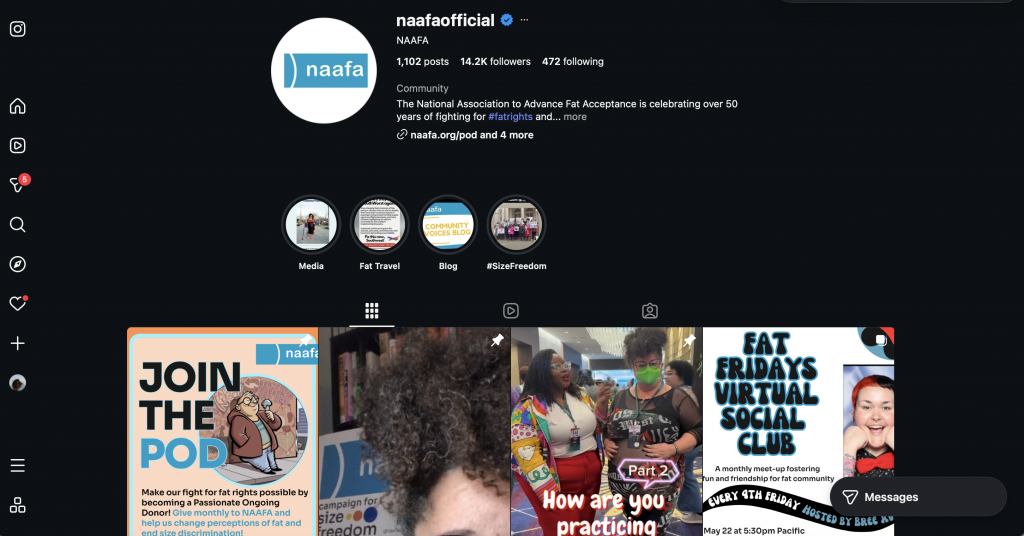
    NAAFA is the National Association to Advance Fat Acceptance, and I plan to reach out to them because of their focus on promoting acceptance of different body types and equity for all, no matter what. There is a lot of criticism when it comes to them because they do not agree with dieting and weight loss surgery, and people believe that this means that people will not change their habits if they have unhealthy habits, and it enables, but they also have some solid arguments when it comes to loving one’s own body.

  • “The really old, racist and non-medical origins of the BMI”

    https://www.abc.net.au/news/2022-01-02/the-problem-with-the-body-mass-index-bmi/100728416

    People calculate BMI using a simple formula: weight in kilograms divided by height in meters. It puts you in specific body-mass categories. 

    The categories are very black-and-white. If you are underweight, if you are less than 18.5, you are normal weight if you are 18.5-24.9, and you are considered obese if you are higher than 30. People believe it is simple, but in reality, it makes the subject simple and creates very radical feelings. 

    The BMI scale was developed in the 1830s by the Belgian mathematician Adolphe Quetelet, who was not a medical professional. What is really interesting and funny is that this was never his goal for BMI to become such a relevant thing, but to find the weight and height of the average man, whatever that means; it was never about health or a measure of it. This was a measure in which only Western European men participated. In the 1970s, Ancel Keys proposed it as a way to study obesity, and the study was conducted only on men. 

    There are many flaws with BMI. First of all, we can see how it works when applied to a large group, but it is not to be used for individual health assessments. Another difference is that there is no distinction or further investigation of muscle, fat, and bone, which is why athletes mostly score as overweight; it is mostly muscle weight. There is also no breakdown by ethnicity, age, or gender. There is the fact that healthy BMIs differ across groups and populations. It is very interesting to look at the fact that there are people with a high BMI who are considered healthy, but others who have a normal BMI who suffer from several health issues because of this. 

    There are some medical and emotional consequences when it comes to this and one of the main things that happens is that it can cause it might cause shame and stigma, some people avoid medical care because at times they feel that doctors are only focused on their weight, the high weight stigma causes people to get discouraged and accept that they can not gee a healthier body and finally BMI become a tool for judgment instead of something that actually helps. 

    BMI is still used for several reasons, two thirds of people in Australia are considered overweight or obese by the use of BMI alone, the reason why it is still used is because it is really easy to use it takes limited costs and it is easy to measure, it is really useful when doing large scale reaserch for example it helped at the time when COVID 19 vaccines were hard to get to sort out individuals who could be considered high risk and experts believe it can be used but not alone there needs to be more context when it comes to measuring bodies. 

    There are better alternatives they could use in this sense, such as measuring the waist, which can help better assess health risks and the risks they entail. Women with high waist measurements have increased medical risks, and one fact that some people don’t realize is that the fat in your abdomen is more dangerous than in every other part of the body. 

    There are different situations that doctors suggest doing, and one of them is focusing more on behaviors and habits, and not just weight, and also looking more at habit building can have more of a difference than losing weight. 

  • Galeries Bartoux

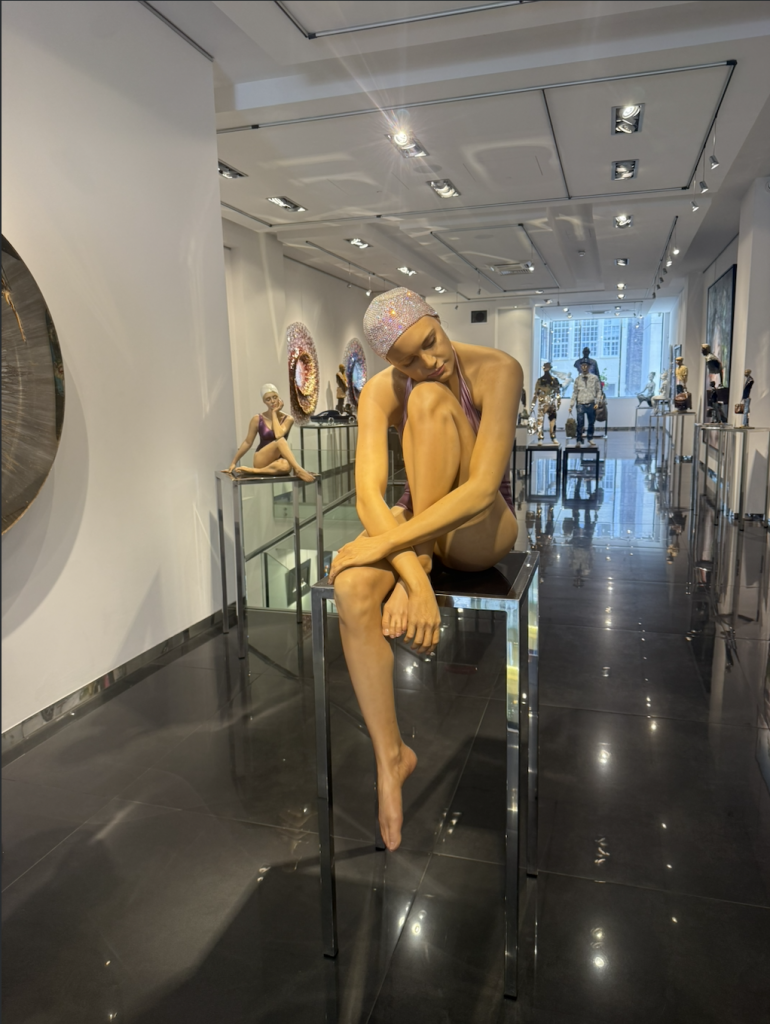
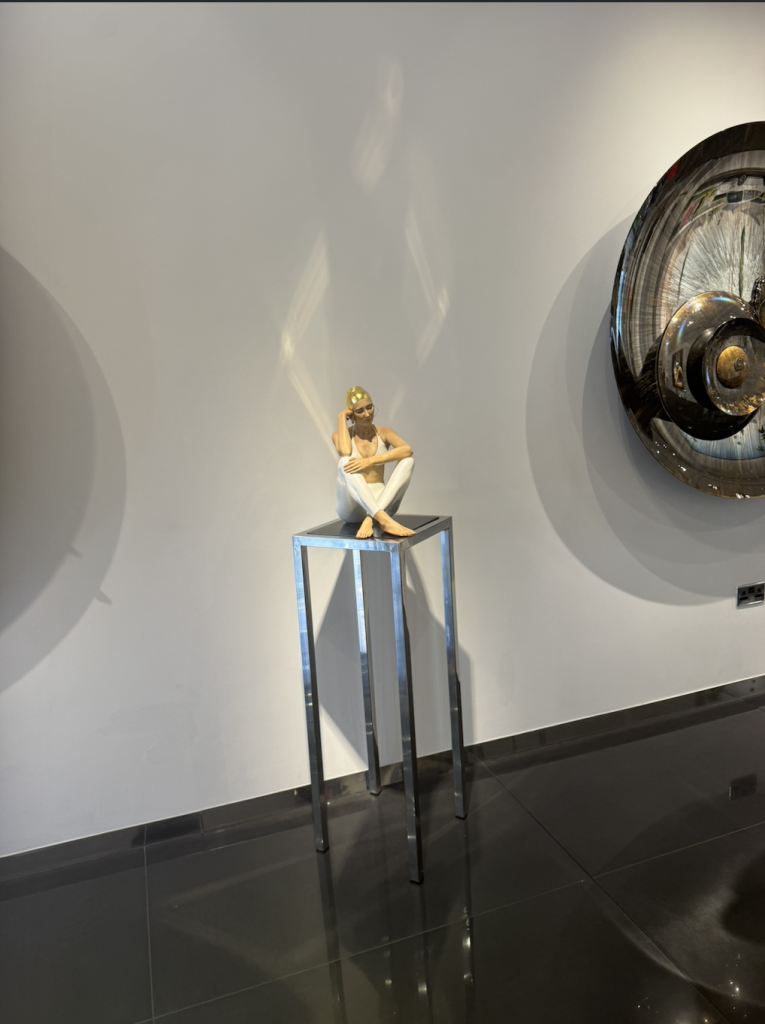
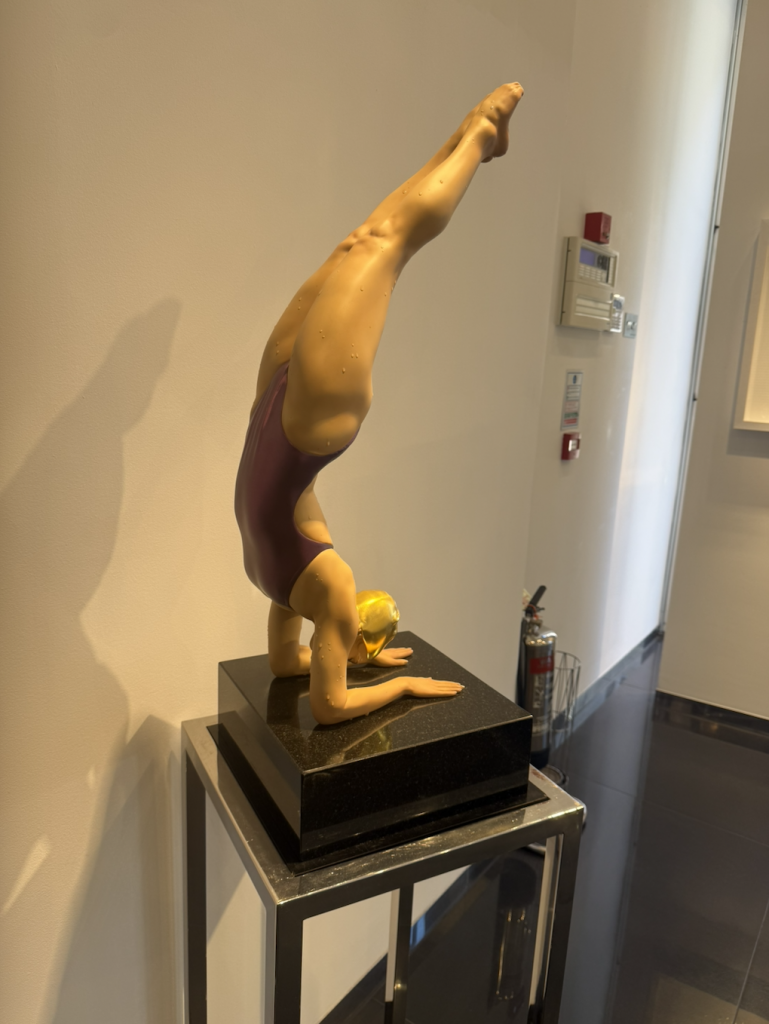
    I was walking through London one afternoon and wandered into a gallery called Galeries Bartoux. I was very intrigued because they had several pieces that embodied the female body in different forms. The collection I was most interested in was a set of three sculptures, because I felt it embodied the form of a body during sport, showing it in different dimensions, such as when she was resting and when she was exercising. I thought this was interesting, as women as subject matter in art can be beautiful, but it can also become complicated. I think it might be worth it for me to go again and look at them more closely, as well as the art that surrounds them, which might be correlated to the female physique when it is active. I also found it interesting that they are showing women as athletes, not just as static objects, as sometimes happens.

  • Laura Tobón

    https://www.infobae.com/colombia/2023/11/06/laura-tobon-dedico-un-mensaje-a-quienes-la-siguen-en-redes-sociales-que-se-comparen-conmigo-no-es-realista

    Laura Tobón is a revered and very well-known personality and model in Colombia. She is one of the most well-known internationally and is also known because of her work on TV networks. In a recent social media post, she says it is not realistic for young girls to compare themselves to her and that they should not feel pressured to look like her. She said people should not compare themselves to her because being a public figure is her full-time job, and if it is not your full-time job, you should not have the same expectations she has. She expressed that she would have liked to see a video or message on her social media, because people only show a perfect life at different times. She says there are many comparisons on social media, which make many people feel different kinds of insecurities and make them feel smaller or as if they are not worth it. She expresses that social media is a small piece of reality and creates expectations that are unsustainable for others. People who are content creators have a whole team that helps them with aesthetics, and this happens mostly on a daily basis. This is not the reality for most people. She says people should not aspire to this because it is her job, and if it is not your job, it is not realistic to consider it real life. This shows the expectations people have and how comparisons and the social media world have created great controversy, and even this video she posted created a great deal of controversy.


  • “Gender, eating habits and body practices in Medellin Colombia”

    https://tma.socsci.uva.nl/23_2/ochoa.pdf

    This journal speaks about Medellín, Colombia, and how bodies are viewed and seen differently, and it was written by Ana María Ochoa. There is an ideal of western body types of being in a thin body and it happens more in the richer parts of the country however even though there is a change in how people view the world and it is seen in a more global perspective there are still different standards in different countries, this has lead to there being a lot of problems in how young women see their bodies and in their health especially when it comes to countries in Latin America were the ideal has started to change into the idea of being as thin as possible. This is thought to be happening because of the way bodies are understood in the United States and Europe, and the body images seen there. In Medellín, this is considered the ideal body, and it is valued; people depend on it for their sense of self-worth as persons. However, the controversy is that curves are also valued and important, which leads to extreme practices among many girls in Medellín. In this article, they discuss treason and why it occurs, including factors such as political and gender inequality and community pressure in this city. 

    The main people who suffer from pressure are mostly adolescents, and the ideas are shared in similar ways all over the world, especially in Western society. The way this is sent into the world shapes the exercise and eating habits girls adopt. In Colombia, it is assumed that the pressure that young girls feel is because of American and European beauty standards, and that is why they want to achieve extreme thinness. This might be somewhat true; there is more to it in the background, such as political and gender norms. Body dissatisfaction is most common in richer countries, especially in Western societies. Girls want to achieve extreme thinness, and boys want to appear extremely masculine. Studies have shown that there has been an increase in eating disorders in countries such as Japan, Malaysia, and China, and there have been similar studies done in Fiji, where being fat is seen as a positive result of love and support. Studies have shown that women who start to see the Western media have higher levels of body dissatisfaction. There is also a shift toward a more Western way of life in countries such as Iran and Tunisia. However, things are seen differently in different countries, such as the fact that Hong Kong anorexics do not believe that it is because of fat shaming but because of the suffering they get through bloating and having little to no appetite. In places like San Andres and Belize, it is very uncommon for people to strive for extreme thinness; their ideal body is the Coca-Cola-shaped body. Eating disorders and their symptoms differ across cultural settings. 

    Being thin is often considered the ideal for girls, as it signifies beauty, health, success, and self-control. Something that is very surprising is that girls in Latin America have a higher level of body dissatisfaction than girls in the European country of Spain. This is mostly based on the media and the idea that what is considered attractive is normal and should be easily achievable. 

    Colombia, as a country, has very specific beauty standards; women in Colombia are expected not just to be thin but also curvy, meaning large breasts, a flat stomach, and thick hips. There is also a lot of value placed on people with European features, such as light hair, light eyes, and being tall. This is not the reality of most women in Colombia, which leads to girls being very critical and feeling severely insufficient in their bodies. 

    Ana Maria Ochoa conducted research on high school girls in Medellín between 1999 and 2000 to better understand how they viewed their bodies and body image. The way she conducted this investigation was through interviews, focus groups, observations, and the stories the girls shared. There was a range: some girls did not care much about their appearance, while others were very focused on dieting and losing weight. A common belief among some of them was that having what was considered the right body would make them more worthy and better accepted by society, especially if they were more attractive to boys. 

    Medellín is considered the fashion capital of Colombia, and beauty, modeling, and appearance are highly valued in society. There has been a shift in traditional family and social values driven by social media and modernization, making society even more focused on appearance, status, and competition, so most girls feel even more pressure as young girls. 

    Medellin and Colombia have a strong culture of modeling, celebrities, and beauty queens, which influences girls in Medellin. Many girls compare themselves to these figures whose job it is to look this way, and they feel as if they don’t look similar enough. According to the girls who were interviewed, they believed that men have a preference for women who are thin but still have curves, and these are considered perfect bodies. This leads to girls feeling pressured to complete diets, exercise, and change their natural body shapes in order to gain social approval and the male gaze. 

    Many of the girls who took part in this research followed unhealthy diets to lose weight; some skipped meals and ate only certain foods they considered healthy, such as fruit, and counted calories very obsessively. For a lot of the girls, eating less became a form of discipline and self-control, and on the other hand, eating too much made them feel weak or guilty. These extreme habits caused several health concerns and physical effects, such as dizziness, headaches, stomach discomfort, and an obsession with food. 

    The only reason why people feel this pressure is not only from the media but also from family, friends, and teachers. Some girls were insulted by their brothers, mothers, and classmates. Mothers want their daughters to look as perfect as possible and comment on their daughters’ bodies to try to improve their appearance. They also saw how men mostly treated and judged women because of the way they look, but men feel less pressure and are less critiqued. 

    Excessive is another method used to achieve the dream body. The belief that they needed to be thin while still having muscle led girls to spend hours at the gym, scared of gaining weight or looking flabby. Excessive is not just about health in Colombia, but about being accepted by society and following the status quo. 

    There is also a very large culture when it comes to plastic surgery, and it is accepted in Medellin, with the most common being breast implants and liposuction in order to have the perfect bodies, which is seen as normal. Surgeries are planned by girls at a very young age, and sometimes they are gifts from parents for important birthdays. Even though it has the nickname of “Silicon City”.

    There are a lot of girls with lower socioeconomic status (SES), who are also considered, who come from poorer backgrounds and have a different or lower economic position. When people are attractive, they think it will help them get better partners, jobs, and a better life in general. Most of these girls from lower economic backgrounds sometimes face a lot of backlash because of where they live, which forces them to look well-presented and always as perfect as possible, as part of survival. 

    There is also a Narco-Asthetic culture because of the drug trafficking history in Medellin, which has had an influence on the different beauty standards. One can see a high value placed on curves and cosmetic surgery, as well as a way of life that emphasizes being very showy in what you do and what you own. The television and the media glamorize this lifestyle, leading young girls to believe they need to reach this level to achieve success and security. 

    In Colombia, there are beauty vs. Beauty contradictions: it is a message that comes from both sides of society.: Health is very important to stay healthy,, but there is also the extreme pressure to stay thin and look attractive. This leads to a lot of girls taking part in unhealthy diets and having different surgeries in order to get to this level, and this really leads to this contradiction that you have to be healthy but thin at the same time.

    In this article, at the end, we see that there is a social construct in Medellin, influenced by the media, gender expectations, and inequality, that ties together in the culture and exposes young girls to an impossible beauty standard. There are some girls who are able to deal with this and can deal with the pressure from other girls, who end up with health issues and are not able to deal with it well, resulting in body obsession. Girls who come from a lower socioeconomic background don’t feel that it is just about appearance, but it is about being accepted by different levels of society. 
  • American Psycho “Modeling Industry”

    Lisa Rinna, a very well-known actress in LA, is also recognized for her work in reality TV and her openness about her daughter’s struggles with food and anorexia. She took part in an episode of American Horror Story called “Tapeworm,” where she played a model agent who acts as a mentor to a young girl desperate to enter the modeling industry. Her agenda is to get the young girl to change her body type and appearance, insisting she achieve the “perfect” body required to succeed in this industry. This leads the girl to go to extreme measures, such as using a substance similar to Ozempic, even though she was not medically in need of it. Later, when that stopped having its seemingly magical effect, she started to take tapeworms as pills, allowing them to consume the food she was eating, which led to various health problems. Although she was doing everything “right” according to her own standards, she was still not attaining the expected body type naturally and resorted to other methods. This was almost expected, as she learned about a doctor who could help her from another model seeking to lose weight. He continued suggesting these outrageous ideas, and the model agent was aware of how the girl was achieving this level of thinness.

  • History of Eating Disorders

    Eating disorders are not new, but the change in vocabulary and how we understand them have evolved over the years. 

    The history of eating disorders goes back to the 12th century. It is not something that started now with people’s obsessions with social media and their bodies.

    The first time that we are able to look or observe eating disorders was in the 12th and 13th centuries, when people started to use starvation as a sacrifice to God. This was because of the belief in religious starvation, and this made starvation become something that was glorified or something that was considered selfless.

    In the year 1689, Richard Morton is described as the first example of the symptoms of anorexia nervosa. This was something that started to be seen because medicine and science evolved, and eating habits started to be seen in a more medical way, and this affected the way the illness of anorexia nervosa was seen, when this was seen as a form of religious practice it was seen as a choice made by specific people and from the medical point of view it started to be considered an illness. He named it or noted it as a “nervous consumption”.

    In the early 1900s, they were considered or were thought to be endocrine disorders, and this was because the medical field started to explore eating disorders more thoroughly, and they thought it came from the endocrine system. They wanted to find a medical and logical reasoning because of this, and they tried different forms to fix it, such as prescribing pituitary hormones in order to get this treated. This is definitely something that affects eating disorders, but it is also deeply psychological, and it is no longer considered the main reason why this happens. 

    In the 20th century, the way that they approached these disorders was through parentectomy, and this is when children are removed from their parents. This was something that was considered useful at the time because the thought process at the time was that eating disorders were the parents’ fault, and they had caused them. However, this was a limiting belief, and it created great pain to the children suffering from this as well as to the parents who received all of the blame.

    In 1903, Dr. Pierre Janet started to see bulimic behaviors in some of her patients, and this led to eating disorders and gave them a new light as a form of behavior, not just medical.

    In the 1930s to 1940s, eating disorders started to be understood as psychological conditions. This was the moment in which they stopped being seen as something that was purely in the body, but that it had a mental aspect, and they started to become part of the mental health spectrum, which led to treatment being much more focused on behavioral and psychological treatment. This was considered a better approach because it focused on the root cause. This completely changed the way this disease was viewed and how it could or should be approached.

    In 1959, there was the first conversation about binge eating disorders because before this year, people thought that eating disorders were just anorexia, which was not eating food and extreme thinness, as well as bulimia, which consisted of throwing up or the use of laxatives. Binge eating was something that came at this time; even though it was something that had existed before, it was thought that this was just a part of bulimia, and it took years for people to realize that it was its own type of disorder.

    In 1973, Hilde Burch published a book that examined case studies of eating disorders, noting that this field had started in psychology and was beginning to explore different treatments that might be needed. He shared very specific details about people struggling with these disorders. The book is called “The Golden Cage,” and it really shows the challenges and issues that come with a person suffering from eating disorders. Since the book was published, he has worked with countless patients and has been a source of information for professionals in this specific psychological area.

    In 1980, the DSM added an eating disorder section, which completely changed the way that eating disorders started to be seen and treated, and made people realize how serious they are and the type of care they require. 

    In 1987, Bulimia became its own eating disorder in the DSM, and this was really important because it made sure that people understood that it was a different type of disorder, specifically from Anorexia. This meant that people with these different disorders began to ensure that the approach to diagnosing and treating them was in place.

    In 2013, Binge eating disorder was recognized by the DSM as well, and this is relevant because this is a disorder that is completely different from Bulimia and Anorexia, which are the most commonly known. However, this is the disorder that most people suffer from, and it is extremely hard to deal with for those who suffer from it. This really shows all the different ways in which eating disorders can rage so differently and shows how they may not be seen in different specific ways. 

  • Body Positivity Movement

    https://www.bbc.co.uk/bitesize/articles/z2w7dp3

    This is an article I came across called “From New York to Instagram: The history of the body positivity movement.”

    One of the main things that is seen here is how everyone talks about “love the skin you are in” This is because the body positivity movement is something that has been ongoing for a long time it has also brought along a lot of controversy because a lot of people believe that it promotes people to settle into being obese however people who agree with the movement have said that it is about helping people embrace self acceptance and not letting physical appearance be your entire self worth. Even though this is something we might see a lot of people are not familiar with, it is how the body positivity movement actually started. Tigress Osborn, who works with NAAFA (National Association to Advance Fat Acceptance) in the United States, is the organization that has helped shape the body positivity movement as it is today and how it has evolved worldwide. One thing that they talk about is the fact that every day of one’s life we are reminded that no one’s body is good enough, and this can come from a lot of different sources, even something as simple as a self-depicting text about themselves and their appearance, a diet company showing a new fad diet, a before and after picture of a diet, or an influencer. This is where body positivity comes in, reminding us that our bodies are actually okay and that accepting and loving our bodies is more important than what we look like. It is important that we understand we have to block out the toxic culture that makes us feel hatred for ourselves. This can also be a form of fighting against self-esteem; it is a form of questioning capitalism, patriarchy, fat-phobic, sexist, racist, and ableist (had to look this up). 

    The origins of the body positivity movement trace back to the fat rights movement in 1969. It began when Bill Fabrey, an engineer in New York, was upset by how people mistreated his wife, Joyce, because of her size. After reading an article by Lew Louderback about discrimination against fat people, Fabrey shared it widely. He later formed a supportive group called the National Association to aid fat Americans, now known as NAAFA, which remains central to the cause. On the West Coast, Californian feminists organized their own activism for fat liberation, creating the ‘fat underground.’ Their 1973 fat manifesto demanded equal rights for fat people and opposed the diet industry. As fat activism grew, it drew inspiration from civil rights and other liberation movements, recognizing connections between different types of oppression. However, early fat activism failed to include people of color, mistakenly believing their communities were more accepting, which led to exclusion within the movement.

    This was a movement that continued growing and gaining more force by the time of the 1980s, when there was a lot of enthusiasm when it came to fat liberation and being seen all over the world, one of the greatest ones is the London fat women’s group, which acted in the mid-80s and was active for years. There was different vocabulary because body positivity was not something that existed in the 70s, 80s, and 90s, but there were activists who talked about the diet industry being a scam. By the 90s, it was a huge movement protesting in the White House and having protests in gyms, and also taking part in the San Francisco pride parade, where they talked about loving their bodies, and this made people feel inspired to love their bodies no matter how they looked. 

    There was also a movement that began in the 2000s, in which bodies were presented online in larger formats. This was because of the online idea and how body shame and love were seen or presented. This, however, began in the 90s through chat rooms, which were their form of social media, and created an activist community. Later on, it went through Tumblr, Instagram, and Facebook, as well as hashtags, to build stronger connections. People who were considered fat started to have their own role as them bringing in fat visibility as a form of activism such as the creation of people presenting OOTD showing their own way of moving through life even though there is a other of back lash with this as well. There is also vocabulary such as “fierce fatties” to call themselves more confidently, and new forms of digital companies on social networks, such as websites about self-love, one of which was created in 2012.

    Body positivity became a social media movement and has led to changes like body acceptance, self-love, and more, and it has been used in a number of movements. There are two sides; some people are fitness influencers, and others want people to love their bodies as they are. However, most of the people who talk about this are people who are considered to have imperfect bodies, or who are fat influencers. This, however, has led to a lot of controversy, and it has been said that they are telling people that it is okay to be obese. However, this has become a movement controlled by certain people, and the people who originally started it have lost their voice.