Blog

  • Croquis

    https://www.wearview.co/glossary/croquis

    This is a very important word or concept in the fashion industry: the silhouette of the human body in a flat plane, typically for clothing. This relates to what I did with the bodices and asking people what they thought a designer should use to make or design clothing. The word is used worldwide, but it is the French word for sketch. Designers use it so they don’t have to draw a new body every time they have an idea; it is basically a blank mannequin on paper. This normally looks very simple; however, I keep asking myself: how do they decide what a body is supposed to look like, and why t is there a standard they have to follow?. Tfollow?r day I was speaking with a student from another course and when I showed them the papers that I have described in the past with the different shapes of body a designer should design without me even asking her a question she just looked at the page and said that the one on the far left corner at the top was the correct one and that it was because that was what she was taught as a designer and that just made me think about how the industry was built on this idea of a body looking in a certain way with this conclusion I feel as if people who enter the industry get told a rule book. I think it is really hard for these designers to go against that rulebook. The idea behind this design, or the way it is mostly done more stereotypically, is that the proportions are more elongated and very stylized, which makes them not look real. Normally, a regular person’s proportions are 7 heads tall. Still, this designer draws more like 10, and the extra length normally goes to the legs. This is normally considered an industry default because it is believed to make the clothing look better, which is why designers often go for it. I find a lot of problems with this style and this reality in the sense that there is the world style, and that this is meant to be more style-oriented, which I find very interesting and difficult at the same time because this is so subjective: who decides what is considered more stylish and what is not, and if these are not even real people or the interpretations of one, how can people even be expected to design for real people when this is not even what is in mind. 

    One reason there are fewer critiques of this is that it is used in the idea stage of design. Then, as designs move forward, they become more accurate in proportion and are used for actual manufacturing; they are the clothing and garments. 

    This is a tool designers use to create a good workflow; it helps you put ideas on paper, supports the first sketches, and later becomes a selection process for the best ones and the ones that fit the brand best. (I understand logically that it makes the process easier, but maybe they could have some croquis that could be in different body types that show different representations, maybe doing the same design on the different bodies to show the differences). However, I think there is a science to this being more time-consuming, but it could also mean it is more ethical, and that is also important to consider. 

    One piece of advice they give is to pick one and run with it, but like I said, how is that ethical? I have spoken to a couple of designers, and they have all said there is a correct one to use or an industry standard; some designers even say it makes them look better, and that in school they had more success when they used more stylish models. 

    In the end, I think this piece is missing information or isn’t very critical because I understand this is part of the industry. Still, there are moments when I think some things should be questioned and looked at differently to see how they could change, because this is something that actually should change. 
  • Are Models to Skinny? The debate fashion has been having since 1900

    https://www.theguardian.com/fashion/2015/jan/16/-sp-are-models-too-skinny-the-debate-fashion-has-been-having-since-1900

    • This is an article I found online about models and how they are too small and don’t represent everyone. Research. 
    • Models and their body size have been something that people have been debating for more than a century, and the argument that exists saying that this is something that affects people’s body image is just as old and prevalent. 
    • When the industry took shape, models were called “living mannequins” because they were used as displays in different formats. They were looked at as “animated dolls.” At the time, they were expected to look and act the same, which led to a lot of judgment. “One critic in 1910 described their ‘industrial smiles’” I think this is really hard to judge specifically because this was at a time when women did not have a lot of rights and jobs were very limited, so it was actually a power move that they were able to get this job and make some money for themselves. Hence, I think it is really hard to make these kinds of judgments against these women. However, they took away a lot of their power and autonomy because they were not able to speak unless spoken to, and they would not even have their own identity; their identity would be the one with the name of the dress, which completely stripped them. So while we can’t judge them, we can critique the way they were treated as moving objects. 
    • One of the main things to look at is that in the 1900s, women stopped wearing corsets all the time, and they were all slender. Still, none of them reached the level of extreme thinness we see today, but it started changing rapidly as more people got involved in dance and sport. Looking at the dates, I think it might have been when flappers started to appear and began showing their legs and arms. The same problems we see now were also present back then: “Then as now, both journalists and the public complained that models bore no relation to ordinary women.” This is the same critique we see today, which shows this isn’t just something we see now; it started when the industry gained more visibility and models became more common. 
    • There was also talk about Arjmand, who was publicized as the thinnest model in the world, and people were scared she was going to break from how thin she was; however, this is not something she, as a model, ever liked. She was always on diets to try to gain weight but was always thin. I think we have to look at this closely because people are criticized for being too thin every day. We see it on a daily basis. I am in no way comparing it to the discrimination that people in bigger bodies face because there is no comparison, and being criticized and being discriminated against are very different things, but being extremely thin is something some people cannot control. I have spoken to people who say that they feel as if they are a part of the problem with fat phobia and the media because they are thin, when in reality there is very little they can actually do about this. It is important to understand this, but also to understand that these are not comparable things. 
    • There were also geographical ways to see differences. For example, the fact that in the 1920’s in NYC, the uptown people, which I am guessing are the richest people based on the geography of NYC today, the models were a lot thinner. In contrast, in the southern part of the city, they were more full-figured, and I can even connect this to today because in South American countries, when people are of a lower socioeconomic status, they want to be more full-figured to show they eat and have money for food. Still, people with a higher socioeconomic background often want to be thinner. At the beginning of the use of models, there were a variety of sizes; however, when there started to be more movement and there started to be more standardization, I imagine that this was something that was done as a part of the industry to make things easier for themselves; however, not keeping in mind that they were excluding other people that should be included in conversations and as a part of the industry. 
    • “In Paris, Coco Chanel chose models in her own, slender, image, even fitting the fuller-figured ones with a whale-boned brassiere to flatten their bosoms.” This makes me think about ethics and research because, when she was doing this, she thought of herself as the stakeholder and made the product for herself or the form in which she thought the look should be. Still, research and products should never be only for ourselves. It is really interesting how she even went about changing people’s bodies to make sure that they looked the way she intended the clothing to be worn; however, this goes against one of the main principles that I have been researching, which is that you should not change your body to fit a garment but to change the garment. An example I can show you today is about how people have their “skinny jeans or clothing,” and this is for when they reach their goal, and this is replicating this same idea of changing one’s body to fit into an industry standard. 
    • This was the trend of having models be “boyish form is passé,” which is that the women that looked less developed or did not have a lot of curves were no longer the beauty standard, which shows us how bodies are now trends that need to be followed and are set by the media industry. Even though this was the standard for so long, there was a story in the press where 200 women lost their jobs for being too thin. This makes me think about the expectation that women fit a thin ideal, how they decided to change that, and how it made people unemployable even though they had been doing and looking within past expectations. 
    • The idea of being this thin, even though there is a fact that the media have perpetuated it but in reality it was something that started by certain doctors before the First World War, where they started to promote dieting as a form of being healthier; however, this can also be connected to how the medical industry is fatphobic as well as, in some ways, racist because it was their form of going against people who were not who they considered straight-sized. 
    • There was the idea that being thin meant that you looked younger. However, this is something we might have evolved from, because now it is called a baby face or young face when someone has more volume around their face, which shows this as a difference. 
    • Even though we have said that models’ bodies are part of the problem and what causes people to go through body image struggles, in this article it says that there is not enough scientific data to back this up. However, even if that’s true, many qualitative studies show evidence to the contrary. People looking at this media have become more insecure, and this might not be scientific, but to bring out a lot of data, one book that I can talk about or use as a source is the book “Beauty Sick” by Renee Engeln, PhD, where she speaks about the way beauty standards affect women. She uses anagrams to explain different women’s relationships and how they kept on evolving and being seen in different ways. 
    • The author of this article is actually a professor, or at least was one 10 years ago at CSM. I think it is very interesting that she looks at the history of modeling, how it affects body image, and how it has evolved. I will try to contact her to see if she can be one of my experts. It is very broad and discusses how models have been viewed since the time of mannequins and how they are seen differently today.
    • I think that this is a very interesting article because it looks at the research that is out there very critically, looking at how models started and how it has changed through the time but still has some similarities today, as well as looking at the effect that models have had, but also looking at the forms in which the models are treated, not only looking at it from a critical perspective but trying to understand the industry as a whole. 
  • “The Way Popular Magazine Publications Present ‘the body’ and the Standards they Promote”

    This was a really interesting post by a student at UAL, and I thought it was really interesting to look at someone researching the same thing I am and her take on the subject. What this student does is look at major magazines such as Elle and Vogue and how they have not only in the past but also in the present shown the ideal body image and how this affects different levels, such as standards of identity, mental health, and inclusion.

    This is seen through history: in the early 20th century, there was the idea of white femininity, and this was the beauty ideal and what was shown, which means thin white women, and this is what is in the covers as well as the editorials. In the 1960s-1970s there was the new idea of the supermodel and how they were expected to be super tall and thin and this is relevant because the editor of the magazine vogue at the time Diana Vreeland really promoted Twiggy which shows the new idea and the way that bodies were seen as changing this however had a lot of consequences because there started to be an idea of perfection and this lead to people lowering their self esteem and disordered eating because they started to think they had to look perfect as well (this is not everyones job and should not expect to look like the girls in magazines). In the 2000s, however, there were more conversations about how this could not possibly happen, and magazines began to include a wider range of body sizes and ethnicities. Unlike previous editors of these magazines, Anna Wintour and Edward Enninful wanted more diversity, not just the same girls over and over again.

  • Tutorial with Zuleika July 6th

    In my tutorial this week I got a lot of insightful information that will help me move forward in my project since I had been feeling very stuck in the last couple of weeks and did not know what I was going to do moving forward. One of the first things she mentioned is that she would always go back to the research question in order to understand what it was I wanted to do and accomplish as a whole. I need to actually start completing more work on the interventions even if they are small ones because this is how I am going o make new knowledge.

  • Current Question

    How can visual media of female body image pressure shift how audiences in Colombia perceive body diversity?

  • Bouncing of ideas with a friend

    Earlier this week, I felt a little stuck, and I started a conversation with one of my friends in Colombia, who I also consider one of my stakeholders. She is one of the people who responded to my last intervention. I felt a little defeated and like I didn’t know what to do, so I shared one of my other interventions from before I finished the master’s, and she gave me a couple of ideas I found important to include here. It started with an idea of getting people to speak more vulnerably about their body-image issues and giving them information about where some of those issues might come from. This started as an idea for a card game in the format of “We’re Really Not Strangers” to spark deeper conversations, and this could be an interesting idea to explore. Secondly, she talked about making an artifact in the form of a body and getting different people to interact with it and share how they felt about their bodies, and I also thought this could be something I could implement further as well; these were two of her ideas. These conversations are really helpful because hearing people’s perspectives on what this could end up looking like is really interesting to me. I am going to keep on trying to see what this might end up looking like because I have found this process really hard and also not something I am used to because the expectations and what things have to look like have always been very clear, and having them look in different ways has been very interesting but at the same time challenging for me. 

  • “Fat Pandora” Netflix Original Profiles

    This is one of the most important fat activists in Colombia: Adriana Convers, who created a persona she uses as Fat Pandora. I started following her after she was on a podcast with the organization I have been working with and researching, El Cuerpo que Somos. I found her work on Netflix telling her story, and it was very interesting, so I included it along with a summary of what she says. 

    She says that she was tired of being told that she needed to look a certain way to be accepted and that people normally believe or have a conception that fatness and fashion cannot be friends. She set the goal to show the world the opposite of this belief. She explains that seven years ago, she was tired of feeling excluded from fashion and felt like she didn’t belong. When she saw that there was going to be this new TV show of queer eye she was very excited because this was a TV show she had seen all through her teenage years, and this is a series which at times makes you laugh, but in other moments it makes you feel empathy. She loved how much attitude Jonathan had. She said he wasn’t afraid to show who he was; he wasn’t scared to laugh or speak. He walked in heels and resisted hate with humor and love. This is why he is an icon, she expressed, because he has inspired us to love ourselves as we are. This series shows the importance of tolerance and accepting and embracing each other’s differences. He doesn’t make himself look like a victim; he shows power and voice. She called her blog Fat Pandora because she isn’t afraid of the word fat; for her, it is not an insult. Through her blog and social media, she has created a community of sisterhood and brotherhood built on empathy. She thinks that depression causes more deaths than other illnesses, and she decided to surface her depression and accept herself as she is. She thinks haters are necessary because they keep you humble and grounded. Just like in real life, not everybody is going to like you in the digital world either. What she wants to accomplish with Fat Pandora is for her followers to understand that fashion is for everyone, and that through it we can express ourselves; that fat girls do not need to dress in all black to hide themselves; and that, on the surface, to be happy, you do not have to be a size 2, and if there is no space for you, create it.

    Some of the messages she shares here are interesting and relate to my work because, from the research I have done and the people I have spoken to, one of the main things everyone says is that fat is not a bad word. We can’t take away the stigma from a word if we consider it an insult, and I learned this from Tigress Osborne as well. I reached out to her team but haven’t gotten a response. Still, I have learned a lot from her content and experience, especially in fashion, because I found it interesting that, even as she was growing up and had means, she was able to get clothing that was pretty. She wanted to wear it because she had it custom-made. Still, why are there not enough options in Colombia for there to be more clothing all around for different sizes? She has been trying to create new meaning around the word fat and has honestly created an amazing community. 

  • Book: Pablo Escobar and Colombian Narcoculture – Literature Review

    Giving a bit of context, I hate the fact that I am reading a book with this title and that it is one of the only books I was able to find in the UAL library on Colombian aesthetics, which compelled me to read it specifically, since, from all of my research, the narco-culture is one of the main reasons why the importance of aesthetics exists in Colombia. I, as a Colombian person whose family suffered from the violence and all of the things that Pablo Escobar did, would prefer not to perpetuate information about him; for example, I have never watched a TV show. However, for this study, I needed to look at this book and sections of it so I could see what has been researched and what is missing. 

    INTRODUCTION:

    • The introduction starts by speaking about a picture which was very important and seen in Colombian media of hippopotamuses who were being hunted or exterminated, “…whose only transgression was to be out of place, a species foreign to yet thriving in Colombia”(pg.1). What this is telling me is how there are environments in which certain people or things are not welcome. The animal was part of a project Pablo Escobar ran, where he broke many international laws about flora and fauna. He wanted his house to have animals from all over the globe; this included giraffes, zebras, kangaroos, and many more, but many of them could not survive the climate and other factors in the area, and some were taken to zoos. However, the 4 original Hippos stayed at Hacienda Napoles, where they kept living and reproducing, which created a lot of fear about public safety. 
    • After his death, there started to be more of a stage for him to be portrayed: “What his killers could not imagine was that Escobar’s legacy would change Colombian cultural production in print and on the screen for years to come, promoting the creation of multimedial narcocultura and replicating the narco lifestyle in television, literature, music, architecture, language, fashion, the female beauty ideal, and social rituals, including those associated with death”(pg.3). This is showing the way that even though he died, this gave him a platform. He became even more well known, and Colombia became known for his history. All of the illegal things that he did, including the murders and kidnappings, are still in the light today, and some people are still scared to visit the country even though there has been so much growth in the tourism sector; however, his tombstone is still something people want to see whenever they visit. 
    • There were a lot of different players when it came to the world of Pablo Escobar and the culture that he left behind: “…prepagos (high-end prostitutes), and silicone-enhanced trophy women, it would become a defining feature of the nation’s media landscape” (pg. 3). This shows us that the way that women were portrayed as play toys and something to observe and be changed based on the aesthetics of the time is even upsetting and sad that they are called the names they are called. 
    • Sadly, this has become a selling point. There are thousands of books throughout the entire industry of Colombia from his family members, mistresses, and people who were his accomplices; there is even one, “…Madame Rochy, who claims to have procured the most desirable Colombian women for her wealthy criminal clients”(pg. 4). How is this something to brag about? How is this something to be proud of, and that you openly talk about it was breaking the law and making women into objects to be used by men instead of them being actual people and being treated as such. 
    • There are many reasons why the area of Medellin was so large in the production and market of cocaine, “Of course, there were plenty of reasons Colombians, and particularly paisas, the inhabitants of the Antioquia/Medellin region, quickly took up trafficking in cocaine: their well-known penchant for commerce, the decline of the textile industry in Medellin, and the subsequent economic recession, which increased interest in illicit economies…”(pg. 10). This shows us the reasoning why Medellin specifically ended up being so impacted by the narco culture aswell because it was what they lived off of when the economy started to decline and everything started to change because their economy was based on something that was declining and this had effects on the factthat people needed something else to do they could not just stay waiting for things to change, I dont believe that they took the right path but this explains why Medelin was so important in this context. 
    • In this chapter, there is a lot of context about drug trafficking and the cartel. Still, there was not much relevance to my topic and subject, which is why I did not make notes on all of the chapter but on the points that I considered important and relevant.

    CHAPTER 5: Mad about boobs

    • The chapter in this book that interested me, specifically for Colombian aesthetics and the female body, is “Mad about Boobs” (pg. 166). The idea is that there is no television without having a specific kind of woman’s body: “The truth is that in Colombia there is no television without breasts. Television has brought home the narcotaste, silicone, and the money ethic” (pg.166). This really tells me that there is a stereotype in the Colombian media: a certain body is seen as the norm. It is important to think about the people we admire in this medium; specifically in Colombia, for example, finding influencers who show a different body type has been a struggle, and it’s something I need to look into further. “We the bandits would fall for tits and ass, we used to marry mafia dolls” (pg. 166). Why are they considered mafia dolls when they were the ones who created them? They were told that they needed to look a certain way to have a certain life, and it is so extreme that there are even girls who are television presenters, and doctors ask them if they want any free surgeries or anything in that style. This is something that I also saw in a personal interview with a man in his 70s in Colombia called Julio Toro, who told me that the problems with body image in Colombia started with the doctors wanting to make a fortune and doing it through this.
    • “The iconography of the Escobar brand, of exacerbated visibility and an unlimited power of consumption, presupposes a constraint influx of female groupies whose sheer number and anonymity only shore up the narco’s cachet” (pg. 166). This shows the idea that power, since this was the form of money and power at the time of Pablo Escobar, was to show one could afford the surgeries and not only that but also the idea that the more beautiful and perfect your wife or woman looks, the more powerful you are as a man. 
    • “The epithets attached to these girls – CDT(“carne de traqueto”, loosely translated to narco meat [Colorado Grisales 103]), muñecas (dolls), and prepagos…” (pg.166) This shows me how women were seen as objects. Men almost always surrounded them, and men gave them their names and value. It was all they could do, and this was just the way that the world was. 
    • “…go-betweens responsible for the steady supply of adolescent virgins for the patron, would store ‘fresh meat’ for his entourage in different houses across Medellin” How is this somethignt hat was socially acceptable this young girls were used for their body and were probably not even given a choice there is actually a song that used to play in Colombia called Pablo Escobar which I just thought of where girls were invited to his house and if they said no they were threatened that their entire family was going to get killed and that even if they were dead they would revive them and kill them again. 
    • “While they could afford to buy almost anything, underprivileged (and privileged) youth could join in the fun only if their attractiveness simulated the narcos’ desire and sense of self-worth” (pg. 167). This is where the asthetic and pressure I believe originally comes from because at the time I would asume that it was cool or nice to be one of the women who were sutounded by this men and that they could take them on trips and give them money that nothing else could which leads to the assumption that all of the girls who wanted to be a part of this life were looking at the main girls and trying to replicate their look, “The idealized look included hyperbolic voluptuousness with an exaggerated bosom, which, in accordance with the notions of the postmoder instability of ‘truth’ and ‘reality’, did not need to be authentic. Narcos customarily bankrolled plastic surgeries to create an experience straight from Baywatch, whose richly endowed women were epitomized by Paela Anderson. Soon enough, as Roldan puts it, the narco taste for excess and artificial enhancement spilled over to society as a whole:’Pert models with busting decolletages and reinforced rear ends touting everything from beer to lingerie intrude as constant reminders of the feminine ideal the concaine trade fashioned into a societal norm from plastic surgery’(“Colombia 179”)”(pg. 168) This is really somethign to look at because there si specifically one word that is used which is excess and I can connect this to my reading and research about fat phobia and African body archeotype and what this makes me think is that they are doing the same thing in the assumption that bigger as in breasts and plastic surgery means more consumption which is not necesarily true. Of course, there is more consumption because there is a payment for a specific body size; however, it is a personal choice of an aesthetic which shows an election and a choice. Being a “narco doll,” as they were called earlier, became the norm, and people wanted to fit into and aspire to it because of the trend, even though it wasn’t part of their reality before. 
    • There is more information when it comes to this aesthetic: “…credits the linkage of trophy women and narcos to none other than Pablo Escobar…’He was the super rock star of the day. Anything he did became that big and lavish…very narco aesthetic, which has spilled beyond the drug trafficking milieu, had its origins in the capo: ‘Escobar liked his ladies, and he often liked them ‘operadas’, or [aesthetically] operated…example to follow for those who had the means to do so. Pablo Escobar made [aesthetic surgery] more socially and culturally acceptable…He almost made it unacceptable to not change’” (pg. 168). This shows us the level of power he had. People ended up following his example, and it became the standard. It became so much of a standard that girls who are graduating high school get their breasts done for their graduation presents and get their nice jobs for their 15th birthday. It has become a culture and society so obsessed with fitting into the aesthetic standard that it is scary not to fit into it. There is extreme ostracism for those who do not change themselves; for example, there is the saying to shoot their beak to look better, but never under the idea of health and wellness, but under being embarrassed about looking a certain way with their body. 
    • There is a very famous novel and Telenovela called “Sin tetas no hay paraiso,” which translates to without boobs there is no paradise. When they asked the author what the inspiration for this novela was, this is what came up: “Gustavo Bolívar Moreno recalled his encounter with the fourteen-year-old Catalina, who approached him while he was working in the city of Pereira. She wanted to know how to become an actress so she could afford breast implants from a competent plastic surgeon, which would in turn secure for her a powerful sugar daddy” (pg.169). This shows that people aspired to accomplish this. They wanted to do it, and they thought it would bring them a good life; he wanted to bring to light how bizarre he thought it was and how he could bring it to life. 
    • “…Young Colombian girls who aspire to narco glitz – Even if only as prostitutes with fake breast”(pg. 170). This shows me that there are girls who aspire to be this. There is a large amount of inheritance that we get from narco trafficking and the business in general. Still, I find it sad that this is something young girls aspire to be. I understand that this is not all young girls, and many of them have other aspirations, but the thought that this is all they think they can do with their lives is very sad. 
    • “Tackling in a single story the subjects of underage prostitution, obsession with beauty, and loose morals opened up a can of worms for sin tetas, earning the book enormous popularity and criticism at the same time”(pg. 170). This is a book that got a lot of criticism, and there was the issue that where it was set was seen for a long time as only this, and that is scary because having a place only be represented by one story is ot just sad, but it is almost a prejudice that they have to deal with. 
    • “The venerable Spanish proverb ‘tiran mas dos tetas que dos carretas ’ (loosely translated as ‘A pair of breasts pulls harder than two wagons’) does not fall into Bolivar’s assertion of women’s sexual power, particularly when and if she happens to be well endowed”(pg. 173). This shows how much importance and power are given to women and their appearance. If this is a teaching you have grown up with your entire life, it’s hard not to think your value is in your physical appearance and that if you don’t look a certain way, you won’t get anywhere in life. 
    • “True Catalina’s new breast ensure her luxurious future, but, in satisfying her adolescent dream, she simply transfers her voracious consumer appetite to the next signifier”(pg. 181). This makes me think about young girls who are chasing a weight or a goal, and the second that they reach it, they start thinking that they need to lose more and they are not happy with it, so they are always thinking about what comes next and never truly being happy about what is going on. 
    • “Having grown up accustomed to believing that her enhanced body will guarantee success, the heroine becomes detached from reality and certainly from her roots, alienating her childhood friends and even Marcial with her growing demands”(pg. 181). The same thing I said above applies: this belief or thought becomes a given, and it leads people to focus on aesthetics instead of other things in life that I consider more important. For example, one thing that comes to mind is that when I was having a lot of struggles with my eating, I remember I was sad and thought no one loved me because I was fat, and a close friend asked me if I seriously thought that she was going to like me more or love me more if I was thinner. I answered yes, ashamed, because that is what I thought at the time, and it not only made me sad but also made me realize that my beliefs were very strong and that I had to face them head-on. 
    • “…chauvinistic approach to women and the shameless exploitation of the female body, which has no function other than the decorative, testing the spectators with nudity and female curves”(pg 192). This was a criticism of the TV novel; however, I think it is extremely hard to look at this because I have always been told that we need to understand the past so we don’t keep repeating it. Since the Narco time in Colombia is such a taboo subject and we are not taught about it, we are just told to ignore it and not do the same things; some patterns can grow and lead to different situations, and that is why it is hidden. 
    • Apart from all of the ideas above, there was also a large issue with this new telenovela. It was the new idea that this city only has two things, which are hit men and prostitutes, and to be fair, this is far from the truth, and media such as this only exemplifies and makes information worse when there are heavy subjects. For example, this region is known for coffee production as well as agronomy and textiles, and this TV show made it seem like that was all there was; however, this is something that happens in Colombia a lot, especially when it comes to telenovelas. 
    • I also looked at the biography to find relevant information or sources for the rest of my investigation, and even though there were a few, the book mostly focuses on Pablo Escobar and the effect narco-culture had on Colombia. At some point in the chapter, the information about body image stopped, and it shifted to the author’s moral responsibilities and the characters he portrayed, which left me with very little information in that part. 

    Pobutsky, A.B. (2025) Pablo Escobar and Colombian narcoculture pobutsky, Aldona Bialowas. University of Florida Press. 

  • Interview with “Equilibrio Cambiante” (Marile)

    I came across this organization through social media, but I was able to set up a meeting with one of their lead psychologists to learn about the organization and its process, and it was very helpful. I got her consent to record the video and share it on my student blog. She gave me verbal consent, and you can see it in the video recording I am going to add; however, this interview or meeting took place in Spanish, so I will be taking notes in English on all the important points.

    • She is doing her master’s as well, and her undergrad research was in EDs, so she had to go through the process of making sure everything was done with informed consent and that she understood how it all worked. 
    • I asked her about the process in this investigation and where her interest in this specific subject matter came from; it started when she began her degree in psychology, which is also where her own therapy process began, and she also did her internships with this specific population. 
    • From a young age, she was always in judgment about diet culture as well as wellness and personal; she suffered a lot from fat phobia, and she started to learn about the terminology and the way that there is a direct correlation with ED’s and the behaviors that come with it, and the system of hormonal eating she wanted to learn more about it, and now she is working in helping people in their process through anorexia, bulimia, binge eating disorder, and in general people with a complex relationship with their body and food. (Clearly, she couldn’t talk to me about her specific clients because that would be an ethical breach of confidentiality, and everyone’s identity and experience should be kept private, so she works a lot with women who have suffered through any gender violence, and there is a connection between trauma and ED’s. She also works with people who have some neurodivergence and has seen it more in people who have autism, with the idea of selective foods and that behavior. Still, she is aware that there is a relation between ADHD and forgetting to eat, but also binge eating because they do not know how to read their own internal signals and are not aware of them, so there are times when they forget to eat, go to the restroom, drink water. (This was something I asked about because through my own journey in my treatment center in Spain I was told that there is a strong correlation between my ADHD and my Bulimia as well as the forgetting to eat and not feeling hungry and I was curious to see if this is a hypothesis that they had in Peru where she is working as well and she expresses how there are other ways in which she has seen it. )
    • There aren’t many treatment centers in Peru/Lima because Peru is very centralized around the capital, not other areas. The places that have these services have a lot of cases against them and even some that have been proven; testimonies that are public about violence in those spaces. She would not recommend any of these centers. While completing her degree, they tried to teach her that the treatment for eating disorders is very similar or should be treated differently. 
    • What they do is they are a psychotherapy treatment center, and they center around the context for the conduct of the eating disorder. This is therapy of acceptance and compromise, which works very well with ED’s and body image struggles, and this is a program where there is work with psychiatrists as well as nutrition; it is not just psychological treatment. The family also participates in the process, and there are barriers because at times the family does not want to participate. They don’t feel comfortable going to a psychologist who tells them they have to lose or gain weight; they need to control and manage with food, and it is challenging, but it is what they do, and they have good results and have only been working for one year. 
    • It is still a very closed subject that a lot of people still do not speak about, especially in Medellin. There are a lot of large misconceptions still around eating disorders, and the one she considers the biggest one is that people believe EDs are only about food and eating habits. They are so much deeper than this; in the end, some people have problems with cognition and identity: who am I if I don’t have an eating disorder? Parents sometimes have ideas when they are told that their child is sick that there is no eating disorder because their child eats. Another is that, in their household, they only eat healthy foods (Orthorexia). With some of her friends, she feels that she has disordered eating because she does not fit into any of the boxes, and they say that she eats. They don’t see her as anxious, and it is not necessarily something to do with her size and body; if there is no extreme thinness or the word that she does not like to use, obesity, they are not taken seriously. There are a lot of professionals who think that the only thing that determines if someone has an ED is their BMI, when this has been proven to be false, but this was not even created to measure weight. Still, because someone in statistics developed it and it wasn’t adapted to Latin America, it was only measured in white European men. 
    • She thinks fat phobia comes from racism because a straight-sized white European body is thinner. Still, the enslaved people who came from Africa who got to Latin America had a different body, and this comes from racism and also capitalism and the idea that when we are going into recession there needs to be more simple clothing, such as only sizes. I am going to charge you more when you have a larger body because I have to justify my form of production. Now, with Ozempic and GLP-1s, different doctors are saying that, in the name of health, which is not true, they need to lose weight when investigations are saying that Ozempic and their similar medicines can lead to cancer, but you are not told this. Bariatric surgery and becoming anemic, as well as being people who have higher rates of suicide because they don’t find themselves when they see each other in the mirror; the process of adaptation of your hair falling out and broken nails, and it is romanticized as something you have to go through to drive at looking beautiful and being pretty. 
    • Social understanding and learning are important for conversations about how we relate to bodies, and how young girls are told to tuck in their stomachs and behave around food. Double moral of don’t leave the plate empty because then there is shame around the kids in Africa not having anything to eat, but also the pretty girls are thin. They have to be quiet and pretty, and from a young age there is a double standard of seeing parents and mothers who are always on a diet, also the ones that serve the food but don’t eat, men saying that you have to be thin or no one is going to like you, social media saying that the fat friend who is nice or funny, and the thing girls are the only ones who can have a successful partner. They are doing the fat girls a favor when they are with a cute man. In her own household, there was a lot of fat phobia, and when she was around 11 years old, for her Christmas present she got a subscription to the gym, sports clothing, and at that time she would have loved anything else. The age at which people go through different trends or behaviors around eating habits in Peru has been going down;  now children as young as 11 are affected. Sometimes it is about being thin, or there is a lot of pressure because their bodies are growing and changing. There is discrimination based on gender, as well as homophobia and sexism. Some of the insults include: you look like a boy, you are probably a lesbian because you have small boobs. 
    • I asked her specifically about using design in my project and what she thinks I should do, since I don’t want it to be only my experience. She said first it is about trying to sensitize, and how she was at other centers and did content about psychology surrounding the ED’s. There were a lot of teenagers saying what this is, showing it to their friends, and thinking about who I want to reach because the signals of risk can be seen beforehand, and making people conscious about what it could look like: a commercial campaign and asking questions about what you have felt. A small checklist about if you should ask about getting psychologists help and getting some testimonies and seeing different ones not making it sad and saying how it evolved and how it had different consequences and maybe having a guide for people who are surrounding people with Eds for example a family member, friends, partners and teachers just the people that are around them for them to know how to act and understand instead of judge. 
    • She has been in a process with someone whose partner has an ED, and instead of asking them to get better, try different foods, and try to get better, she asks herself whether this person is willing to accept this. There is not a lot of consciousness around ED; we take it in a very personal way and take it as if they are trying to change something about their body specifically, without knowing what the limits of the help are. She has around 7 clients that she is helping out, and she works with one other psychologist that sees more cases of bulimia and anorexia, and she is more involved with bulimia and binge eating. 
    • There is a lot of pain because, for there to be complete recovery, there needs to be a lot of luck in finding the right treatment, but apart from there not being a lot of services, there is also the fact that there has to be enough money. She thinks that there is the possibility for recovery even though there are some people who say you can never get fully recovered she thinks it is because maybe they have not received the appropriate treatment and the help they need because in the university she had a teacher who taught this and according to her you can never be cured but she thinks this is a myth because this is something that is different to everyone in therapy treatments and not all Eds are the same she says that this does not mean that you will not get the thought that you dont like the way you look but this are thoughts that will show up but recovery is knowing what you want for yourself and what you want in your life and getting close and what is valuable in order to continue and it is similar to suicidal thoughts or tendencies is that there are going to be moments in your life when the idea will show up but the being able to indentify it and not act on it is recovery especially considering that society is still going to be fat phobic and but large pressure on diets and the systems that predate them and that this are systems of oppression and that we can name them but we can’t get out of them but we can sensibility and educate as well as fight against it and being destructive and this is why eating disorders are suggested to look at very different processes and looking at different versions of it. This gives you flexibility to work creatively and think outside the box, and this is very important. 
    • Personally, she feels a lot of pain when someone is interested in being part of the process, but doesn’t have a support system and can’t pay for the entire process. She would like to have thousands of processes at a health care price. It is important to recognize that professionals also get tiered. They can burn out and spend a lot of energy pushing against the structural barriers a person may face. She stopped seeing young adults, and the ED was a part of intra-familial violence. To cover her treatment every week, she sold clothing and desserts with her mother, which shows compromise, and the commitment that all patients have toward the process is important to consider. They decide to get better, and it is difficult because they are getting uncomfortable and going against the voice in their brain and the pattern they are used to. 
    • I verified one last time if it was okay that I added these notes to my blog, and she said it was okay; whatever I needed.
      • One thing that made me think a lot was the fact that I am myself in treatment, and I have never had to worry about how I am paying for it and the effects it might have on my household. Still, it made me think about the impotence that a family member or a parent might have, knowing that this is something that is going on and that they might not have the means to help their family member, and what to do in that respect, as well as a person who wants to get better because this is not something that health insurance covers in most cases and apart from that there are very few people who are equipped to help other so I was thinking about this and how maybe it is even important to have less of a stigma around all of mental health because this is part of the problem as well. 
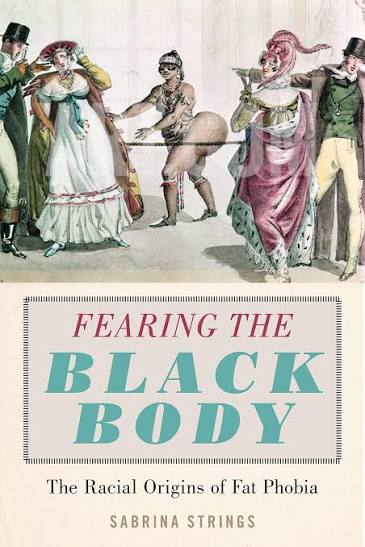
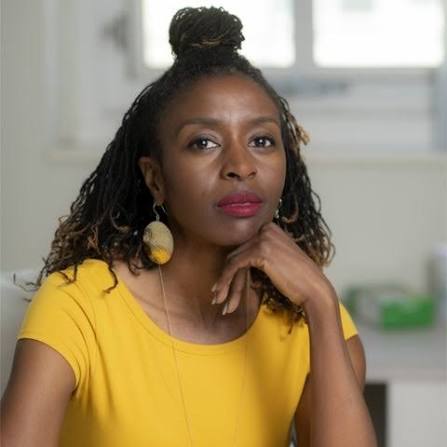
  • Meeting with Sabrina Strings

    I met up with the doctor, Sabrina Strings, for a short meeting. She gave me really good feedback on what I am doing. I also asked if it was okay to write notes about our conversation in my student blog, which my professors, tutors, and classmates can see. I came across her work through manying with Zuelinka, who told me to look at her through other experts, including Osborne and psychologists in South America. 

    The first thing I asked her about was methodology, and she told me to start with Colombia and not focus on all of South and Latin America because it’s too broad a subject. She said her work was obvious because it started with what people considered desirable at different sizes. Then you had to be thin, so she thinks that’s why she started where she did, but she thought it would be harder across all of Latin America, so she decided to start where she is. 

    I explained to her that there are a lot of different places it came from in Colombia. The first one was the economy in Medellín, which was based on the textile industry. One hypothesis is that because textiles were the largest industry, that’s where the economy developed. Secondly, there is Narco trafficking and the idea of what a woman has to look like and what she has to do to fit into society, and this led to a lot of the problems that we have today, with a very large amount of plastic surgery in the city. There are a lot of different contexts because, in some of them, being of a larger size is good because it means you have money to buy food and that you are not hungry, so in that context being thin is considered poor, but this is in communities of lower socioeconomic background; however, when it comes to people who come from a higher socioeconomic background, being thinner is the ideal, and we see this through the use of GLP1s and extreme diets and exercise. (maybe it is because they are less focused on surviving?) 

    She told me that, after hearing this, there are a lot of places I could go with this, with different research opportunities. Instead of trying to connect all of them, she is suggesting I look at each as a separate project; they are different projects, and I shouldn’t worry about everything at once. This means that in my career, I have a lot to do, and she says I should start with the one that is most interesting or important to me right now. I said I am torn between the one on textiles and the one on lower socioeconomic backgrounds vs. higher socioeconomic backgrounds at the time; however, that might change, and I need to sit down and think about my options. 

    I explained to her that I’ve been having a hard time speaking to people and getting them to speak to me, so I have been trying all of them and seeing which one I can actually make happen. She said I shouldn’t leave one idea behind or the one I actually want to work on because I might not be able to access it, and I should really think about what I want to do. (But what if this is not what my stakeholders or my project needs)

    Am I doing what I am doing because it is what really matters and what I want to achieve, or am I just doing it because it is where I am finding the information? She said one downside of her research is that it makes people uncomfortable; for example, she was part of a conference that discussed weight loss as a health endeavor. This is not something a lot of people want to hear. 

    People are sometimes confused that when you try to send a message, it means you are completely opposed to the other one. She told me that her grandmother was part of the Great Migration of Black people and moved from Atlanta, Georgia, to Los Angeles, California. She was suddenly living around a community of people who were light and wanted to be as small as possible, and this was a subject that interested her for the rest of her life until she died in 2000 because this was not something that she ever experienced in the South and the Depression, and this was not a concern at that time. In the South, there are more curvaceous figures in the USA than in the rest of the country. She started out by just thinking that this was weird. On one hand, we are supposed to be feminist and doing everything, but you have to be a certain size, and it made people uncomfortable because she was challenging a lot of assumptions. She told me that it wasn’t until 2019 that people started responding to her research differently.

    She also talks about how a lot of times she is challenging direct pockets because there is money in products for weight loss, for example, pharmaceutical companies. Her current research is that sometimes being on a GLP-1 helps with other illnesses, but other times it causes more illnesses; saying they are healthy is misleading; it depends. 

    A marker for lack of representation started at the end of the pandemic: Ozempic was approved for weight loss, and this changed a lot, and everyone was in a moment where there was more size embrace. Everyone talks about the fact that the cash price for Ozempic in the USA without insurance is 1000 dollars, but this isn’t something everyone can pay; insurance is 25 dollars, and if you are not on the BMI threshold, you won’t get it through insurance. BMI is a problem altogether, and semaglutide companies are accountable for this; however, you could have anorexia and get access to semaglutide because you need the cash. In Colombia, you do not even need a prescription. It’s a lifelong commitment; you are dependent on it for the rest of your life. This is something she thinks I should look like in Colombia because of the hyper obsession with bodies and also looking at social media because it has everything good and bad. One thing to look at is biohacking for wealthy people and figuring out what they should be doing: bio-filtered chemicals to ingest and tracking performance through an Oura ring—an industry on optimization. 

    The final feedback she gave me was not to feel discouraged when I hit a roadblock; think of them as different projects, not all together, and everything leads to something else; just keep going when I hit the hard times.