For this intervention I decided to work with a focus group or a group circle where I was able to get the people thinking about different subjects when it comes to body image today and have them feed of each other as well as seeing different perspectives, I decided to have it be people who are parents and have had several young girls in their lives and between all of them I was able to grab an older woman in her 80s and even though she was never a mother she helped raise her nieces from a very young age and they consider her like a mother. I was able to speak to two fathers, one of them being in a more mature age and having had two granddaughters as well, and him being heavily involved in their lives. Afterward, I gathered three mothers’ perspectives on my questions; however, this was a workshop I did in Spanish because the participants do not speak English, so that I will be teaching the original documents as well as the English translations to the best of my abilities. I had them all sign a consent form stating they were okay with answering the questions in Spanish, and I will also attach a picture of the document with all their signatures. This was supposed to take place on August 8. Still, some people in this group couldn’t make it, but asked if they could participate or answer the questions the day before, and I let them since it was important to them and they thought it was important to look at the subject through different lenses.
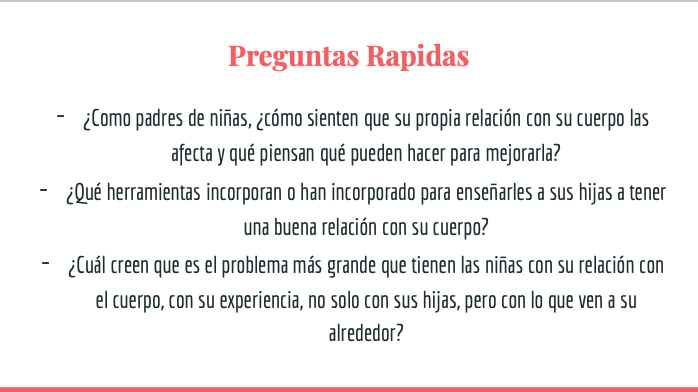
These were the questions they were asked to answer, and they talked through them internally, with answers shared discreetly.
- The first question is: as a parent to girls, how do you feel your own relationship with your bodies affects them, and how do you feel you could improve this?
- What tools have you used or started using to help your daughters build a good relationship with their bodies?
- What do you think is the biggest problem that girls have when it comes to their relationship with their bodies? With your experience, not just your daughter, how do you see it around you?
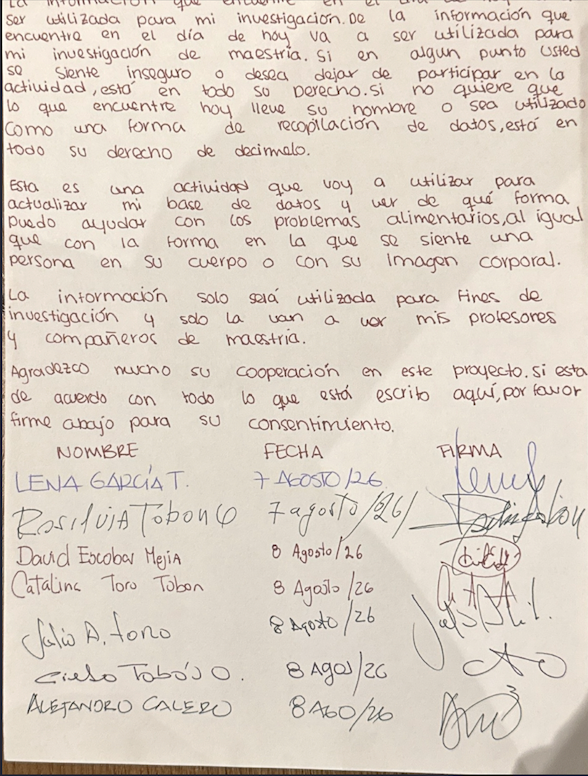
- TRANSLATION –
I will use the information I find today for my master’s investigations. If at any point you feel unsafe or insecure, or you decide to stop participating in the activity, you have every right to tell me not to use what I find today as data now.
I’m using this activity to update my database and see how I can help people who are struggling with food, as well as how people feel about their bodies and body image.
I will use this information for research and share it with my professors and classmates in my master’s program.
I really appreciate your cooperation in this project. If you agree with all that is written here, please sign below to give your consent.
- DAVID ESCOBAR –
He is a man in his mid-forties and has lived in Colombia his entire life. He is a father to two young girls; one is 14, and the other is 8. He was very inspiring and gave detailed answers.
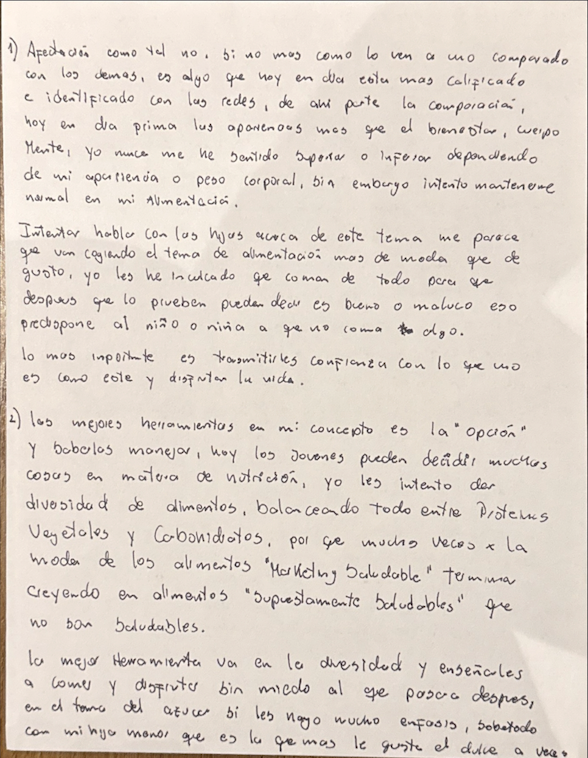
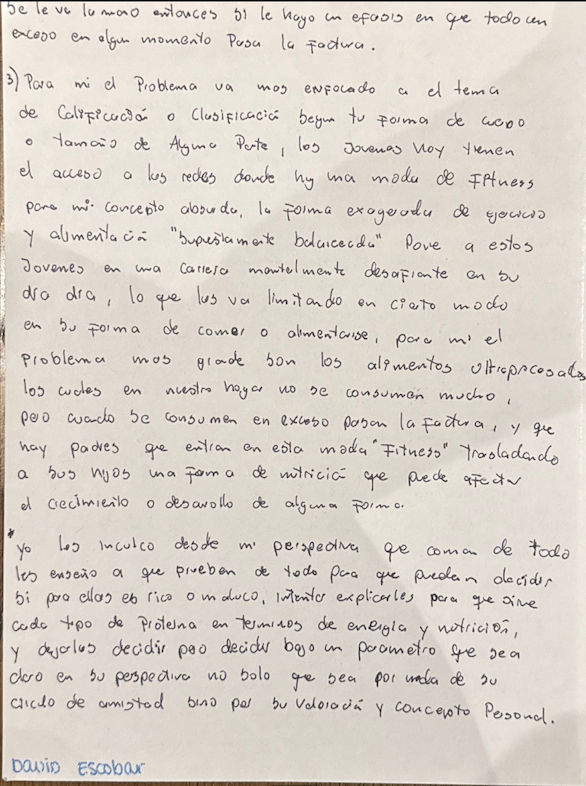
- TRANSLATION –
1. Being affected not necessarily if something I would say that it is more of a situation of them seeing us compare ourselves with others, It is more connected now days with the media, this is where the comparison beginnings, today appearances are more important than health and wellness, mind body, I have never felt superior or inferior depending on my appearance or body weight, however I try to stay normal in my eating habits.
Trying to talk with my children about the subject makes me think that they make the subject of eating habits and preferences more about the trends and not their own personal taste, I have made it clear that they should eat everything and after they have tasted it they can decide whether it is good or bad and this does not give the child a prejudice about food and what they should or should not eat.
The most important point to get across is confidence: they are allowed to be themselves and enjoy life.
2. The best tools in my concept or opinion is the “option” and knowing how to mage them, today young people can choose a lot of material when it comes to their nutrition and eating habits, I try to give them diversity in food, balancing everything between protein, vegetables and carbohydrates because a lot of times the trends of foods that are deemed healthy “healthy marketing” ends up creating a narrative on foods “supposedly healthy” that are not actually healthy.
The best tool is diversity and teaching them how to eat and enjoy without fear of what might happen later. When it comes to sugar, I place a lot of emphasis on my younger daughter, who ikes sweets more from time to time; sometimes she takes it too far, so I make space to discuss how any excess, at some point, comes back to you. You pay for the habits you have had at some point.
3. For me the problem is more focused in the subject of classification or ranking according to someone’s body shape or size in some place, young people today have access to media where there is a trend on fitness which to me is a ridiculous concept, the exaggerated form of exercise and nutrition “supposedly balanced” makes young people in a constant race which is a struggle or a challenge in their day to day life, which limits them in certain ways about their food and their nutrition the biggest problem are the ultraprocessed foods which are not highly consumed in my household, but when they are consumed or eaten in excess they have a price. Some parents buy into fitness trends, which can shift their children’s nutrition in ways that affect growth and development.
- I try to teach them to eat a bit of everything, I teach them to try everything so they can decide if they like it or not, I try to explain to them what every single food is for protein in form of energy and nutrition, and let them choose but under a certain parameter which is clear in its perspectives not only because of trends and their group of friends but by their value and personal concept.
- CIELO TOBON –
This is a mature woman in her late 60s who’s lived in Colombia and has never lived outside Colombia. She is part of an all-women family; her daughter has two grandchildren, as well as 5 nieces and great-nieces.
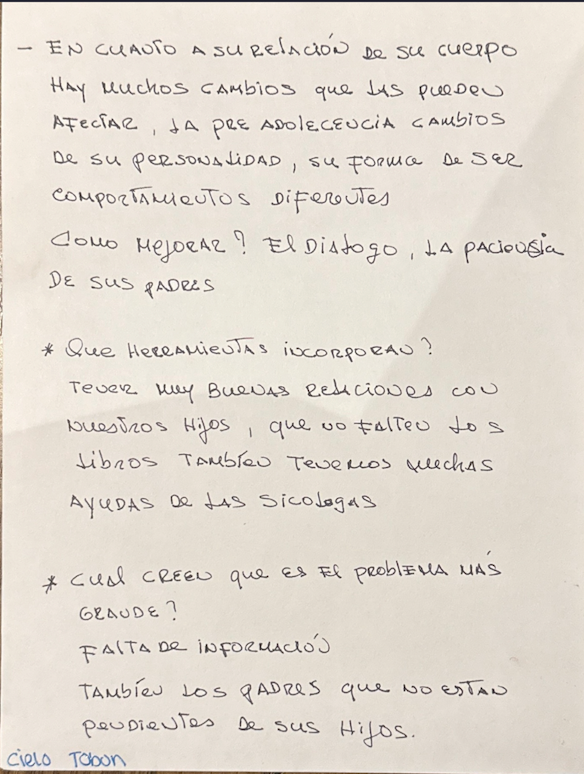
- TRANSLATION –
1. When it comes to their relationship with their bodies, many changes can affect them; nowadays we can see personality changes, their form of being, and their behavior, which are different. It can improve through dialogue and patience from the parents.
2. Having good relationships with our children, having enough books, and we also have help from psychologists.
3. Lack of information also affects parents who are not on top of their children.
- Julio Toro –
Julio Toro is a man in his 70s. He is Cielo’s husband, and like her, he has never lived outside of Colombia but has traveled. He shares Cielo’s family history and has biological nieces who are his brothers’ daughters.
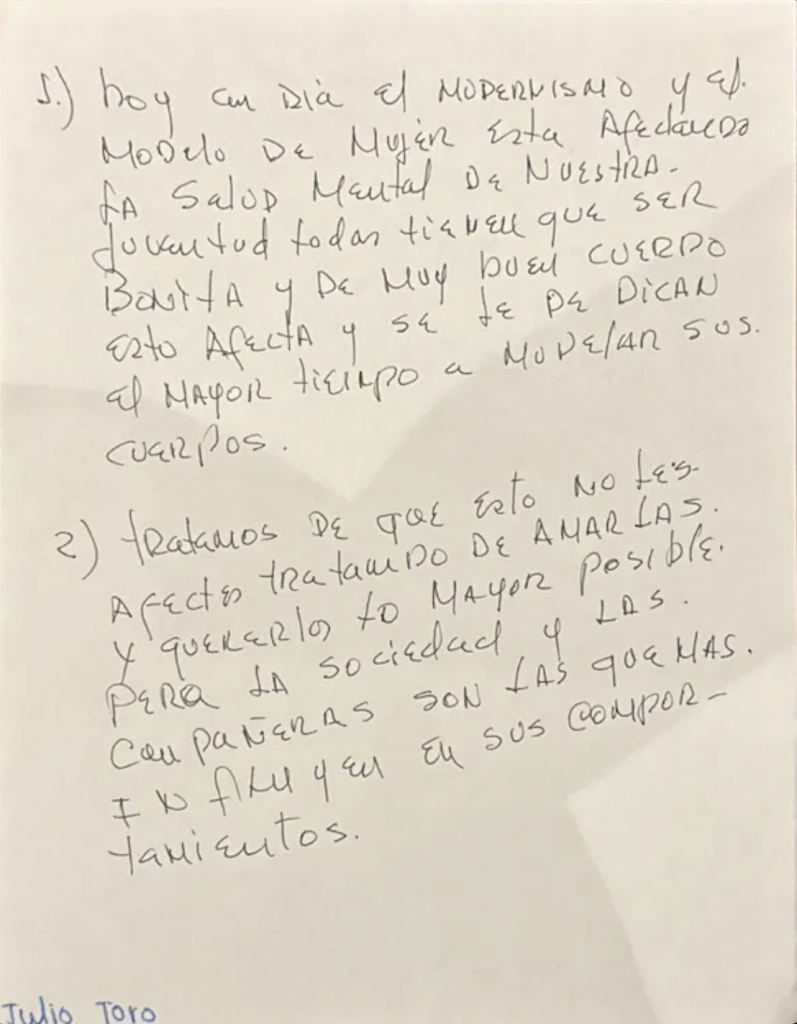
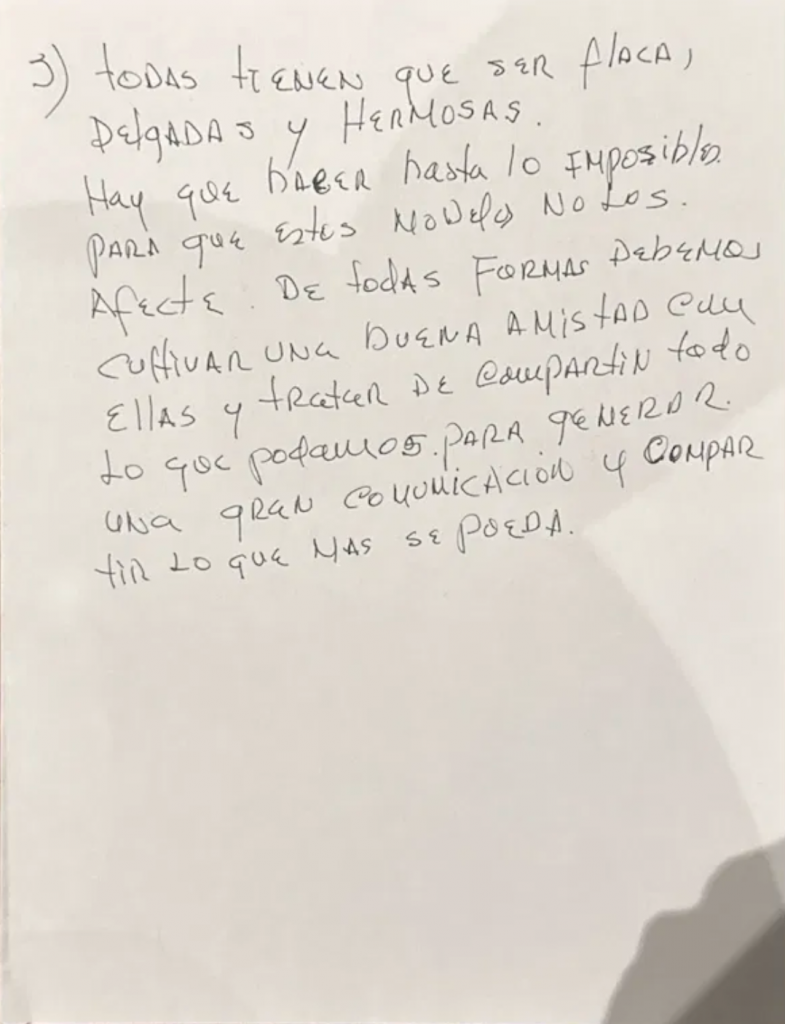
- TRANSLATION –
1. In today’s day and age of modernism, the model of women is affecting the mental health of our young people. All the girls need to be beautiful and have a very good body; this affects them and makes them spend most of their time trying to model their bodies.
2. We try to make it so that it does not affect them a lot, trying to love them and care for them as much as possible, but in society all of their classmates are the ones that have the greatest influence on their behaviors.
3. They all have to be thin, skinny, and beautiful. You have to do almost the impossible so the mental models don’t affect them. However, even if this is happening, we have to help them build a good friendship with themselves and share as much as we can to build strong communication.
- LENA GARCÍA –
Lena is a woman in her mid-40s. She has always lived in Colombia but has moved between Medellín, one of the big cities, and the capital, Bogotá, which may give her a different perspective. She has also been a woman who has always struggled with her body image, and she has a daughter who is 12.
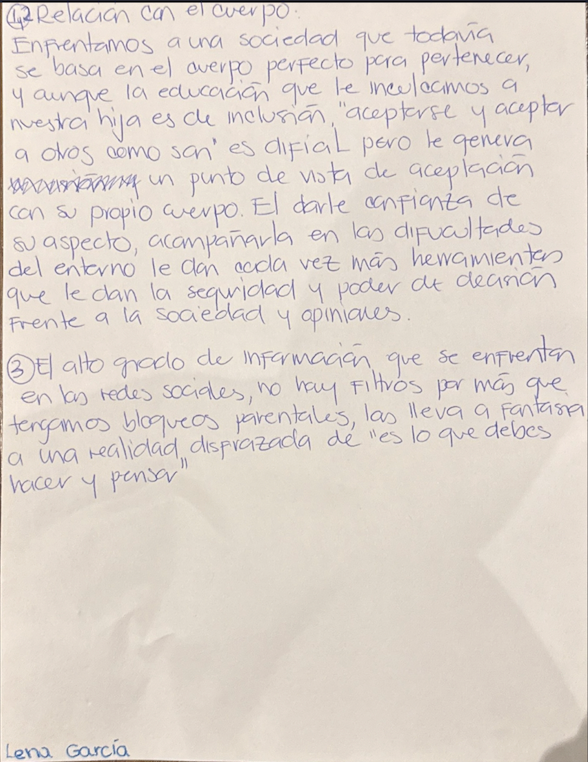
- TRANSLATION –
½. We are up against a society that still bases itself on the perfect body to belong, and even though there is education that we try to implement with our daughter, which is inclusion “accept herself as well as others as they are” it is difficult. Still, it gives her a point of view of acceptance with her own body. Building her confidence in her appearance and supporting her through the difficulties in her circle give her tools that build security and decision-making power when it comes to things like society and her opinions.
3. The high level of information that we face in social media means there are no filters; even though we try to block some information through parental control, they end up in a fantasy of a made-up reality of “this is what you should do and how you should act”.
- ROSILVIA TOBON –
This woman is nearing her 80s and has been out of Colombia very few times. She has always lived in Medellín; she was not a mother, but she helped raise all her nieces and great-nieces, and her nieces consider her one of their mothers because they even lived in the same household growing up.
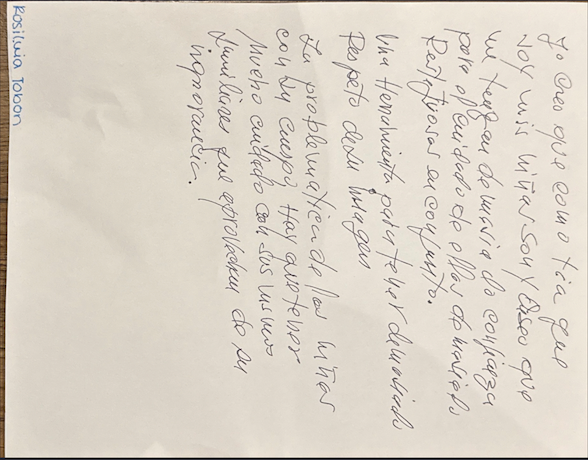
- TRANSLATION –
1. I think that, as the aunt that I am, since I have nieces, I lead by example with the confidence I have in myself. I help them with their own self-worth. When they see me taking care of myself, they will take better care of themselves as well.
2. A tool they can use is the respect of the image.
3. The probability that girls will see a lot of information on social media and relate it to their body means there has to be a lot of caution with the things that they see and talk about when it comes to their appearance.
- ALEJANDRO CALERO –
This is a man in his mid-forties who has lived in two cities in Colombia. He works as a publicist for some of Colombia’s major brands. He has a teenage daughter and an adult son reaching his 20s. He has experience living in both a large city, the capital, and a smaller but still big city, Cali, where he grew up.
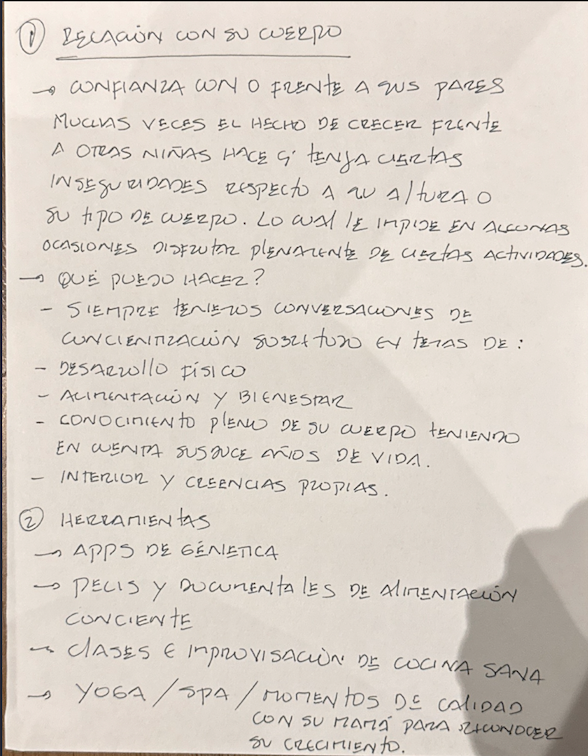
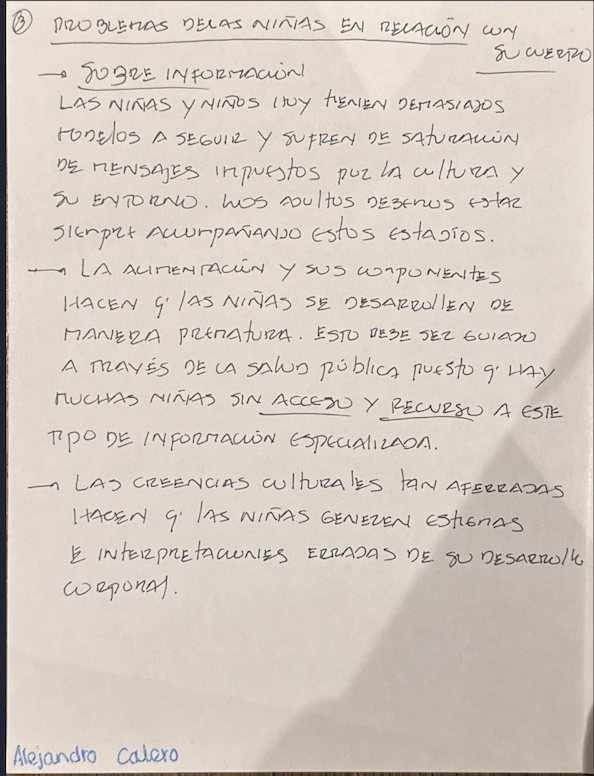
- TRANSLATION –
- Relationship with their bodies
Often, the fact of growing up around other girls makes them feel insecure about their height and body, which can make it hard to enjoy activities and lose weight.
- What can I do?
We always have conversations about making them conscious of different subjects:
- Body development
- Nutrition and well-being
- Full knowledge of their bodies, keeping in mind that my daughter is just 12 years old.
- Interior and their own beliefs.
- Tools
- Genetics apps.
- Movies and documentaries about conscious nutrition.
- Courses and improvisation of healthy cooking.
- Yoga/Spa/ quality time with mom to acknowledge their growth.
- Problems with the girls and their relationship with their body
- Over information
The girls and boys today have way too many role models, and they suffer from the oversaturation of the messages out there because of the culture and the people around them. As adults, we should always be accompanying them in these arenas.
Nutrition and its components can cause girls to develop prematurely. This is something that should be looked at and guided by public health care because of the number of girls without access to and resources for special care and specialized information.
Cultural beliefs are so strong that they make young girls need to look a certain way and have very set interpretations in the development of their bodies.
- CATALINA TORO –
She is a woman in her mid-forties who has always lived in Medellín and has two daughters who are very different ages: one is 8, and the other is 14, and she is always talking about her body.
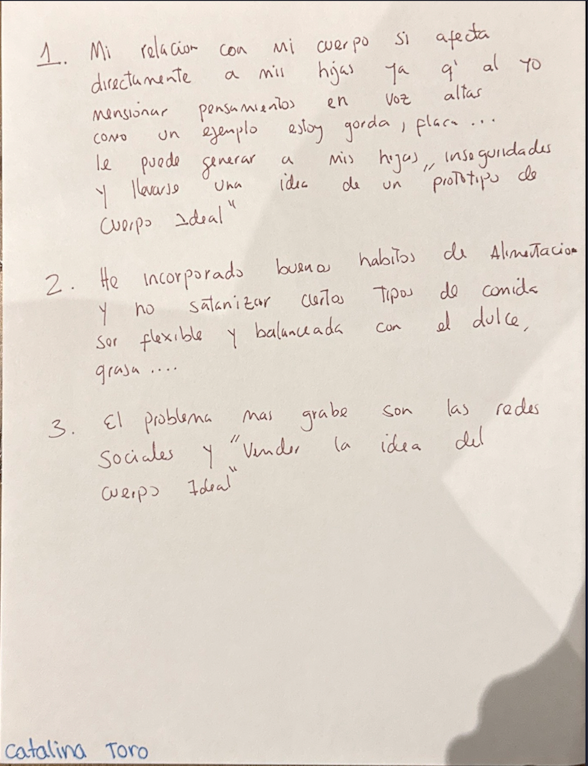
- TRANSLATION –
- My relationship with my body has a direct correlation with my daughters because, as I start saying thoughts out loud, for example, “I look fat or skinny…” I can generate insecurity in my daughters and take away an idea of “a prototype of an ideal body”
- I have incorporated good nutrition habits, don’t demonize certain foods, and stay flexible and balanced with sugar and fats.
- The biggest problem is social media and the “sale of the ideal body”.
MY THOUGHTS AND INTERPRETATION:
- One of the first thoughts that came up when I was going through all of the different peoples answers was the fact that the people that went deeper in their answers were actually the fathers in this situations and not the moms and when I made not of it one of the mothers reaction was that fathers are never on top of a daughters appearance that it is a mothers job to be on top of it, this was Cielo who is an older woman and she had her daughter have breast augmentations when she was a teenager and has had cosmetic work done herself so maybe this is the example she is setting or she find this to be very important maybe this is her set of beliefs. However, this connects to what Julio said later in the conversation. I actually have a voice recording of his conclusion with his consent. He talks about the fact that cosmetic surgeons have made a fortune around women’s insecurities and made them think they have to look a certain way to make money, and this is why there is such pressure when it comes to their bodies.
- One of the main points which I think all of the participants agree on is the fact that there is a very large issue when it comes to social media and all the different examples that young girls have when it comes to bodies and looking for a perfect body but I think that people in the media romantacise their lives and act as if it were natural and easy since they are in the media. Still, there is a lot behind the scenes that we are not aware of.
- Another interesting point is that the older individuals wrote less and were less active in the conversation; it was as if they were less willing to participate and look at the insight,t, almost as if they were scared to go deeper into the conversation.
- Another interesting thing was that only two people talked about food, and they noted that we need to stop the idea that some foods are good and others are bad; instead, we should tell them to be careful with certain foods. Still, there is other media out there that even rejects this and talks about the fact that we should let children learn by themselves not just telling them but letting them learn that a lot of a certain food might give you problems with your stomach or make you feal ill however I am not sure if we will ever find a correct answer for this because of the amount of opinions out there and how there are so many doctors with diverse opinions in the media. One thing is for sure: if you don’t have the credentials to talk about food and haven’t done an extensive study, you shouldn’t talk about the approach to it.
- Older people in this group talked more about the pressure around people your own age and the society around them, specifically in school, and this made me wonder if they felt this when they were much younger.
- There was a lot of talk about confidence and being able to speak about anything with their children, especially how they are feeling about their body and being open to them about the realities around them, and seeing a lot more information when it comes to telling them that what they see out in the world is what is normal and seeing the different ways in which things can happen.
Leave a Reply