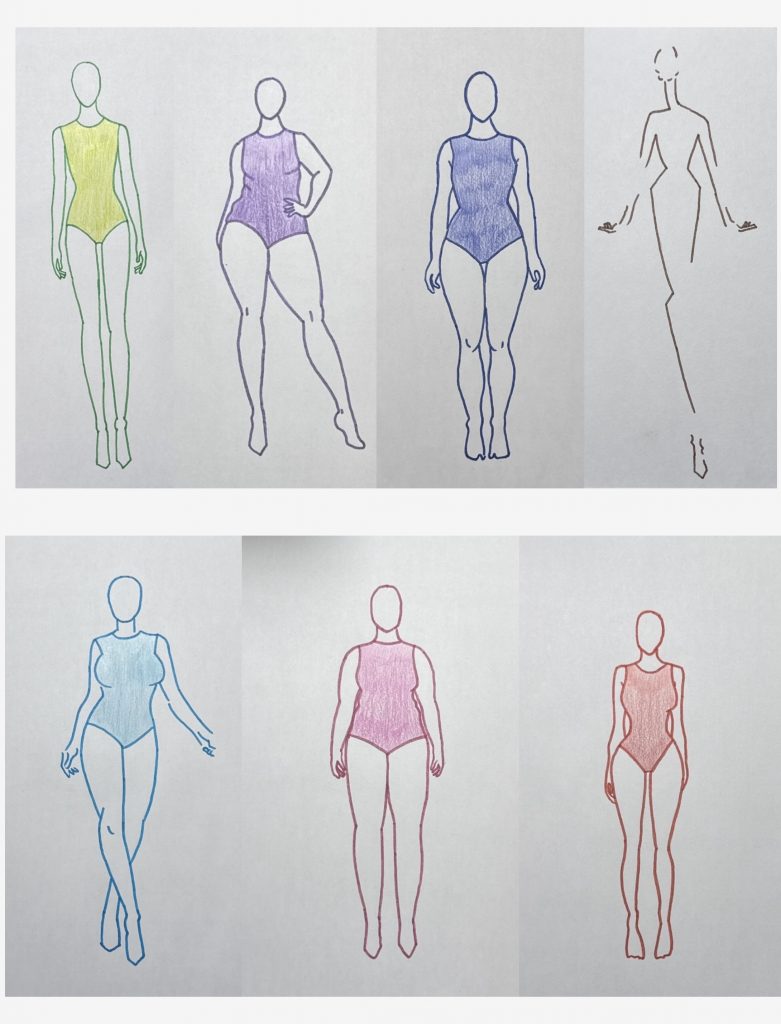
For this interventions I changed the format as well as the place because when I was talking with some of my family members about the interventions I was doing my family asked me where I did it and when I told them I was doing it in Santa Fe they recommended that maybe I try another mall that had more diversity of people so I decided to do my next test in the mall Viva Envigado which is also huge but something that is different is the fact that there is a metro station which makes it more transited and by a larger variety of people which I thought might make it more interesting. For this one I wanted to make 100% sure that I was making an intervention as complete as possible so I decided to make an artifact to go with it. In this artifact what I wanted to accomplish was to include different body types in the form of silhouettes that I use when I am making fashion illustrations which is something I have been doing for years. In all honestly the one I have used until now for the past couple of years has not been the most inclusive because when I was creating my sketches in the beginning I used curvier models but later on I took on some tutoring and my tutor gave me very slim models to use and I thought it made my sketches look very beautiful and this was the feedback I got from everyone in my life I used the one in the top right but now that I think about it and as I have been going through my project I realized it was important to use different body types in my sketches so when I started speaking to people the question I asked them with the artifact to wander was, “If you were thinking as a fashion designer which of this primary sketches do you think she or he should be using when creating new fashion garments or a new fashion line?”
This was the page that I showed them and the part of the activity that they had to do was mark which one they thought and then at the bottom they had to explain why. Some of them did not want to awes or did not have time so they just left it blank and she of them told me to write it for them since they did not consider they had good letter for writing on paper so that is why some of them might look as if they have the same penmanship.
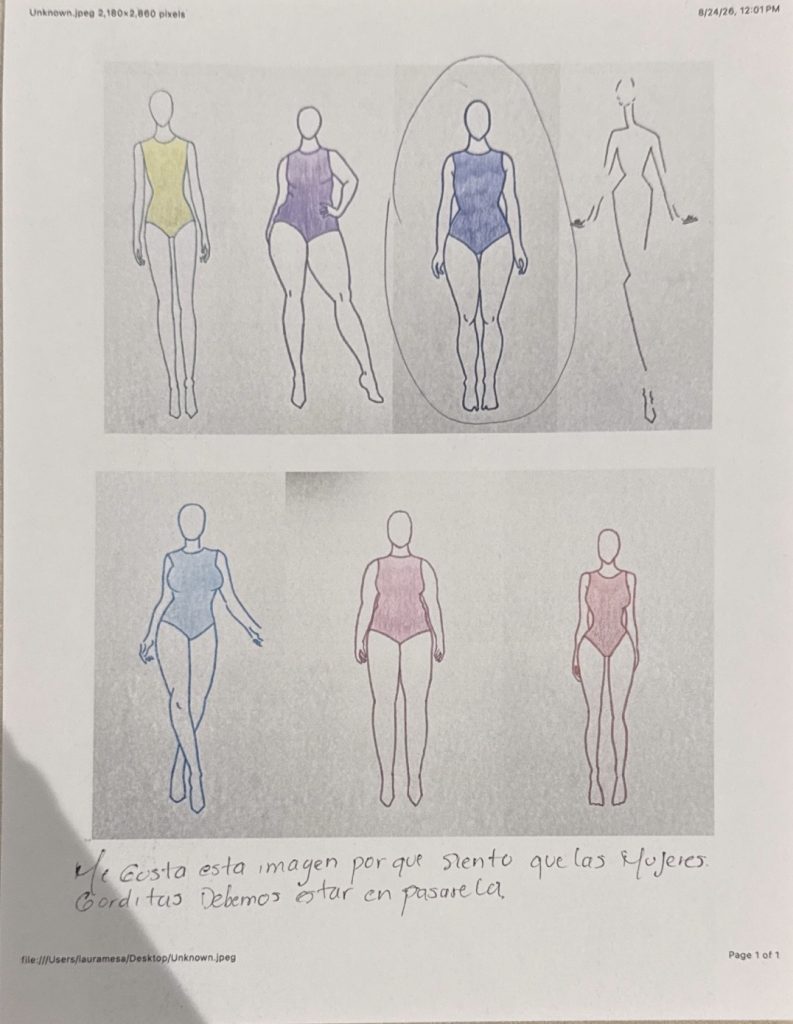
(I like this image because I feel that fatter women need to be more in the runway)
- I really like this wander because, even though it doesn’t directly answer the question, it sheds light on what some people might want to see in different forms. (Maybe a fashion show including different bodies? However, I feel this is something that people have already done)
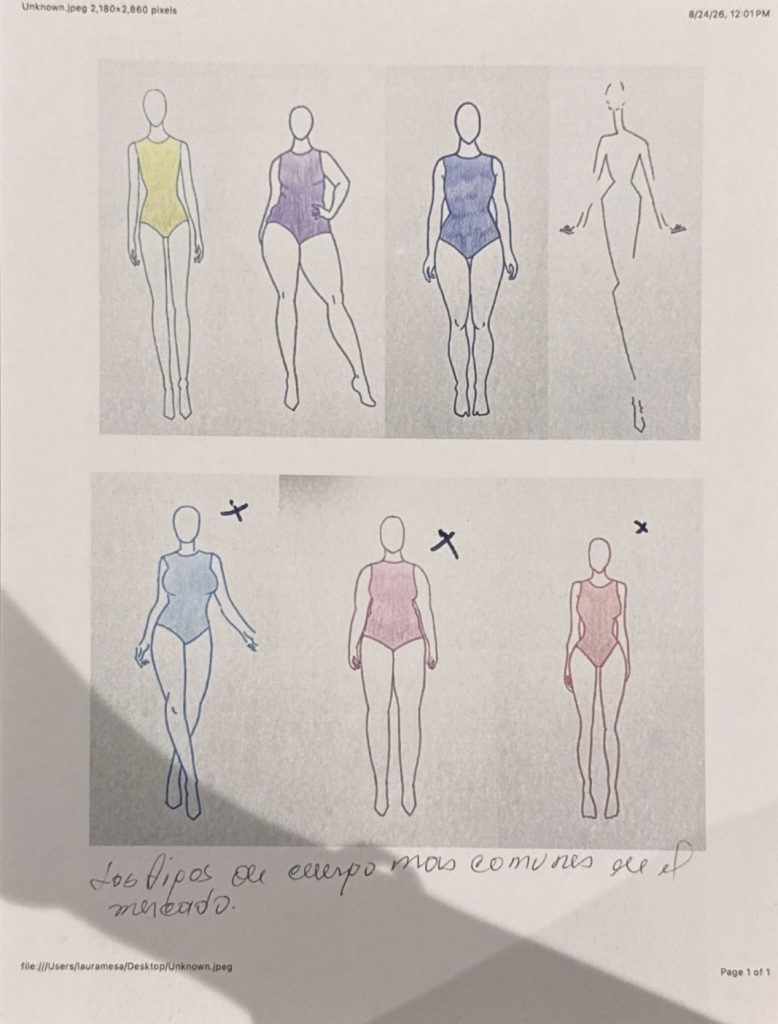
(The types of bodies that are more common in the market)
- Interesting assumption, and it was interesting that she considered the market when she pondered the question; maybe she really took it seriously, trying to get into the designer’s mind and what they had to accomplish.
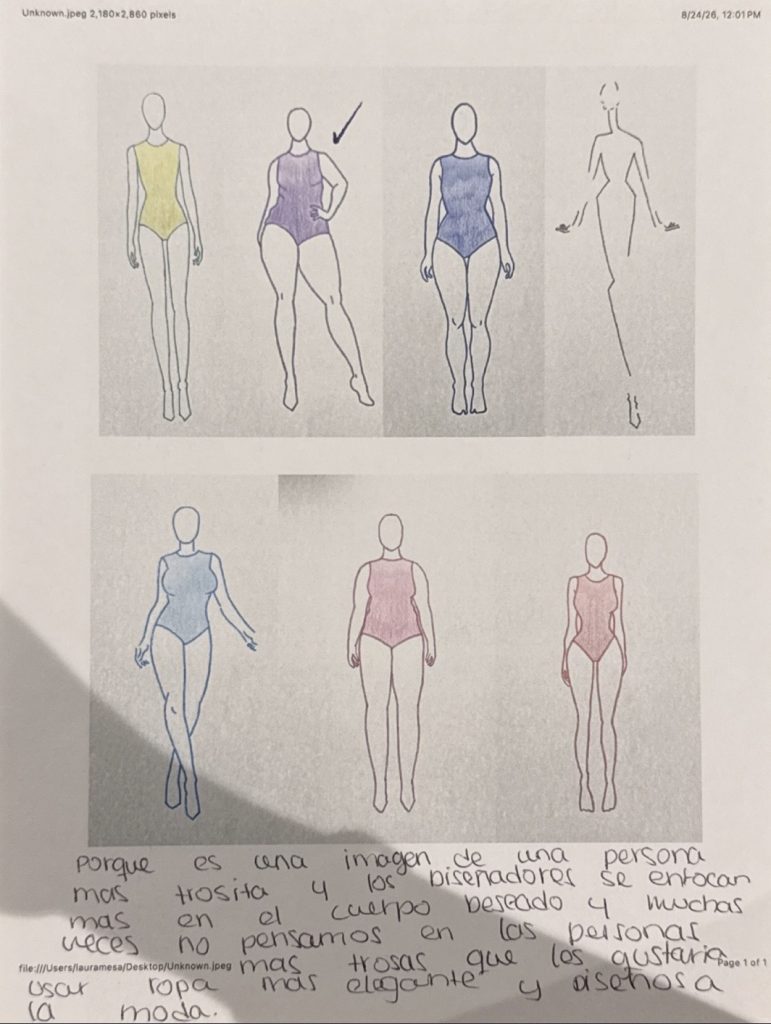
- It was interesting that she thinks that the industry is looking at the ideal body and designers as well. Still, one important thing to keep in mind is that the ideal body has always been evolving. Bodies are sometimes treated as trends. They are always changing, maybe not even in a healthy way; for example, today I heard a crazy statistic that around 50% of Americans are on GLP 1 to lose weight. Not all of them need it, which shows a shift toward extreme thinness as an ongoing trend.
- I also thought it was really important that she is talking about the fact that everyone should be allowed to participate and one brand that I thought of was good American Khloe Kardashians brand and the fact that when she sells the clothing to department stores she makes sure that they buy the whole size range and that they are all displayed in the same place there are no products in plus size sections and this is a ways that brands such as hers are making sure that everyone is included when it comes to the shopping experience and there are no differences.
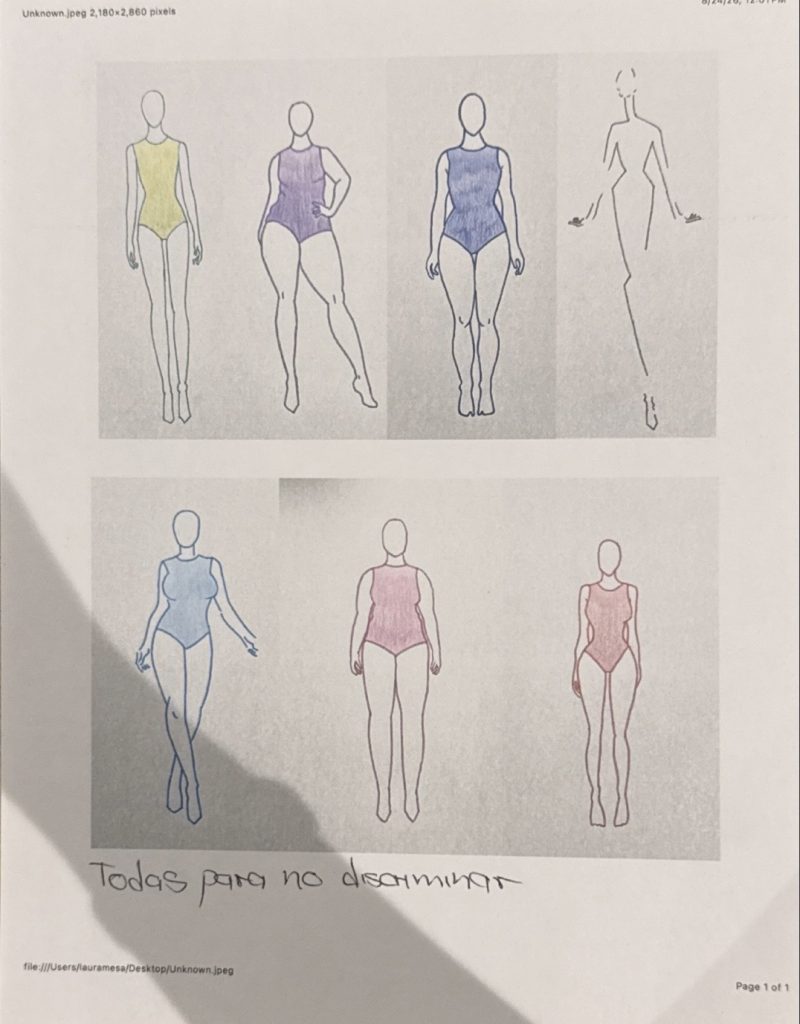
- This person chose all of them. She didn’t think she had to choose, and she thought representing all of them was important, which is true because bodies can look very different in different scenarios.
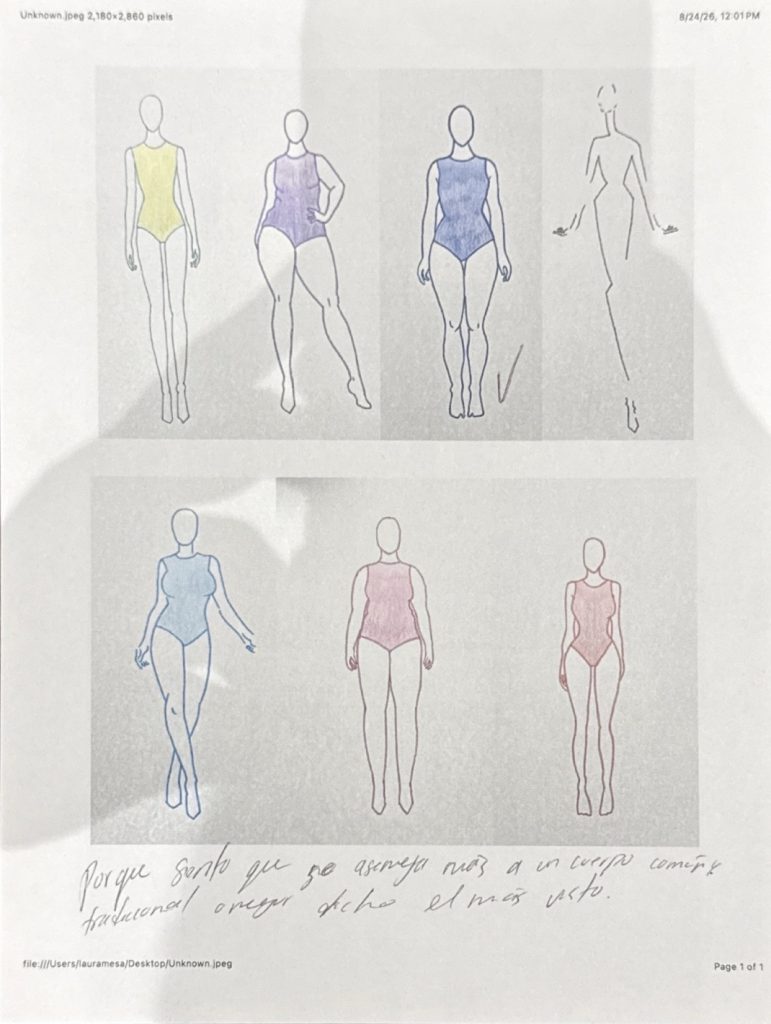
- This person was thinking about the most inclusive of the norm when giving her words, but maybe it is not even the most common, but the average between them.
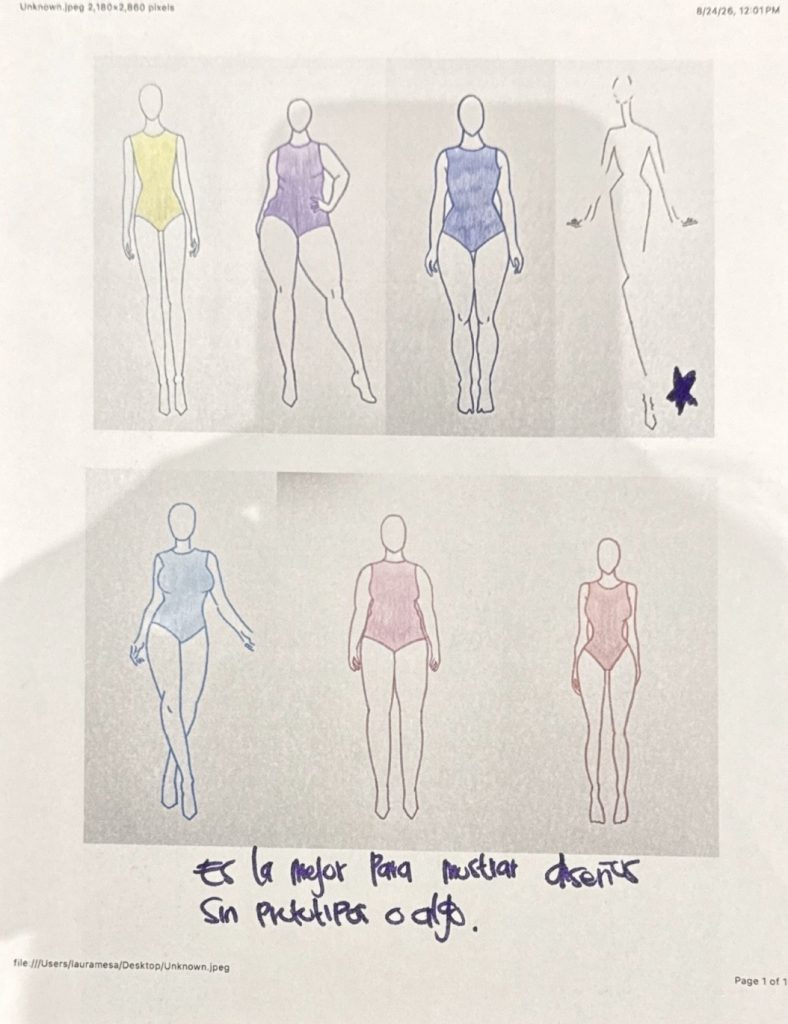
- This is the same assumption I included below: that it’s easier to work with it as a designer.
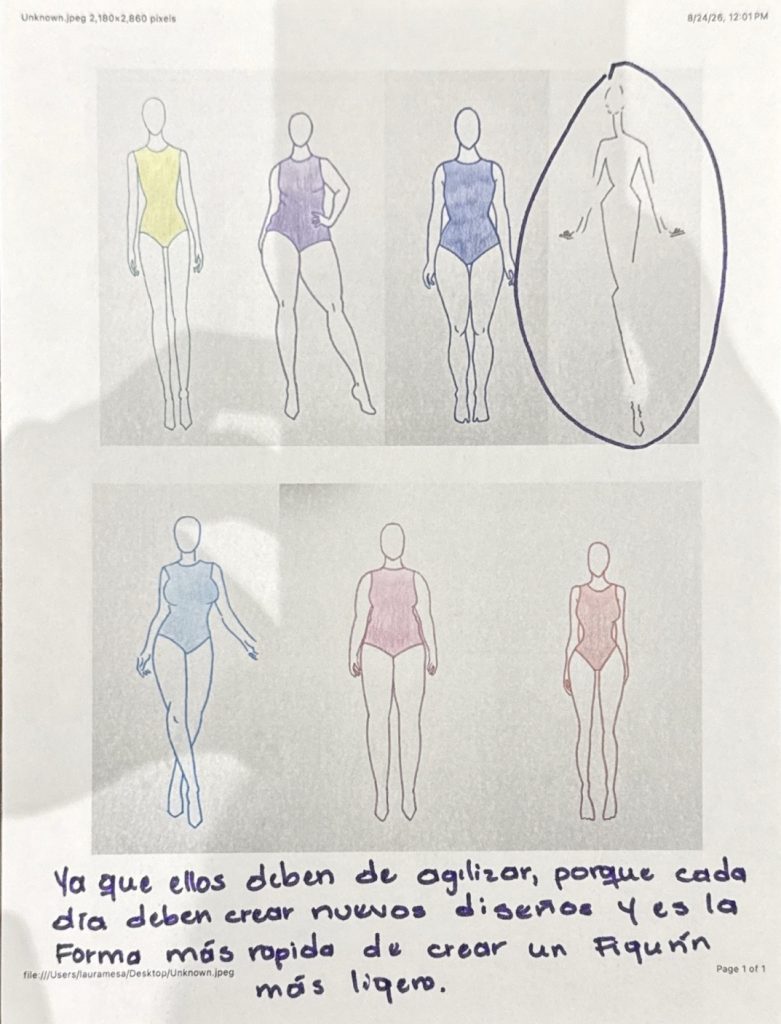
- This applies the same way as above and below because it assumes that larger clothing takes more time to make. Still, it definitely shouldn’t affect the design because I don’t think drawing a couple more centimeters or millimeters is going to be the answer to helping people be productive
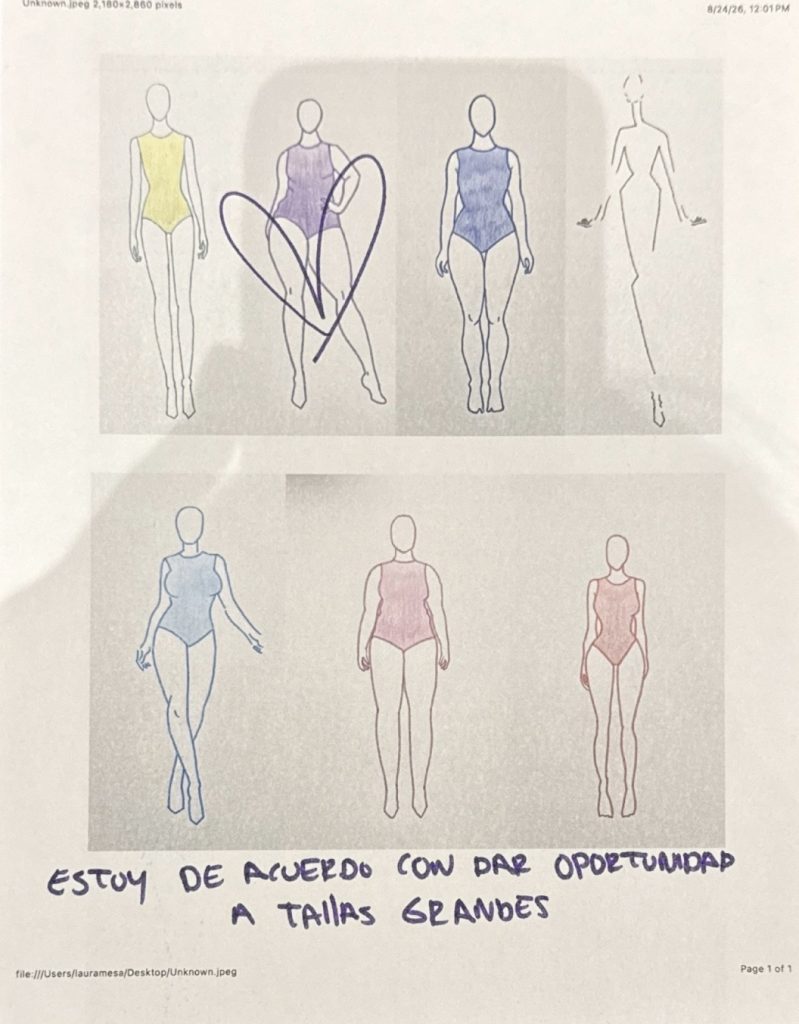
- This person was really interested in seeing more diversity in body sizes and giving larger people more of a voice, especially in the fashion industry. It was interesting that she used a heart to signal her choice; maybe it represents love, and maybe this is a body that needs more love and compassion. (I feel that a lot of times bigger people are looked at as less disciplined or as if they are not as deserving, and this is something I have heard is an assumption people have by many I have interviewed, and I think it is important to look at them from this different perspective.)
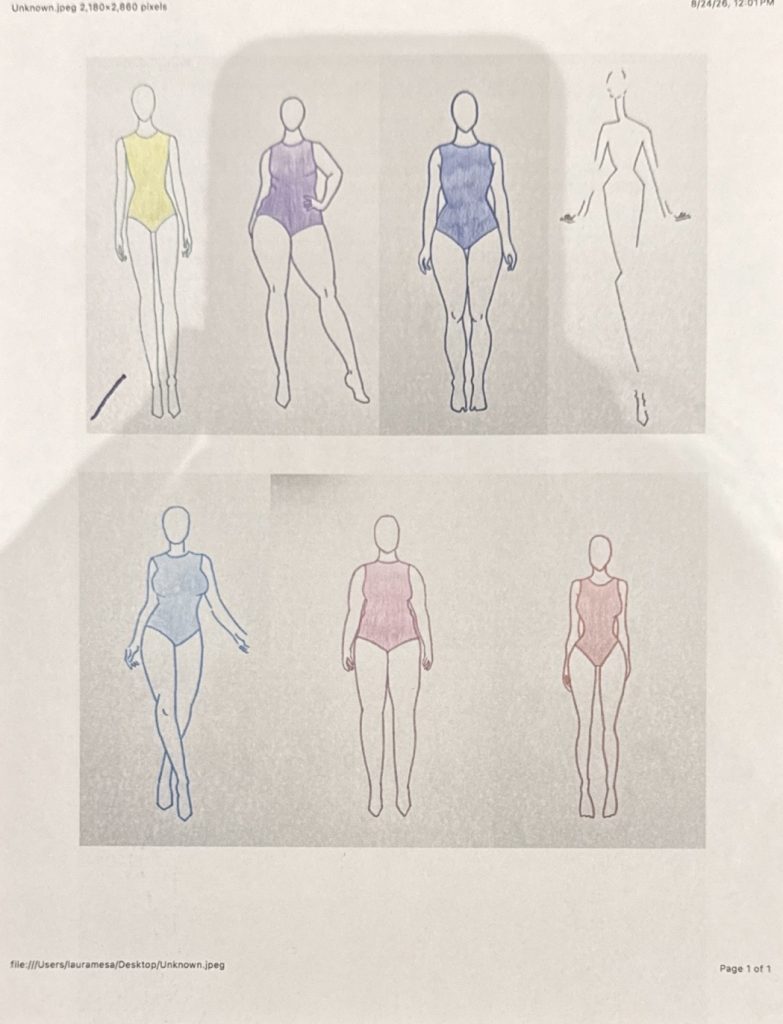
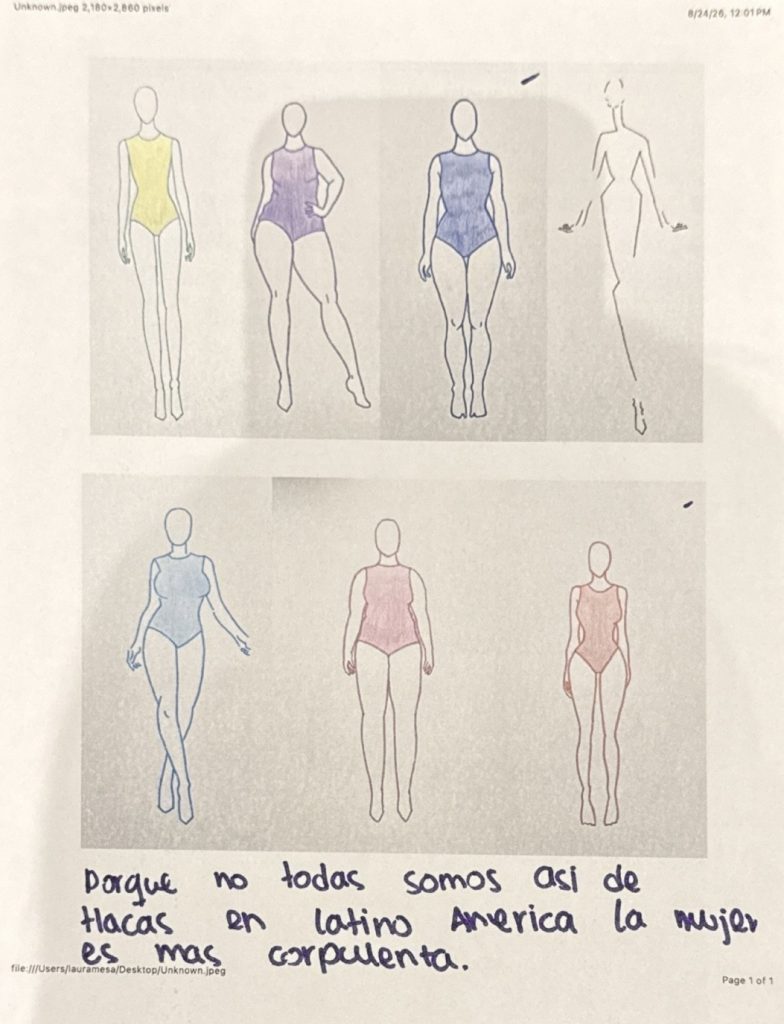
(Because not all of us are that skinny in Latin America, the women have more curves or more body)
- This person really looked at the reality of the people in her community because she made a point to talk about them specifically, and that is why she made her choice.
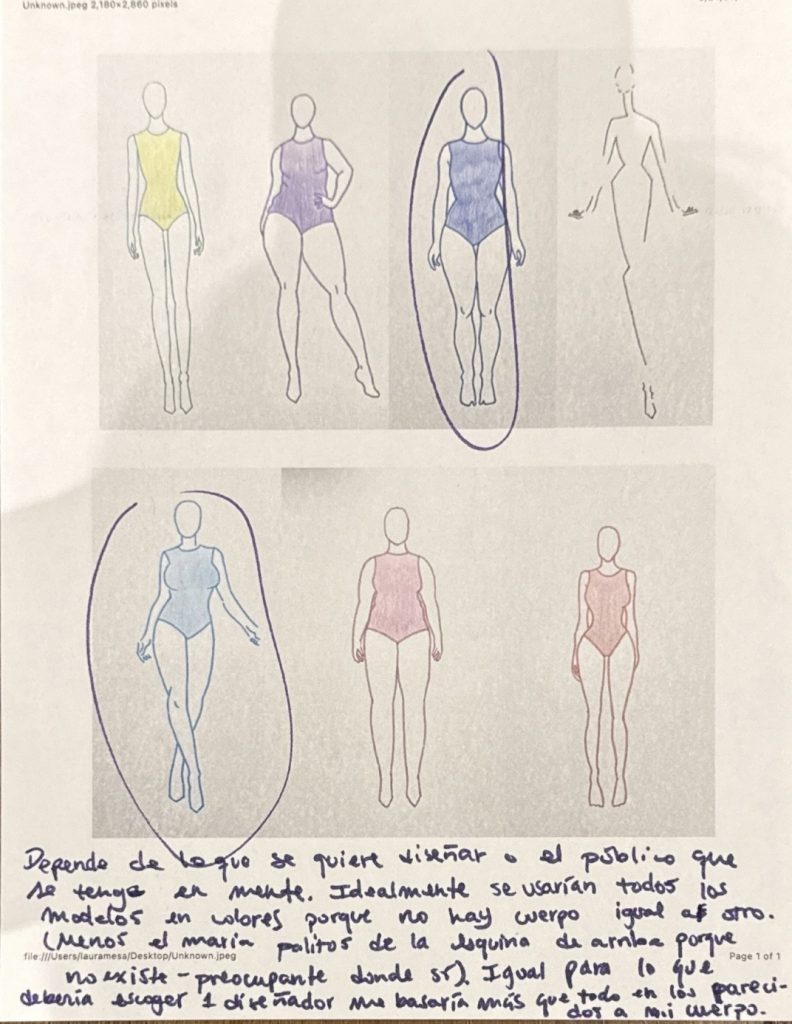
* Maria Palitos is a very Colombian saying that talks about extreme skinniness and it is at times used as an insult for very thin people who are not capable of gaining weight if I had to find an English comparison I would call it long bean.
- This was very interesting to look at because this person based her decision on the fact that these were the bodies that looked the most like them. They want designers to use them, but they also acknowledge that all bodies should be used; however, they are definitely going against the slimmest one in the right-hand corner because she doesn’t feel it represents any body type. I am guessing by her answer that the most important thing is to have a body which is real.
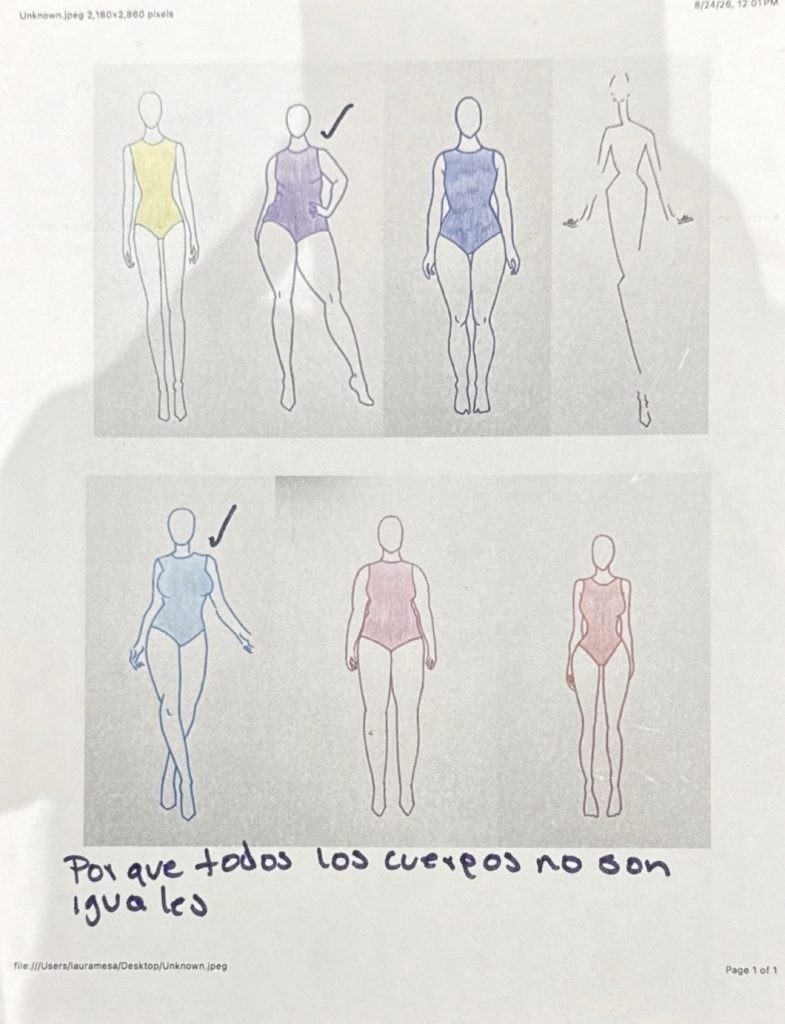
- They acknowledge differences, but like the one below, they still choose. So what made this person choose this one is the wander; maybe it is because of her preference or because they are seen a lot in Colombia, or who knows what the wander might be, but they reason that there are definitely differences between bodies and no two are the same, which is important to notice.
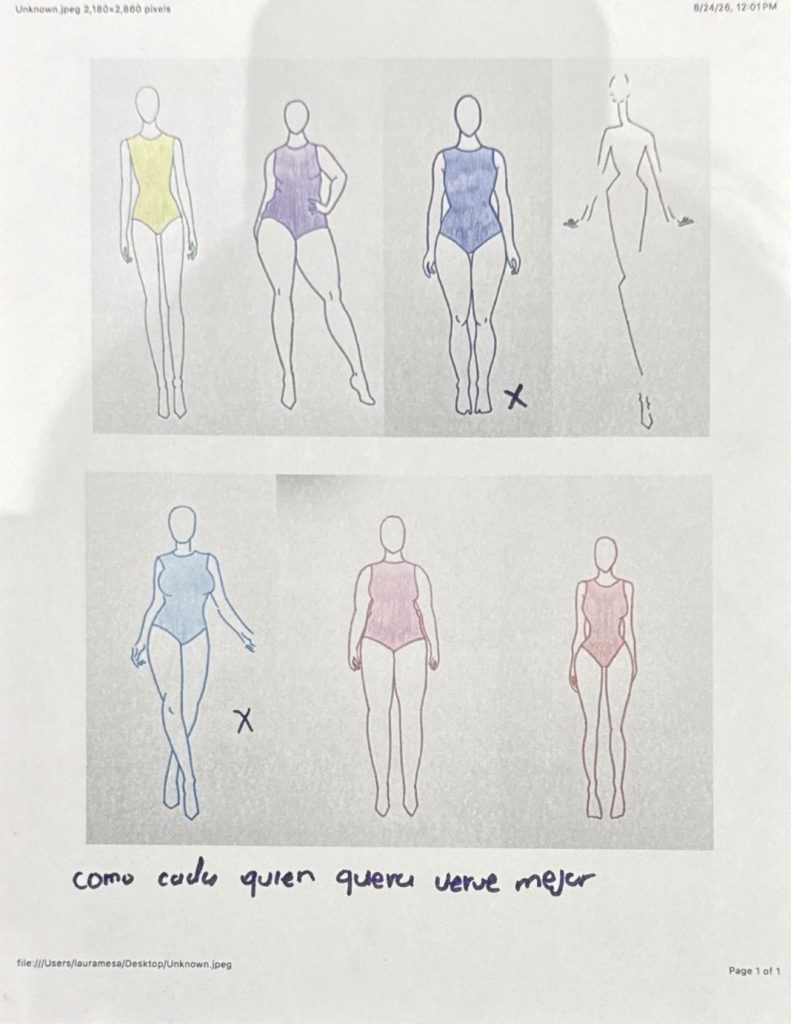
- This person took a very polite approach but still chose specific bodies, maybe because of her personal preference or because they were the ones she identified with most.
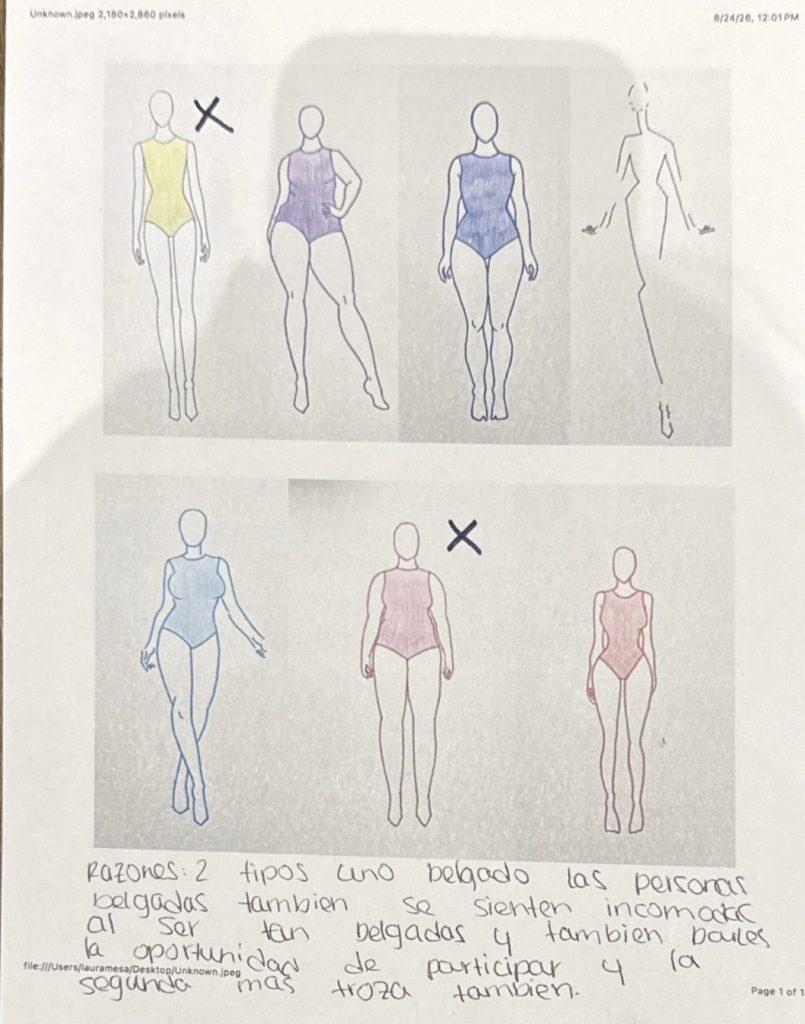
- I think it is really curious that this person choose 2 opposite body types, or what might be considered opposite, and not only talks about fat phobia and how larger people might feel uncomfortable in their skin but also how really slim people have struggles as well, even though they are not always acknowledged, and I thought this was definitely interesting.
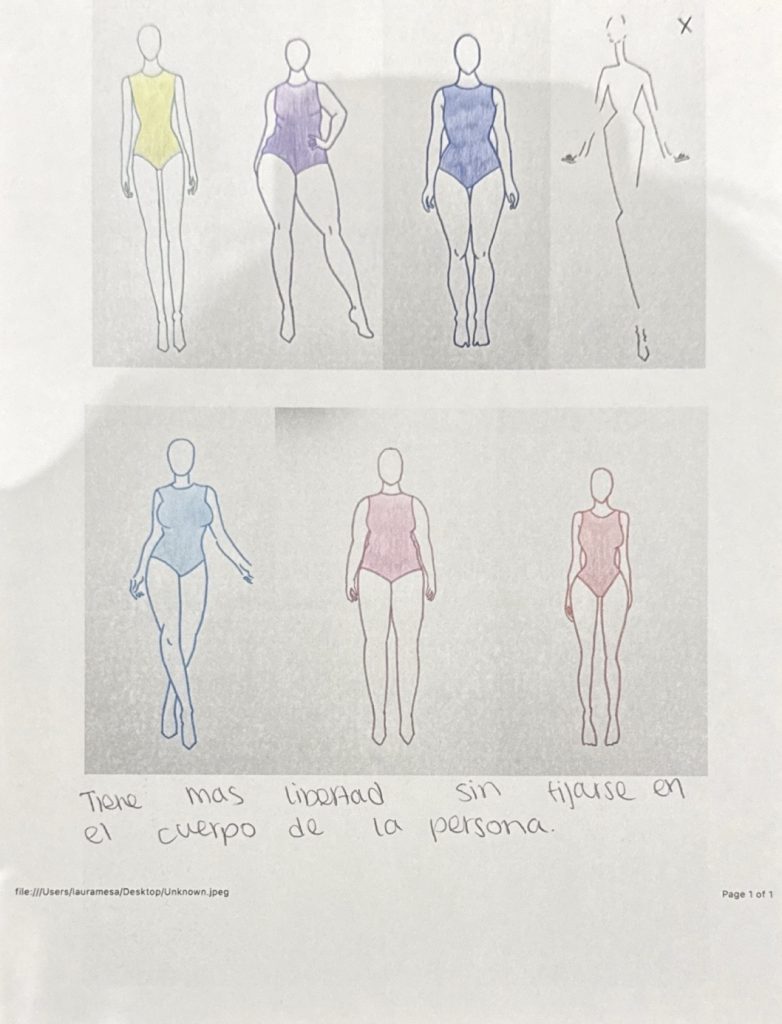
- Here comes in a similar thing to what I saw on the bottom which was the assumption that it is easier to design for a timer body in mind without thinking about the body, however when I was speaking with a psychologist from Bolivia called Sissi earlier today she told me about this fact that at times people talk about the body as if it were a hanger ad that it has to fit as such. There is definitely a connection here because they are saying that the slimmer it is, the more liberty there is for the designer, but what I ask myself is (What does one have to do with the other?)
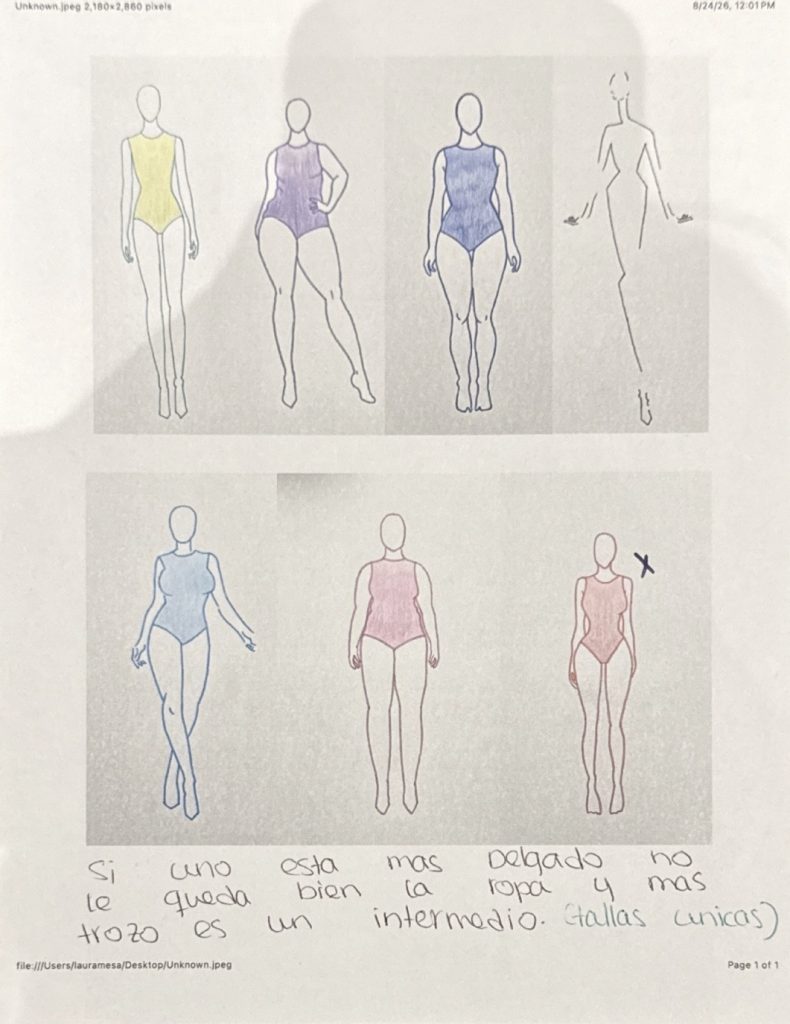
- I found it extremely interesting that the first thing that came to this woman’s mind was one-size clothing, and someone I interviewed told me that one-size-fits-all is an effect of the recession because it is cheaper to design the same thing for the economy. This made me think about how differences relate to this, and I found it interesting that 2 people have talked about this subject.
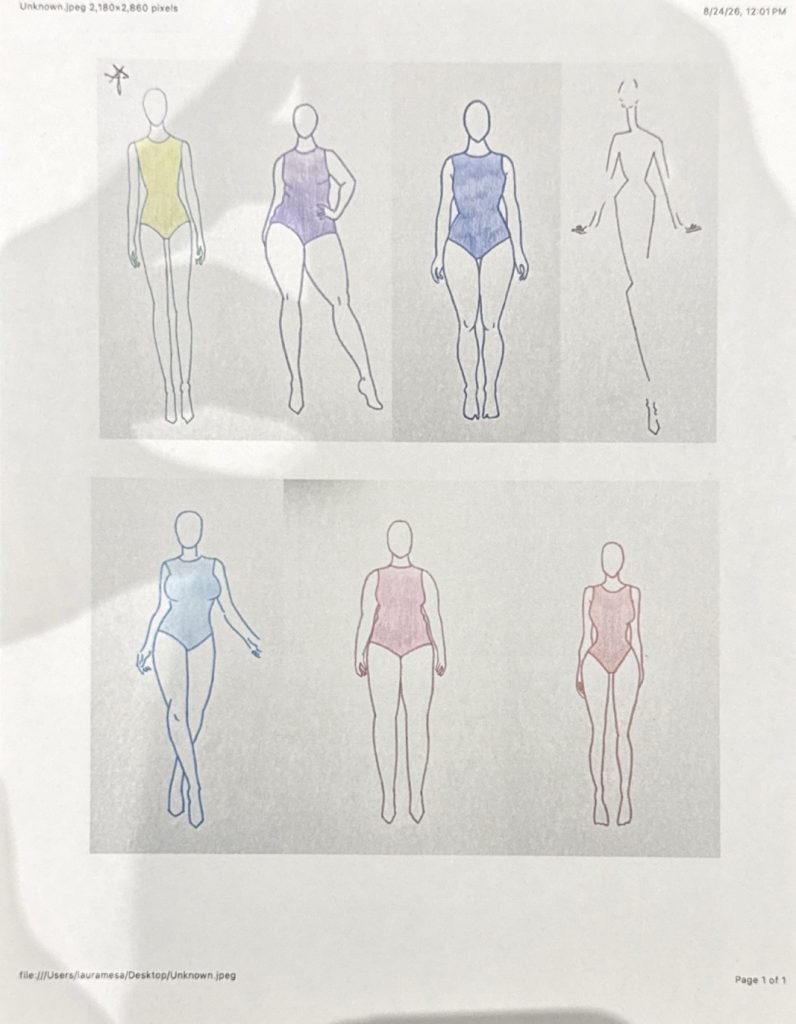
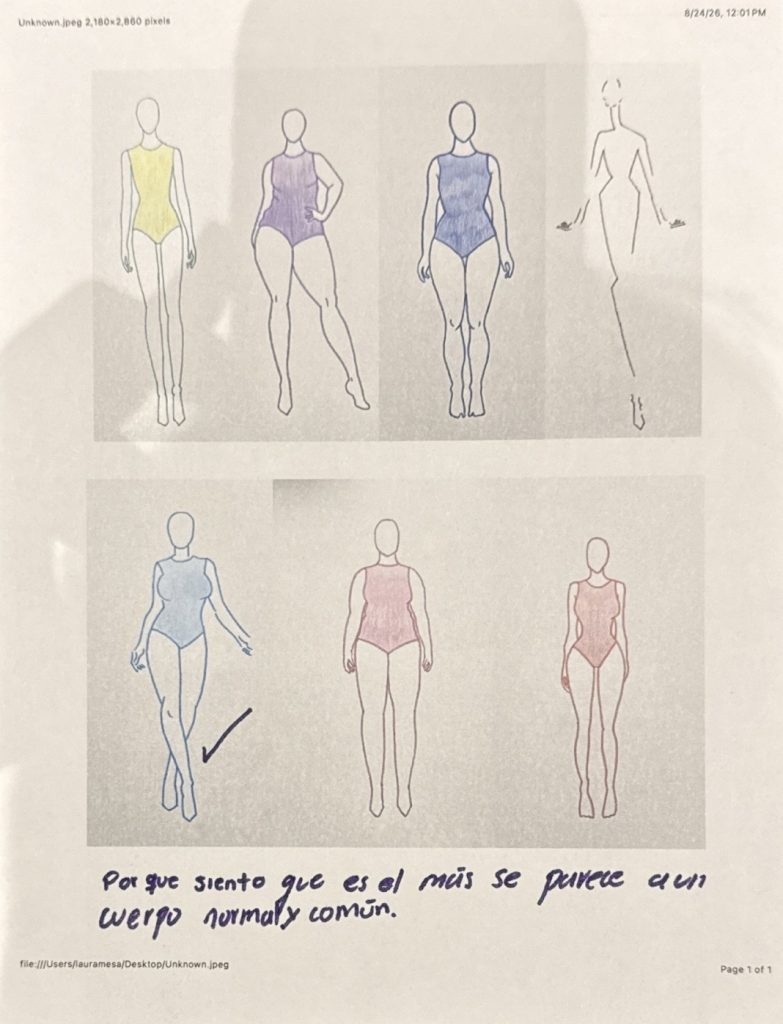
- I think this is a very common wonder because this is, in fact, a body type you see a lot in Colombia. I thought it was very interesting that this is why she choose this because it made me question one thing (why do models not look like the standard human, it also made me think about one of the people who I interviewed about ballet and the way that before the ballerinas body was like a standard person and later on this presser came by because of a group of ballerinas that looked a certain ways and maybe this is very similar to what has happened in fashion that since the slimmer figures were the most represented they became more desirable. However, this is just an assumption I am making based on what I am seeing)
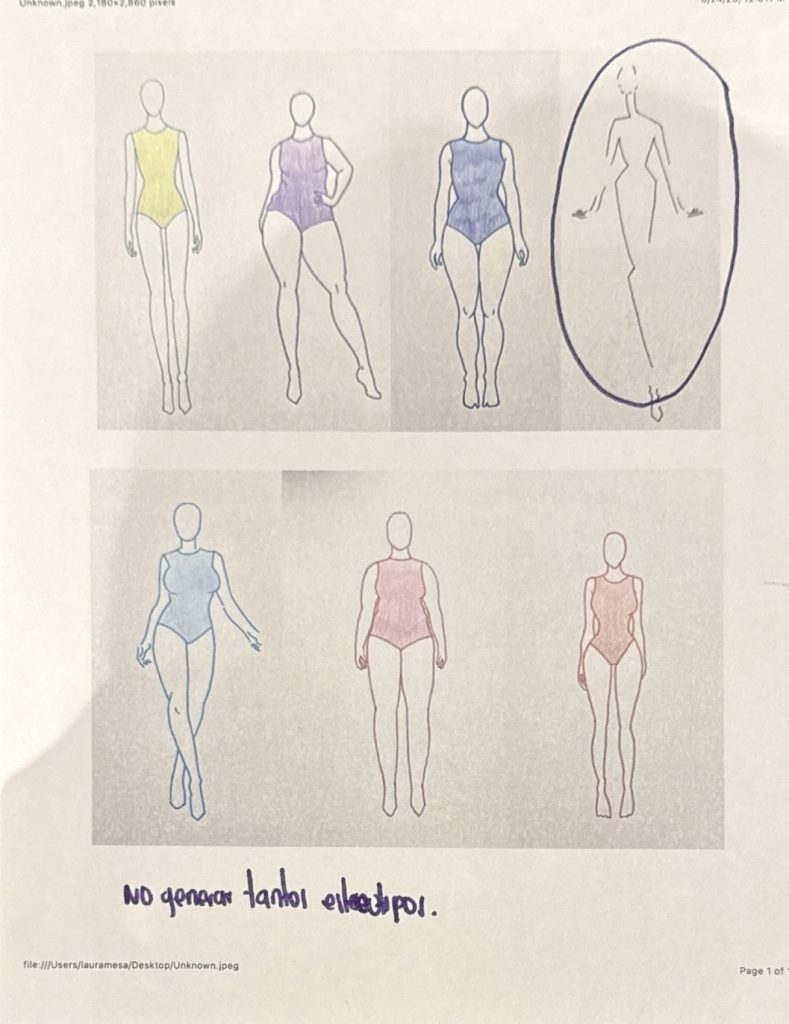
- This can be seen both ways: it might look extremely slim, but this person wasn’t about proving any prejudice against a specific body type, which I found extremely interesting.
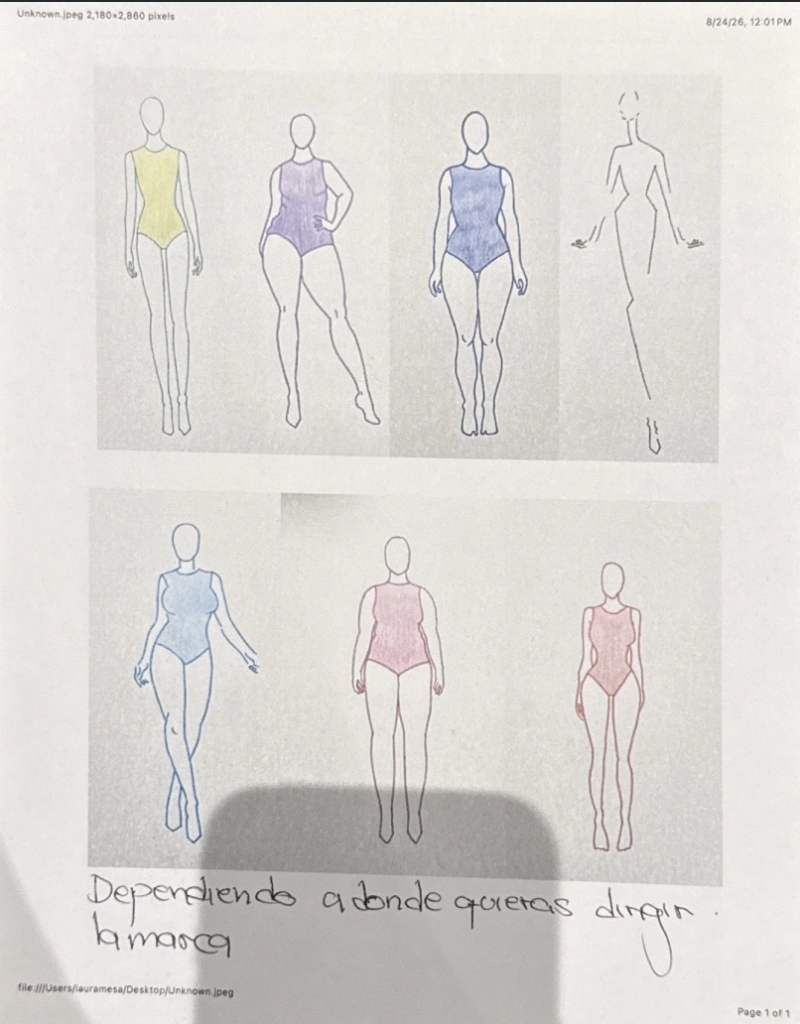
(Depending on where you want to take your brand)
- This was a very interesting reaction because, from the beginning, since they work in a fashion brand and were talking about how they assess, they immediately said it depended on the public they were speaking to or the person.
Honestly, looking at all of these answers, there were a lot of them that surprised me because I did not think I was going to get so many of them from people who were so emotionally aligned with what professionals consider the healthiest, such as the fact that a lot of them said that they accepted themselves the way that they were and that they love themselves. When it came to specific insecurities, the women I spoke to had a part of their body they weren’t completely comfortable with, though some said there are parts they don’t think they would change. Some of them weren’t even about the body, but about appearance as a whole. I also noticed that, overall, some people look at their bodies with the utmost respect and appreciate them for what they are. At the same time, other women thought there were aspects of their bodies they would like to change, which shows me there are two very different groups of people.
There is also the fact that when it comes to body parts and insecurities, as well as what they would change, there were three things that constantly came up: breasts, nose, and arms. There were some of these that I had already suspected, which are the nose and breasts; there is a tradition in Colombia that when you turn 15, you get your nose done as a gift, and a lot of people get breast implants for their graduation; this is very common in a lot of different social groups.
Secondly, I realized that the age at which girls start to notice their appearance varies,e, but most start noticing it before adolescence. Speaking from my personal experience, I was around the age of 8-9 when I started to notice my body and started to feel insecurities; however, I know a lot of people who started to notice it once they got older.
I also saw the fact that most girls learned about their bodies and about standards from their mothers, which makes a lot of sense because I think that, looking at it, the idea of bodies and the way some people are more comfortable than others comes very much from their families’ own views and perspectives, which I thought was very interesting.
However, when I saw some of the answers when it came to their own insecurities or when they felt uncomfortable, there were a lot of peole who do don’t want to answer or maybe not think about or maybe they genuinely have never felt insecure in their bodies who knows because maybe I am thinking through my own prejudices that everyone has to feel uncomfortable at some point in their lives. Still, maybe some people don’t think about it, and it was never part of their conversation or identity.
I also want to give a little of context about the people I asked questions to they were all warned that this was going to be used in my educational blog but that it was going to remain unanimous the only thing that I can include was the fact that I only asked women to participate mainly because I think women approach the subject differently but maybe in one of my future interventions or research I will use men to have different groups.
This was a successful exercise because I got a lot of partic. A very interesting experiment and with the difference in this one from the one I had done previously I was able to see the fact that everyone I spoke with today was willing to participate which I found very interesting because maybe this group of people was more interested in the subject and when I showed up with something they could interact with more rather than just asking them a question they were able to participate more and felt more included but I don’t know. I got a lot of interesting reactions from the people I spoke with for example one that really interested me was when one of the people who participated asked me if she had chosen the right one and that is when I had to explain that in this type of activities there was no right or wrong wander I just needed to see the different assumptions people might have about the fashion industry through this and by getting their answers I feel like I accomplished fart of the goal. I definitely want to do something similar and try different malls, but with different questions or images, because it is important to test different things as well as different backgrounds. Even though it wasn’t perfect and some people didn’t want to participate, many people gave me feedback on the questions and raised subjects I had never considered. It was also a good exercise for me to let go, go up to people, and ask them about different subjects related to the body. It was growth for me. It helped me get better at asking questions and seeing what comes back to me, and not be so afraid of rejection because it’s part of the process; some people won’t want to participate. Still, I learned a lot from the people who took part and from the people I spoke with.
It was interesting to look at everyone’s answers because some people approached it from the premise that it is easier to draw on a slimmer body and design from there, rather than on a bigger body. It is something people think is used, but I also saw that it might be used, or people assumed it should be this because they were trying to find a correct answer instead of doing the important part, which was honestly to look at everyone’s opinion. It was interesting that a lot of people thought it was important, and that some people were bigger in the picture. However, when I got home and showed what I had done to some of my family members, they thought I was missing one that was more intermediate, but I thought I had included a large variety; maybe next time I will try to have an even larger range.
While I was asking these questions, I walked into a store where 2 women were fashion advisors. They directly told me that they really liked what I was doing because they felt there was still a lot of discrimination in Colombia and when it came to bodies, because even though in their store there were sizes ranging from XS-XXL, in Colombia there are a lot of stores that do not have so much size inclusivity and that there are a lot of small one-size-fits-all pieces. However, looking at all of the women, I thought there were a lot of people who reacted based on their own bodies.
I feel that this has really helped me look at body image and fashion as a whole because I was able to see the different perspectives people have on designers and look at different things through the lens of people outside of the world and also looking on the beliefs that they have on the bodies of women in the country of Colombia and the way that I can see that there is a lot of more acceptance than there was before.
Leave a Reply