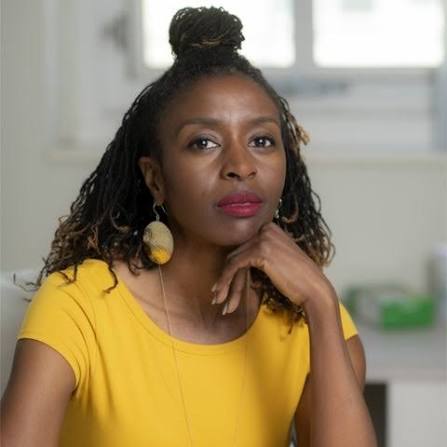
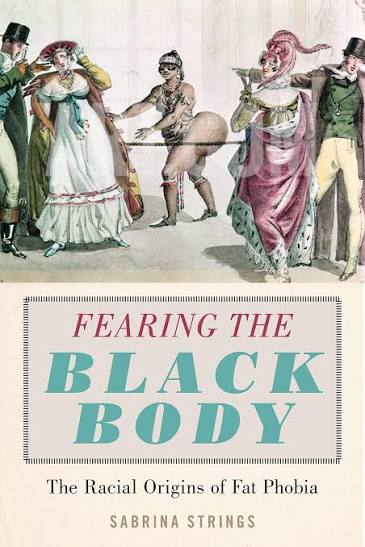
I met up with the doctor, Sabrina Strings, for a short meeting. She gave me really good feedback on what I am doing. I also asked if it was okay to write notes about our conversation in my student blog, which my professors, tutors, and classmates can see. I came across her work through manying with Zuelinka, who told me to look at her through other experts, including Osborne and psychologists in South America.
The first thing I asked her about was methodology, and she told me to start with Colombia and not focus on all of South and Latin America because it’s too broad a subject. She said her work was obvious because it started with what people considered desirable at different sizes. Then you had to be thin, so she thinks that’s why she started where she did, but she thought it would be harder across all of Latin America, so she decided to start where she is.
I explained to her that there are a lot of different places it came from in Colombia. The first one was the economy in Medellín, which was based on the textile industry. One hypothesis is that because textiles were the largest industry, that’s where the economy developed. Secondly, there is Narco trafficking and the idea of what a woman has to look like and what she has to do to fit into society, and this led to a lot of the problems that we have today, with a very large amount of plastic surgery in the city. There are a lot of different contexts because, in some of them, being of a larger size is good because it means you have money to buy food and that you are not hungry, so in that context being thin is considered poor, but this is in communities of lower socioeconomic background; however, when it comes to people who come from a higher socioeconomic background, being thinner is the ideal, and we see this through the use of GLP1s and extreme diets and exercise. (maybe it is because they are less focused on surviving?)
She told me that, after hearing this, there are a lot of places I could go with this, with different research opportunities. Instead of trying to connect all of them, she is suggesting I look at each as a separate project; they are different projects, and I shouldn’t worry about everything at once. This means that in my career, I have a lot to do, and she says I should start with the one that is most interesting or important to me right now. I said I am torn between the one on textiles and the one on lower socioeconomic backgrounds vs. higher socioeconomic backgrounds at the time; however, that might change, and I need to sit down and think about my options.
I explained to her that I’ve been having a hard time speaking to people and getting them to speak to me, so I have been trying all of them and seeing which one I can actually make happen. She said I shouldn’t leave one idea behind or the one I actually want to work on because I might not be able to access it, and I should really think about what I want to do. (But what if this is not what my stakeholders or my project needs)
Am I doing what I am doing because it is what really matters and what I want to achieve, or am I just doing it because it is where I am finding the information? She said one downside of her research is that it makes people uncomfortable; for example, she was part of a conference that discussed weight loss as a health endeavor. This is not something a lot of people want to hear.
People are sometimes confused that when you try to send a message, it means you are completely opposed to the other one. She told me that her grandmother was part of the Great Migration of Black people and moved from Atlanta, Georgia, to Los Angeles, California. She was suddenly living around a community of people who were light and wanted to be as small as possible, and this was a subject that interested her for the rest of her life until she died in 2000 because this was not something that she ever experienced in the South and the Depression, and this was not a concern at that time. In the South, there are more curvaceous figures in the USA than in the rest of the country. She started out by just thinking that this was weird. On one hand, we are supposed to be feminist and doing everything, but you have to be a certain size, and it made people uncomfortable because she was challenging a lot of assumptions. She told me that it wasn’t until 2019 that people started responding to her research differently.
She also talks about how a lot of times she is challenging direct pockets because there is money in products for weight loss, for example, pharmaceutical companies. Her current research is that sometimes being on a GLP-1 helps with other illnesses, but other times it causes more illnesses; saying they are healthy is misleading; it depends.
A marker for lack of representation started at the end of the pandemic: Ozempic was approved for weight loss, and this changed a lot, and everyone was in a moment where there was more size embrace. Everyone talks about the fact that the cash price for Ozempic in the USA without insurance is 1000 dollars, but this isn’t something everyone can pay; insurance is 25 dollars, and if you are not on the BMI threshold, you won’t get it through insurance. BMI is a problem altogether, and semaglutide companies are accountable for this; however, you could have anorexia and get access to semaglutide because you need the cash. In Colombia, you do not even need a prescription. It’s a lifelong commitment; you are dependent on it for the rest of your life. This is something she thinks I should look like in Colombia because of the hyper obsession with bodies and also looking at social media because it has everything good and bad. One thing to look at is biohacking for wealthy people and figuring out what they should be doing: bio-filtered chemicals to ingest and tracking performance through an Oura ring—an industry on optimization.
The final feedback she gave me was not to feel discouraged when I hit a roadblock; think of them as different projects, not all together, and everything leads to something else; just keep going when I hit the hard times.
Leave a Reply