Blog

  • Tutorial June 1st, 2026

    We had tutorials yesterday and had a meeting with my new tutor Diana Donaldson who I had the pleasure to work with before but I am exited to work with her again. One of the first things we looked at were the way that this is not just research but we are more so doing an investigation which we looked up the definition for, “Find out, explore, examine. We should not know the answer for our question” We need to specifically bring in new knowledge because this is what makes our work an MA and not a BA. A problem that I realized with my question is the fact that it is in a subject that might be oversaturated which means I have to look at the gap that I might be able to find through research and further investigation. I also have some more new code words to look at such as (Body Resilience). I also have to look at more data that is already out there and connect it or see what data I might be able to provide myself through my investigation. Closely look at the materials that are already out there and look for comparative analytics, also really listen to the people I am talking to critically and see what they actually need.

    One question or analysis that we made a group that Diana made us think about was, “what do I want people to learn from my research?”

    Also as an assignment to better understand what we are doing we are each going to bring in a presentation redefining and looking more closely at our what, why and how also to look for better questions we could be asking. This includes writing a description of the questions and thinking about the question separately.

  • Ozempic

    https://pmc.ncbi.nlm.nih.gov/articles/PMC12577951

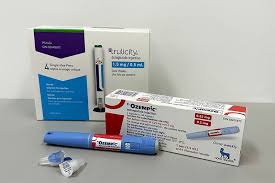
    Ozempic is a drug which is a drug called semaglutide and it is a GLP1 drug which is most often used for people suffering from type 2 diabetes and obesity and there are a lot of drugs which are considered to be doing the same thing such as Wegovy and Ozempic and many more to be honest, however it is now being used for the purpose of loosing weight because of its use in social media and celebrities who are using it. This leads to people not really understanding what this medication is for and has contributed to a lot of controversy. It has worked on patients who are considered obese or suffering through metabolic issues; if used incorrectly or by people who should not be using it, it can be very unsafe. Some of the side effects that can be seen from this are nausea, vomiting, dehydration, headaches, and some other very serious health concerns such as pancreatitis, gallstones, and problems with one’s kidneys. This is a huge issue because it is mostly social media that has been in charge of normalizing its use for a quick fix for weight loss, and this has led to people getting sick without it being necessary and the drug being hard to find for those who actually need it. A lot of people become addicted and actually start to use it in an irresponsible way and look for it on illegal second-hand markets, which leads to instability. There are many shortages because people who do not actually need it are using it, which can cause problems for those who need access but are not getting it. 

  • What Why How What-If

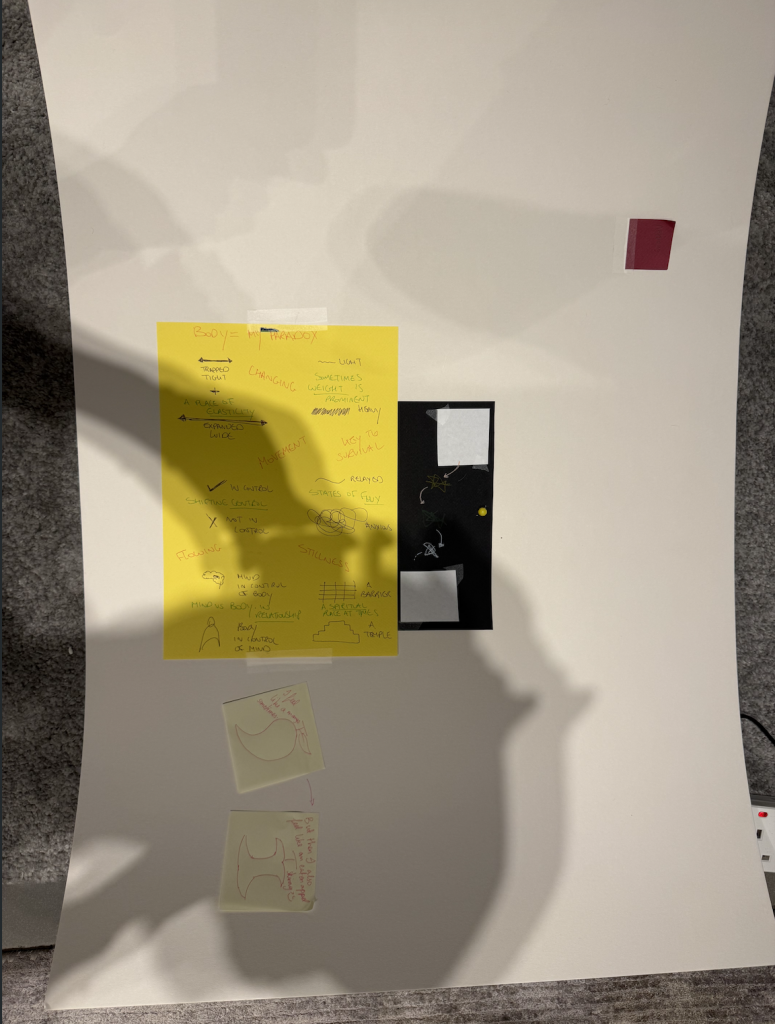
    The question I have come up with, but am aware is going to change for now in my project, is, “How can I bring awareness through a platform where people suffering from body image struggles feel safe and have a form of expression?” My project is going to revolve around body image, how it has evolved, and why this whole system has been built around the view of people’s bodies. This is something I want to further investigate because I personally have suffered from several eating disorders and have a distorted relationship with my body, as well as many of the people who are a part of my life, and I have seen the evolution of trends around Ozempic and eating nearly nothing in order to achieve a certain body type. I have different ideas of different forms in which I can test and further research this question but the first intervention I completed was having a poster and different materials that one could use in order to find a way to answer this question, “HOW DO YOU FEEL IN YOUR BODY? WHAT DO YOU SEE YOUR BODY AS? WRITE OR DRAW IT OUT AND PUT IN WHEREVER YOU FEEL IN THE POSTER”. This was done with a small in-class audience, and I hope that when I do it in a larger setting, I can get more information from the participants. I have considered doing it with various questions in public spaces around the school, such as the canteen or the pub after class. I want to do this because, through my research, I found an artist named Ally Z, who speaks about how her experience helped her find her voice: “My art emerges from this personal experience of these eating disorders and how I represent my body within my artworks” (Zlatar). I want to be able to create a format in which people who suffer from body image problems can show the way they represent themselves, and this can also be a useful tool for their own personal therapy. 

    I learned and received feedback on how to further improve my intervention, what it made people think about while completing this specific activity, and how differently people view their bodies. With the idea for this project what I really hope to accomplish is to make people question why we allow this to be a part of our lives and we normalize commenting on other peoples bodies as well as how we speak to ourselves I also hope for people to not just see the problems that are happening now in the present but for people to understand were it comes from and why it started because if we don’t know where it comes from how will we know how to change it. 

    I know this is a sensitive subject and I have to be careful, especially since I am in outpatient treatment for my eating disorder. However, I have the help and support I need to keep researching, and I understand it’s a sensitive subject for the community. I want to help because it’s always been a secret, and no one likes talking about it. I may encounter challenges, but I will keep working and ask my tutors and classmates for help to complete this project as successfully as possible.

    The starving artist – ally.zlatar (no date) – ally.zlatar. Available at: https://allyz.cargo.site/the-starving-artist (Accessed: 20 May 2026). 

  • -Network-

    My network is evolving right now, and I have faced a couple of challenges along the way. I am sure that they will continue to happen, but I will not stop until I find the correct network that can help me achieve my goals. I have started by reaching out to influencers in Colombia who have openly discussed their struggles with food and body image. I have only received one response, and I am waiting to see who else I can contact who might be helpful in this area. I have also started reaching out to several organizations that are trying to combat this in various ways, such as NAAFA (BBC). However, I have also started to reach out to several support groups dealing with eating disorders, but want to find more to reach out to and will continue to research this is a challenge because a lot of these groups are very closed, and the people participating in some of them might not want to discuss their struggles since this is something that is still very taboo in a lot of societies. I also have reached out to several artists, including Ally Z, who creates pieces about her experience with her several eating disorder struggles and how it looks different at several times and what it means to her (Ally). I have also started looking at more artists with a similar goal whom I could contact. I also was able to look at some of the previous projects that were done in the masters that are relevant to my topic and decided to contact them as well to see what similarities they might have and ways in which they could help me complete a meaningful project tis artists are Shuang Zheng who looked at eating disorders in China and how there could be a change on education (Zheng). One thing that I discussed with my tutor is the fact that I want to do something after I graduate pertaining fashion, marketing, journalism or PR and I want to try to build a network around it in order to create something that can help when I graduate as well which includes reaching out to different magazines as news papers and some different media outlets as well as experts in this fields that I might find and I will continue to work on who else is relevant in my network. One person I have access to, whom I had not even realized, is my aunt, who I actually have had several conversations with this past week, since she is an activist in Colombia and has been involved in aspects pertaining to our culture, and our conversations actually led me to look at my project from many different angles that one might not even realize are possibilities. However, I am aware that plans might change, since networking is very challenging and it can be hard to get a response at times. I will have to look at different people than the ones I have planned, but everything is doable if I stay persistent, even when it is hard. 

    (No date) Eat well – Shuang Zheng – Ual Showcase. Available at: https://ualshowcase.arts.ac.uk/project/510139/cover (Accessed: 21 May 2026). 

    What is the history of body positivity? (2023) BBC Bitesize. Available at: https://www.bbc.co.uk/bitesize/articles/z2w7dp3 (Accessed: 20 May 2026). 

  • Tate Modern (Tracy Emin: A Second Life)

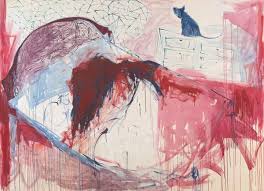
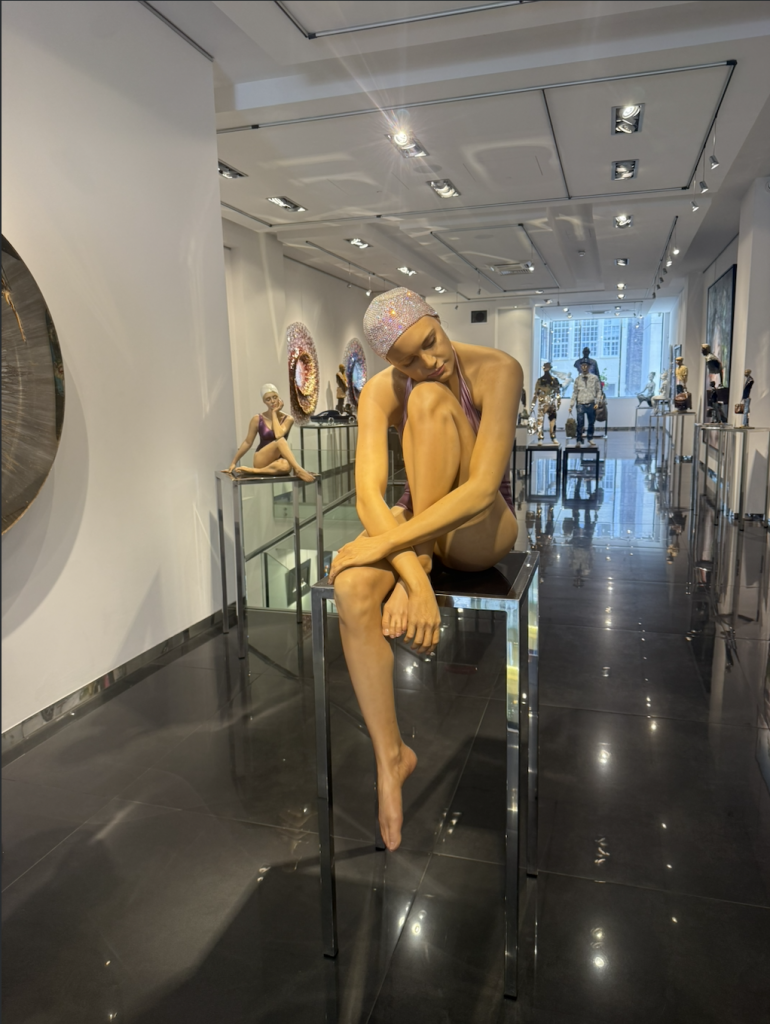
    This weekend I went to the exhibition of Tracy Emin taking place in the Tate modern and it was very interesting to see her journey and how she suffered so much after having had an abortion which came with a story because she went to a doctor in a church and the doctor had told her previously that there was a 99.9% chance that she could never get pregnant because of a bad case of gonorea she had previously so she never took precautions to not get pregnant but then she got pregnant and wanted an abortion and was upset because if she had known that there was a possibility of being pregnant she would have taken precautions and then the same doctor who had told her this did not want to help her get an abortion because of religious ideals and tried to brain wash her into thinking that it would make her a bad person. She went through a terrible depression and stopped painting for a while, but then started to create art because of her experience, and I thought this was really interesting because she felt as if she was not the owner of her own body; she was told her body was made to make the child who was inside her. 

  • Body Image and the Patriarchy

    This is a podcast by Dr. Lindsay Kite, author of the book Beauty Redefined. She is a very accomplished woman with a PhD in female body image, and she works to help women reject being treated or viewed as objects and reconnect with their own bodies. In this podcast one of the main things that are talked about is how as women we grow up with images and are told to treat our bodies as objects which leads to self objecification which lead to them looking from the outside and only caring about looks, this is something that starts happening from the age of 5 and 6 because of the society or the social construct we are around this is something that makes people feel less than others or as not good enough not just fiscally but also in their humanity as people and personalities and who they are at their core.

    There is also the talk of the “Split” from the human bodies, which is something that starts after childhood, when we are always in our bodies, and it’s because we use it as a tool in running, playing, and swimming without thinking about how we look while doing all of the different activities. After a while, and from the social world we live in, there starts to be objectification, and this leads to them feeling as if they are something to change or fix and need to reach perfection, which is not realistic, and this is something that has been seen by the media, as well as what adults say and the social norms we live by. 

    A personal exhale she shared is how she was a competitive swimmer and loved it as a child but when she was in high school she became very self concious and ended up quitting because she felt a fear of being judged and seen differently by the boys because of how she looked in a swimsuit and this lead to her starting to hate the sport and stop enjoying it, This is something that is seen in a lot of young girls because they decide to hide instead of participating. 

    It is not just men but also women who are enforcing the different beauty standards, as women at times we start to internalize the patriarchy and the beauty standers that are set because women are taught from a young age that beauty is power and they also start to see each other as competition for male approval and also women trying to protect mean and boys from being tempted by the female body. Which means women criticizing each other feeds into the same system. 

    There are many comments made to women and girls which hit them in very emotional ways and it is important to understand it, first of girls are raised to think that are only worth what they look like and it is different for boys because they are praised more by their actions and what they are able to do while girls are only looked at by their appearances and this changes the different gender identities as a whole.

    It is important to know that when people just compliment female bodies, we are more than just our bodies; they are tools to get through life. It is not just about self-confidence and loving what we look like, but about getting back to experiencing life in our bodies. 

  • NAAFA

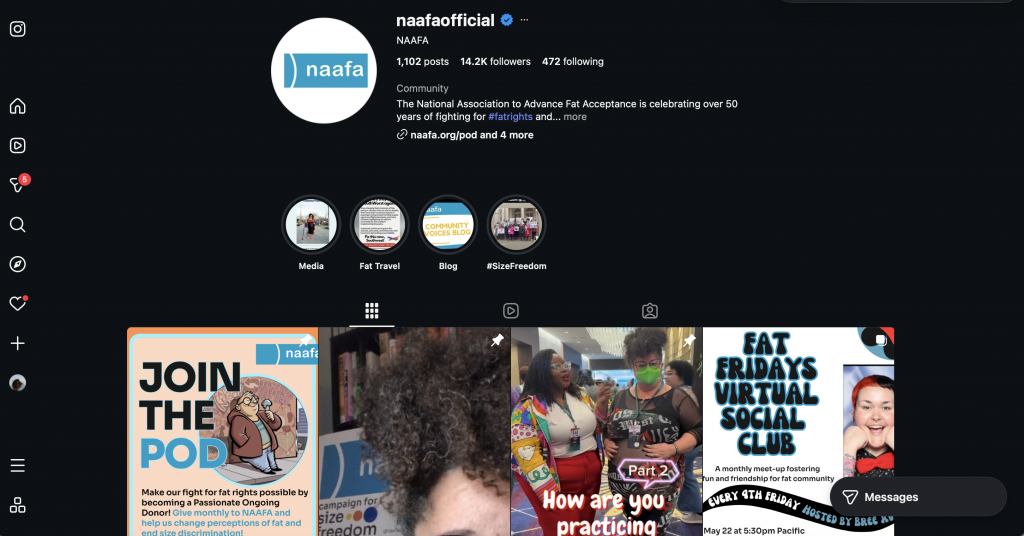
    https://www.instagram.com/naafaofficial

    https://en.wikipedia.org/wiki/Fat_acceptance_movement#:~:text=Critics%20say%20NAAFA%2C%20which%20opposes,same%20rights%20as%20everyone%20else.

    NAAFA is the National Association to Advance Fat Acceptance, and I plan to reach out to them because of their focus on promoting acceptance of different body types and equity for all, no matter what. There is a lot of criticism when it comes to them because they do not agree with dieting and weight loss surgery, and people believe that this means that people will not change their habits if they have unhealthy habits, and it enables, but they also have some solid arguments when it comes to loving one’s own body.

  • “The really old, racist and non-medical origins of the BMI”

    https://www.abc.net.au/news/2022-01-02/the-problem-with-the-body-mass-index-bmi/100728416

    People calculate BMI using a simple formula: weight in kilograms divided by height in meters. It puts you in specific body-mass categories. 

    The categories are very black-and-white. If you are underweight, if you are less than 18.5, you are normal weight if you are 18.5-24.9, and you are considered obese if you are higher than 30. People believe it is simple, but in reality, it makes the subject simple and creates very radical feelings. 

    The BMI scale was developed in the 1830s by the Belgian mathematician Adolphe Quetelet, who was not a medical professional. What is really interesting and funny is that this was never his goal for BMI to become such a relevant thing, but to find the weight and height of the average man, whatever that means; it was never about health or a measure of it. This was a measure in which only Western European men participated. In the 1970s, Ancel Keys proposed it as a way to study obesity, and the study was conducted only on men. 

    There are many flaws with BMI. First of all, we can see how it works when applied to a large group, but it is not to be used for individual health assessments. Another difference is that there is no distinction or further investigation of muscle, fat, and bone, which is why athletes mostly score as overweight; it is mostly muscle weight. There is also no breakdown by ethnicity, age, or gender. There is the fact that healthy BMIs differ across groups and populations. It is very interesting to look at the fact that there are people with a high BMI who are considered healthy, but others who have a normal BMI who suffer from several health issues because of this. 

    There are some medical and emotional consequences when it comes to this and one of the main things that happens is that it can cause it might cause shame and stigma, some people avoid medical care because at times they feel that doctors are only focused on their weight, the high weight stigma causes people to get discouraged and accept that they can not gee a healthier body and finally BMI become a tool for judgment instead of something that actually helps. 

    BMI is still used for several reasons, two thirds of people in Australia are considered overweight or obese by the use of BMI alone, the reason why it is still used is because it is really easy to use it takes limited costs and it is easy to measure, it is really useful when doing large scale reaserch for example it helped at the time when COVID 19 vaccines were hard to get to sort out individuals who could be considered high risk and experts believe it can be used but not alone there needs to be more context when it comes to measuring bodies. 

    There are better alternatives they could use in this sense, such as measuring the waist, which can help better assess health risks and the risks they entail. Women with high waist measurements have increased medical risks, and one fact that some people don’t realize is that the fat in your abdomen is more dangerous than in every other part of the body. 

    There are different situations that doctors suggest doing, and one of them is focusing more on behaviors and habits, and not just weight, and also looking more at habit building can have more of a difference than losing weight.