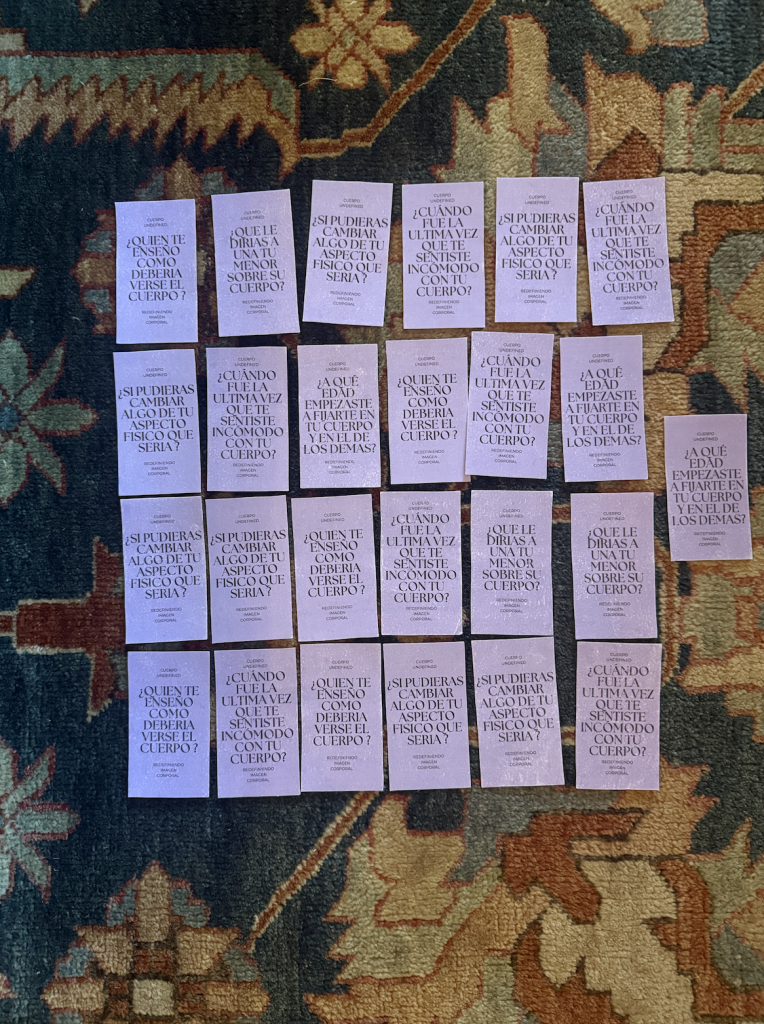
I created different moments where I could use different circles as interventions. I realized it was really hard to get people together, and many people canceled at the last minute, even though it was very productive. Some things did work, and I met with a couple of individuals, but not a full group. I decided I had to do something because I couldn’t keep waiting to see what I could make happen, so I went to one of the largest shopping malls in Medellín, Colombia, called Santa Fe. I sat with a multiple-choice set of questions in Spanish, but I will translate them into English.
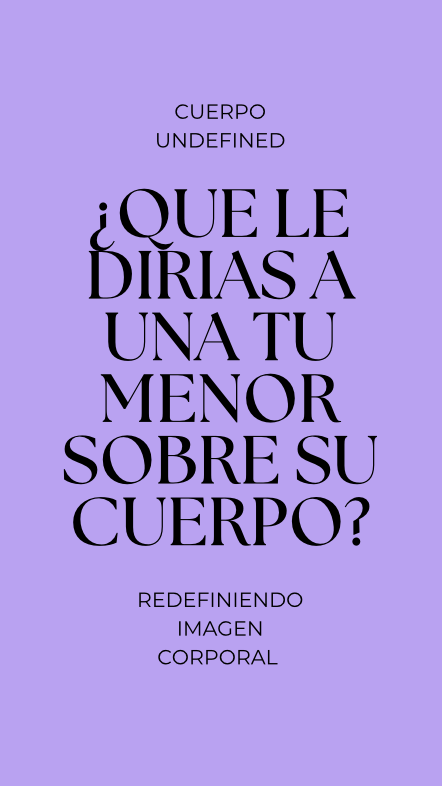
1.What would you tell a younger you about their body?
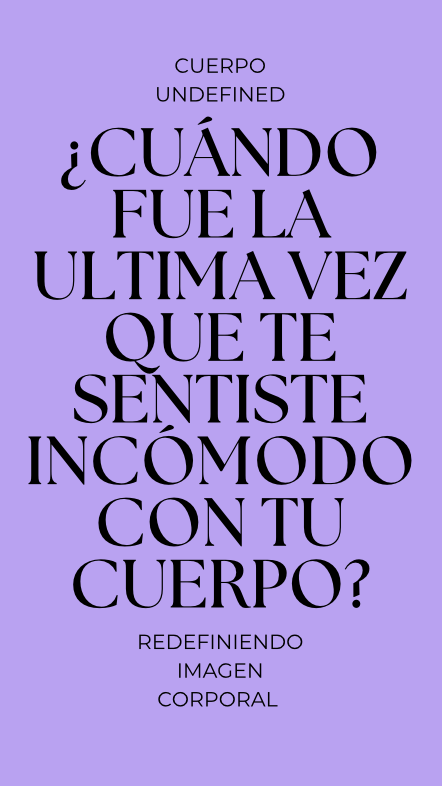
2.When was the last time you felt uncomfortable with your body?
3.Who taught you what your body should look like?

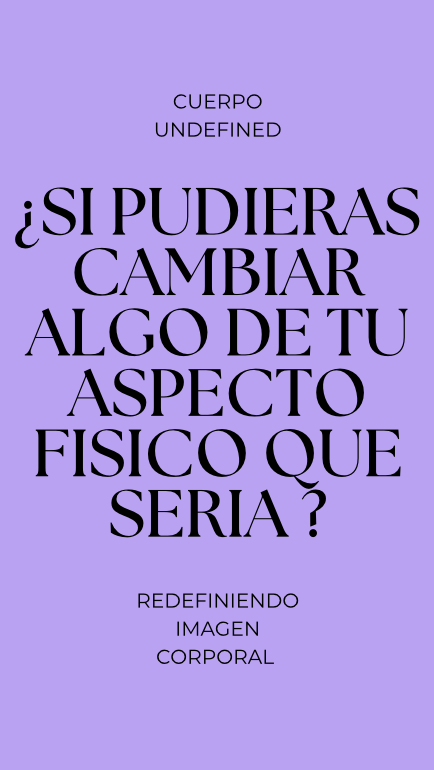
4.If there was something you could change about your physical appearance, what would it be?
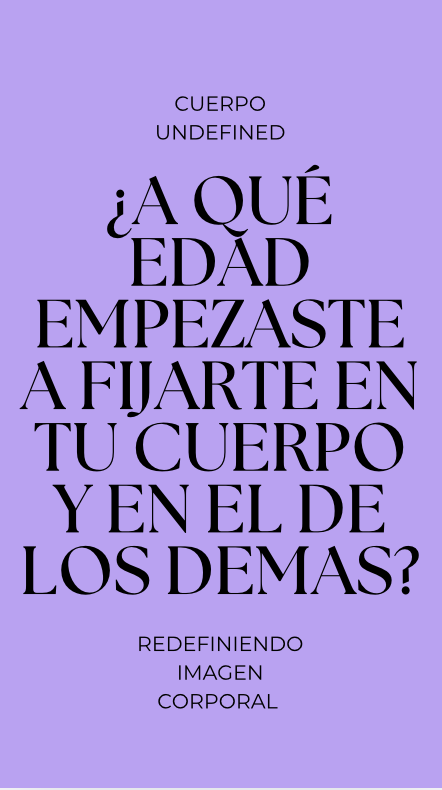
5. At what age did you start noticing your own body and everyone around you?
The design started with my wanting to incorporate the color periwinkle because it’s the color that, for ED awareness, and I wanted to ask questions and see what answers people came up with or how they felt about the questions. Surprisingly, people were very receptive, and of the 30 people I asked if they would be willing to participate and write their answer on the back of the note card I gave them, 26 agreed. I took that well because I honestly wasn’t very optimistic about how people would react. It was very interesting because most people asked me about how to respond. Some people gave details about the event or the moment, while others just wrote down a number. Still, that was the point: to get as many answers as possible. I told them it would be anonymous and used only for research with my professors, tutors, and peers in the master’s.
This was the result: To make the explanation and analysis easier, I numbered the questions from 1-5 and will continue with the answers and my analysis.
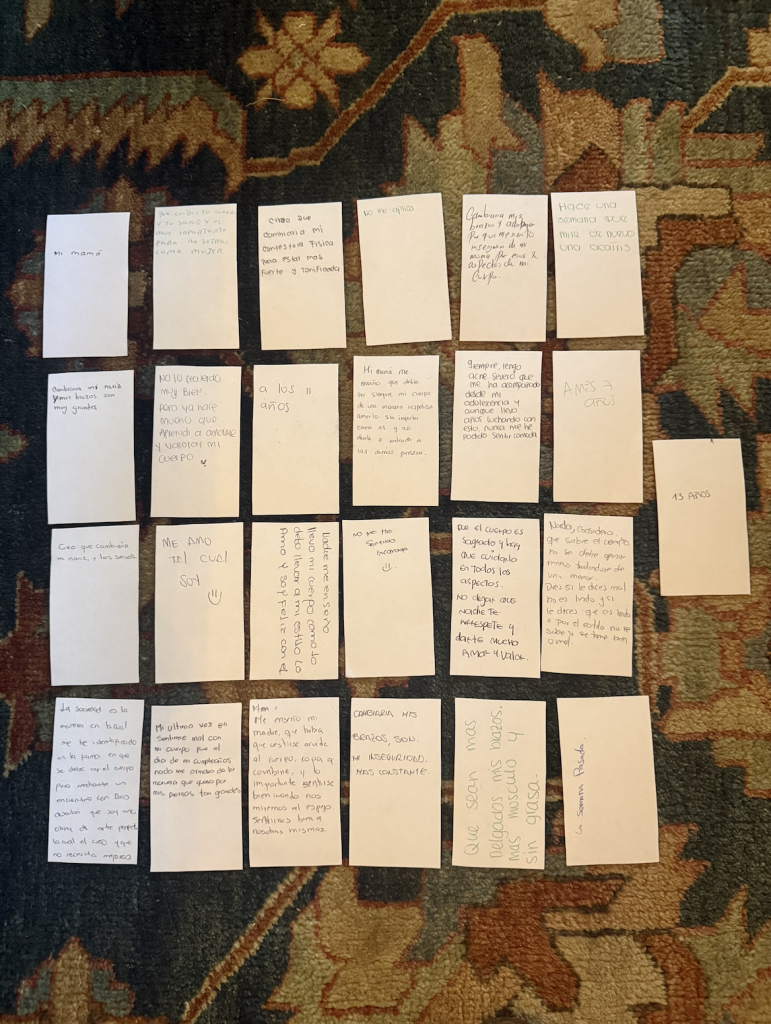
For Question 1: What would you tell a younger you about their body?
- “To take care of your body and your health, and it is very important for us as women.”
- “Nothing, I consider that about one’s body no one should have an opinion, especially when it comes to a minor. I think that if you say something bad, it is not nice, and if you say it is pretty or something of this nature, you don’t know if someone is going to take it in a good or bad way.”
- “That the body is sacred and you have to take care of it in every aspect. Don’t let anyone disrespect it and give yourself a lot of love and value.”
Question 2:When was the last time you felt uncomfortable with your body?
- “Does not apply to me.”
- “Last week.”
- “The last time I felt uncomfortable in my body was on the day of my birthday; nothing fit me in the way that I wanted because of my large legs.”
- “A week ago, I looked at an old scar again.”
- “I have severe acne that has been a part of my life since my adolescence, and even though I have been fighting against it, I have never been able to feel comfortable.”
- “I have never felt uncomfortable.”
- “I don’t remember it very well. But a long time ago I learned to love and value my body.”
Question 3: Who taught you what your body should look like?
- “My Mom”
- “My Mom taught me that I should always respectfully look at my body, love it no matter how it is, and without giving an explanation to people on the outside.”
- “No one taught me. I carry my body the way I should, in my own style. I love it, and I am happy with it.”
- “Society or the way in life which I have identified myself in a form in which my body should look, but during and after a closeness with god I discovered that I am a perfect masterpiece which he created and does not need improvement.”
- “My mother taught me to dress in accordance with my body type, with clothing that matches, and the most important part is to feel good when we look at ourselves in the mirror, feeling well with ourselves.”
Question 4:If there was something you could change about your physical appearance, what would it be?
- “I think I would change my physical structure to be stronger and more toned.”
- “I would change my arms and my abdomen since these are the greatest insecurities around my body, and that is why I would choose those 2 aspects.”
- “I would change my nose and arms because they are big.”
- “I think I would change my nose and my breasts.”
- “I LOVE ME JUST THE WAY I AM.”
- “I would change my arms; they are my most constant insecurity”
- “To have slimmer arms. Have more muscle and no fat.”
Question 5: At what age did you start noticing your own body and everyone around you?
- “At 11 years old.”
- “At 7 years old.”
- “13 years old.”
Honestly, looking at all of these answers, there were a lot of them that surprised me because I did not think I was going to get so many of them from people who were so emotionally aligned with what professionals consider the healthiest, such as the fact that a lot of them said that they accepted themselves the way that they were and that they love themselves. When it came to specific insecurities, the women I spoke to had a part of their body they weren’t completely comfortable with, though some said there are parts they don’t think they would change. Some of them weren’t even about the body, but about appearance as a whole. I also noticed that, overall, some people look at their bodies with the utmost respect and appreciate them for what they are. At the same time, other women thought there were aspects of their bodies they would like to change, which shows me there are two very different groups of people.
There is also the fact that when it comes to body parts and insecurities, as well as what they would change, there were three things that constantly came up: breasts, nose, and arms. There were some of these that I had already suspected, which are the nose and breasts; there is a tradition in Colombia that when you turn 15, you get your nose done as a gift, and a lot of people get breast implants for their graduation; this is very common in a lot of different social groups.
Secondly, I realized that the age at which girls start to notice their appearance varies,e, but most start noticing it before adolescence. Speaking from my personal experience, I was around the age of 8-9 when I started to notice my body and started to feel insecurities; however, I know a lot of people who started to notice it once they got older.
I also saw the fact that most girls learned about their bodies and about standards from their mothers, which makes a lot of sense because I think that, looking at it, the idea of bodies and the way some people are more comfortable than others comes very much from their families’ own views and perspectives, which I thought was very interesting.
However, when I saw some of the answers when it came to their own insecurities or when they felt uncomfortable, there were a lot of peole who do don’t want to answer or maybe not think about or maybe they genuinely have never felt insecure in their bodies who knows because maybe I am thinking through my own prejudices that everyone has to feel uncomfortable at some point in their lives. Still, maybe some people don’t think about it, and it was never part of their conversation or identity.
I also want to give a little of context about the people I asked questions to they were all warned that this was going to be used in my educational blog but that it was going to remain unanimous the only thing that I can include was the fact that I only asked women to participate mainly because I think women approach the subject differently but maybe in one of my future interventions or research I will use men to have different groups.
I thought this was a successful exercise because I got a lot of participants, in my opinion, and even though it was not perfect and some people did not want to participate, there were a lot of people who gave me feedback on the questions and had them thinking about subjects they had never thought of. It was also a good exercise for me to let go, go up to people, and ask them about different subjects related to the body. It was growth for me. It helped me get better at asking questions and seeing what comes back to me, and not be so afraid of rejection because it’s part of the process; some people won’t want to participate. Still, I learned a lot from the people who took part and who I got to speak with.
Leave a Reply